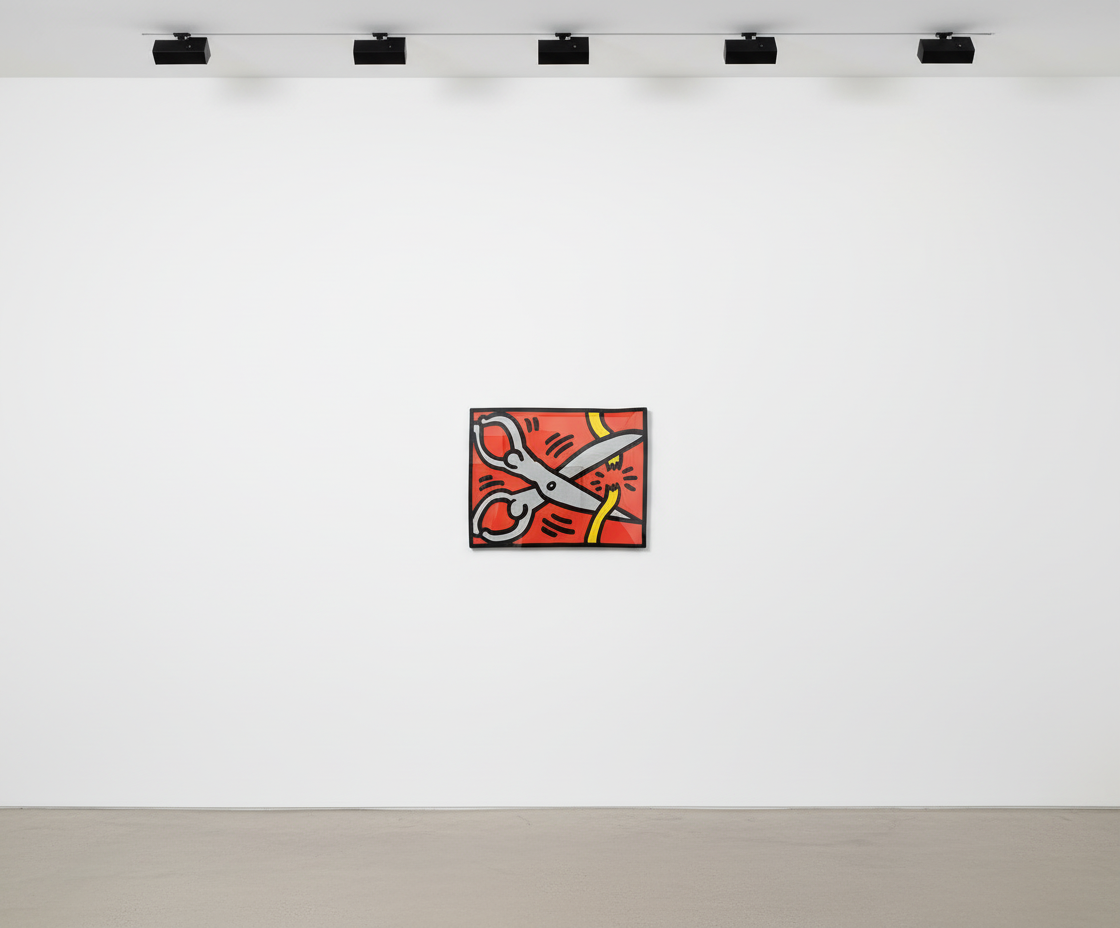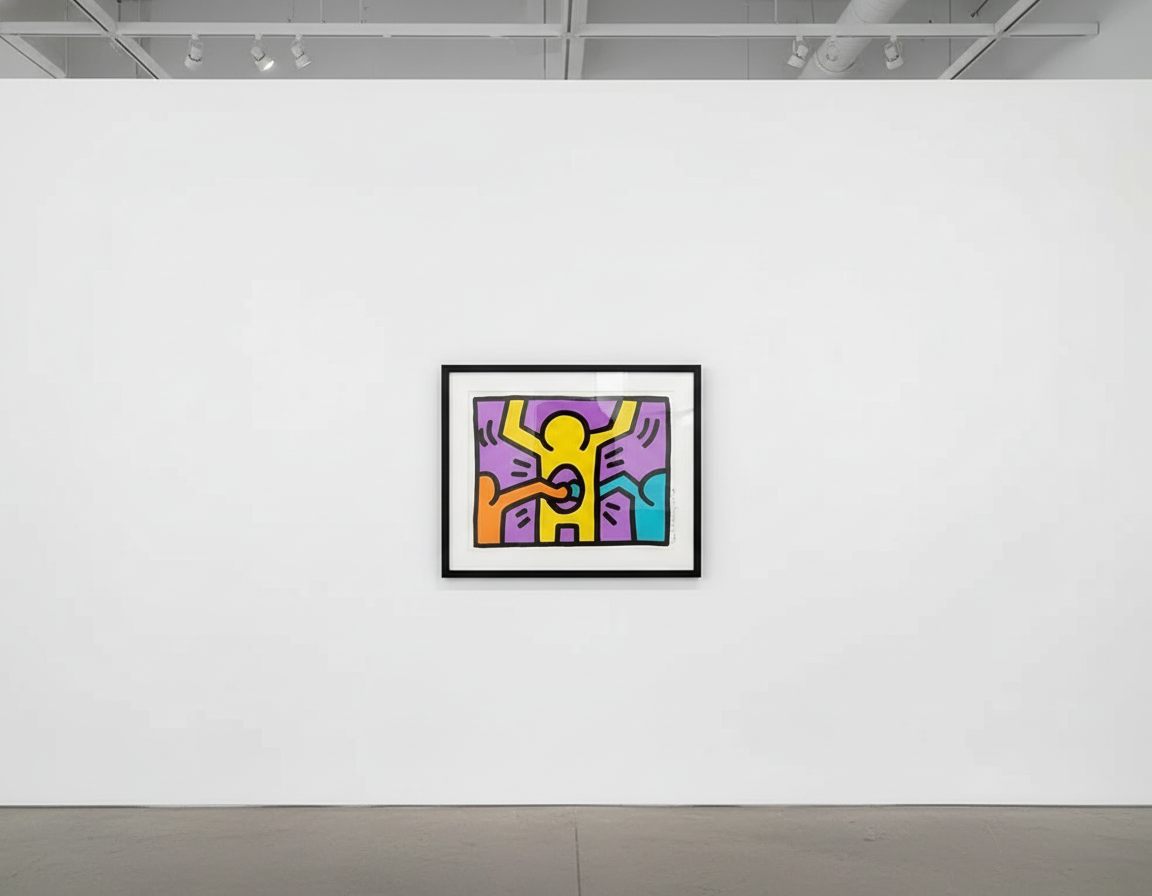
Pop Shop I

Keith Haring stands as one of the most influential American artists of the twentieth century, a figure whose bold graphic vocabulary transformed public spaces into vibrant canvases and democratised access to contemporary art. Emerging from the New York subway system in the early 1980s, Haring developed an instantly recognisable visual language - radiant babies, barking dogs, and dancing figures rendered in thick, unbroken lines. Yet his impact extended far beyond gallery walls. In 1986, Haring opened the Pop Shop in downtown Manhattan, a radical venture that would produce some of his most sought-after works: the Pop Shop Set Series and Pop Shop Quad Series. These signed, limited-edition silkscreen prints represent the intersection of Haring's artistic vision and his populist ethos, making them essential acquisitions for collectors seeking to own a piece of art history.
Opened at 292 Lafayette Street in Soho, the Pop Shop represented nothing less than a revolution in how contemporary art could be experienced and acquired. Haring conceived this space not merely as a retail outlet but as a living extension of his artistic philosophy - a belief that art should be accessible to everyone regardless of economic status or cultural background. The store's interior, covered floor to ceiling in Haring's signature black-and-white murals, became an immersive environment where children, tourists, and seasoned collectors could engage with his work on equal footing.
The Pop Shop offered merchandise at remarkably democratic price points, with items available for as little as fifty cents. T-shirts, buttons, magnets, posters, and inflatable baby figures allowed visitors to take home authentic Haring designs without the barriers typically associated with fine art acquisition. This approach drew criticism from some quarters of the art establishment, who viewed the venture as crass commercialisation. Haring's response was characteristically direct: he argued that creating affordable art was far more subversive than allowing his imagery to be co-opted by counterfeiters and corporations without his consent or creative control.
What distinguished the Pop Shop from mere merchandise operations was Haring's genuine artistic investment in every product. Each item bore his distinctive aesthetic sensibility, transforming everyday objects into carriers of his visual philosophy. This commitment to quality and authenticity laid the groundwork for the limited-edition print series that would emerge from this revolutionary space.
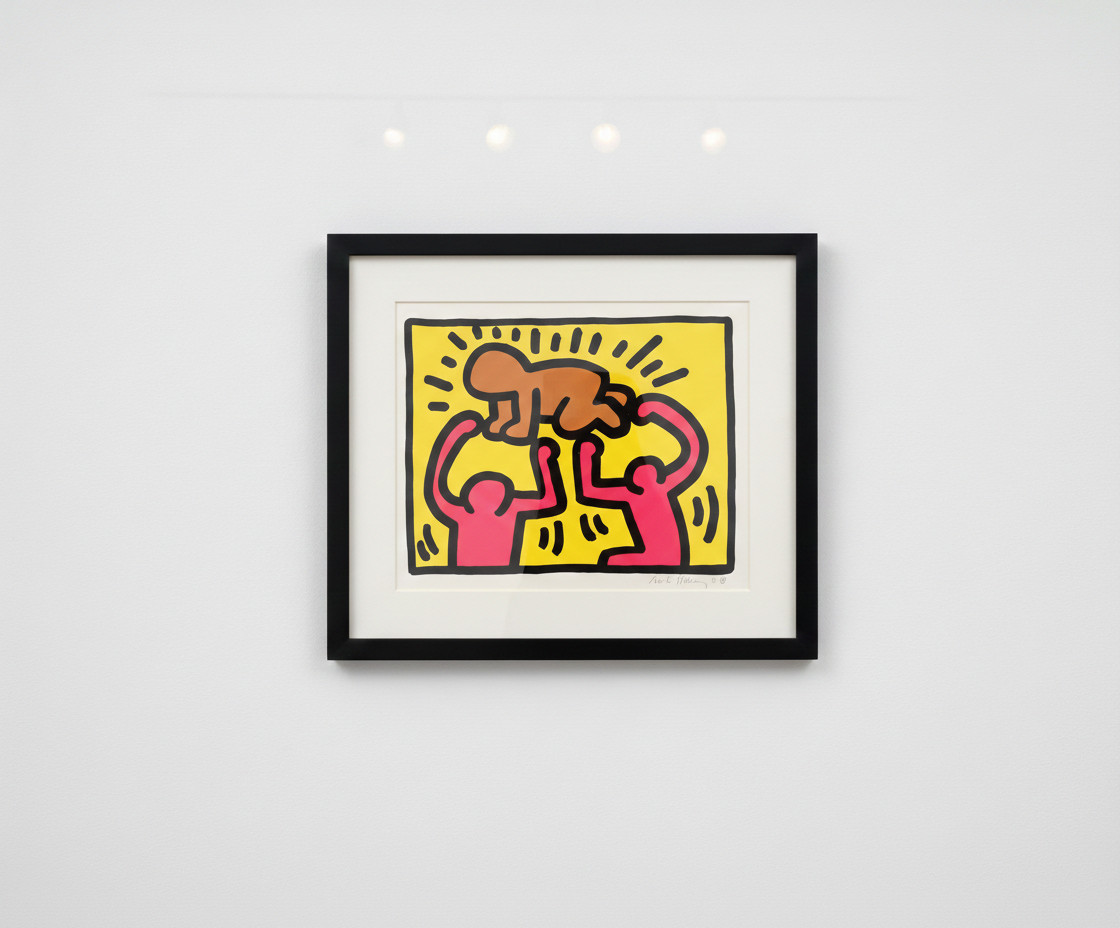
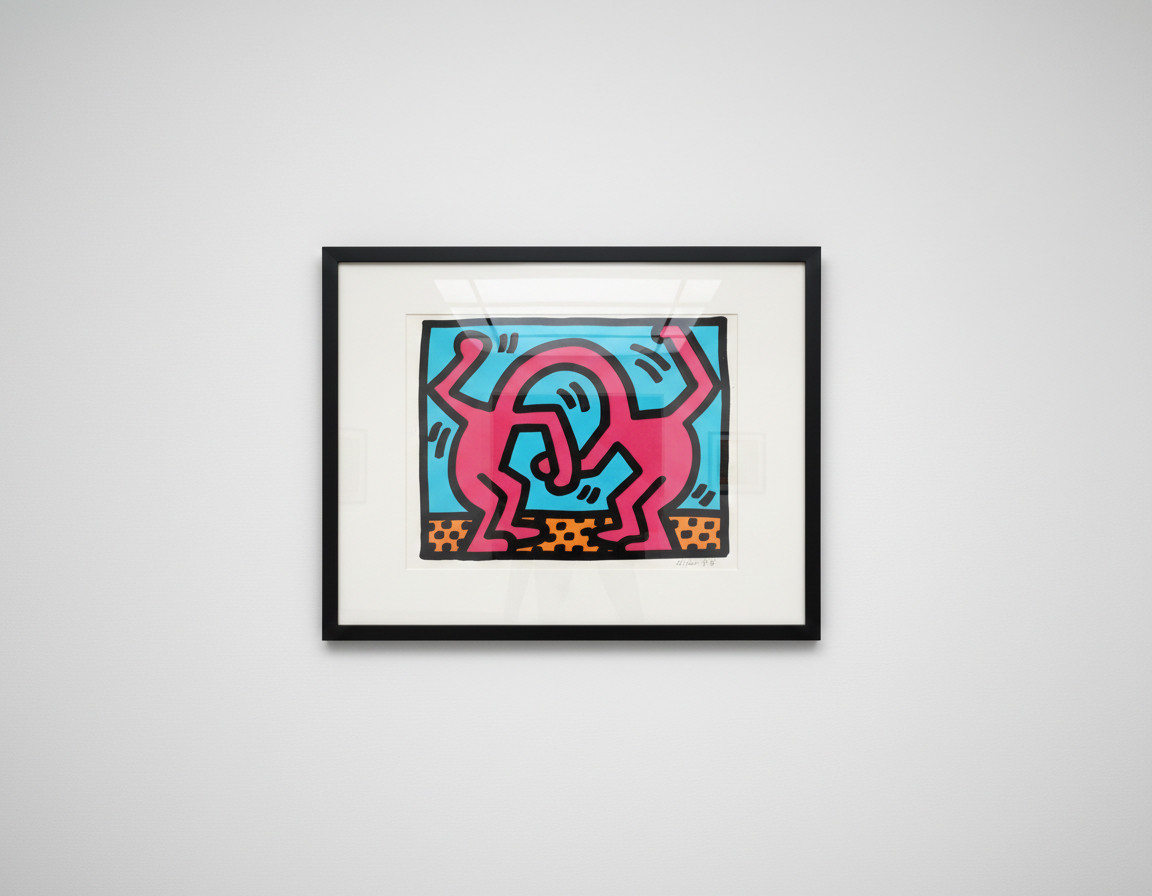
Pop Shop Ii (D) (Littmann PP. 97) — Keith Haring. Available at Guy Hepner, New York.
Between 1987 and 1989, Haring created two interconnected bodies of work specifically for distribution through the Pop Shop: the Pop Shop Set Series, comprising four sets numbered I through IV, and the Pop Shop Quad Series, encompassing six sets numbered I through VI. These signed silkscreen prints on paper represent the artist working at the height of his creative powers, distilling his complex visual vocabulary into compositions of extraordinary energy and precision.
The Pop Shop Set editions typically feature four individual prints per set, each measuring approximately 12 by 15 inches. These works showcase Haring's mature graphic style - figures locked in dynamic poses, surrounded by his characteristic radiation lines that suggest movement, energy, and spiritual vibration. The colour palettes range from bold primary combinations to more nuanced arrangements of complementary hues, demonstrating Haring's sophisticated understanding of how colour relationships create visual rhythm and emotional resonance.
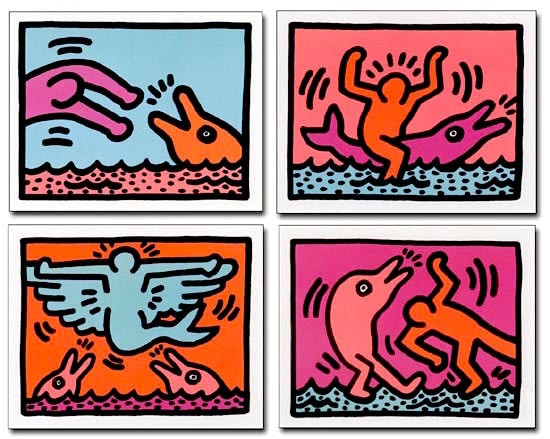
The Pop Shop Quad Series presents larger compositions measuring approximately 25 by 32 inches, with each print divided into four interconnected quadrants. These works allowed Haring to explore more complex narrative structures while maintaining the immediate visual impact that defined his practice. The quadrant format creates a dialogue between individual elements, inviting viewers to read the compositions both as unified wholes and as collections of discrete but related images.
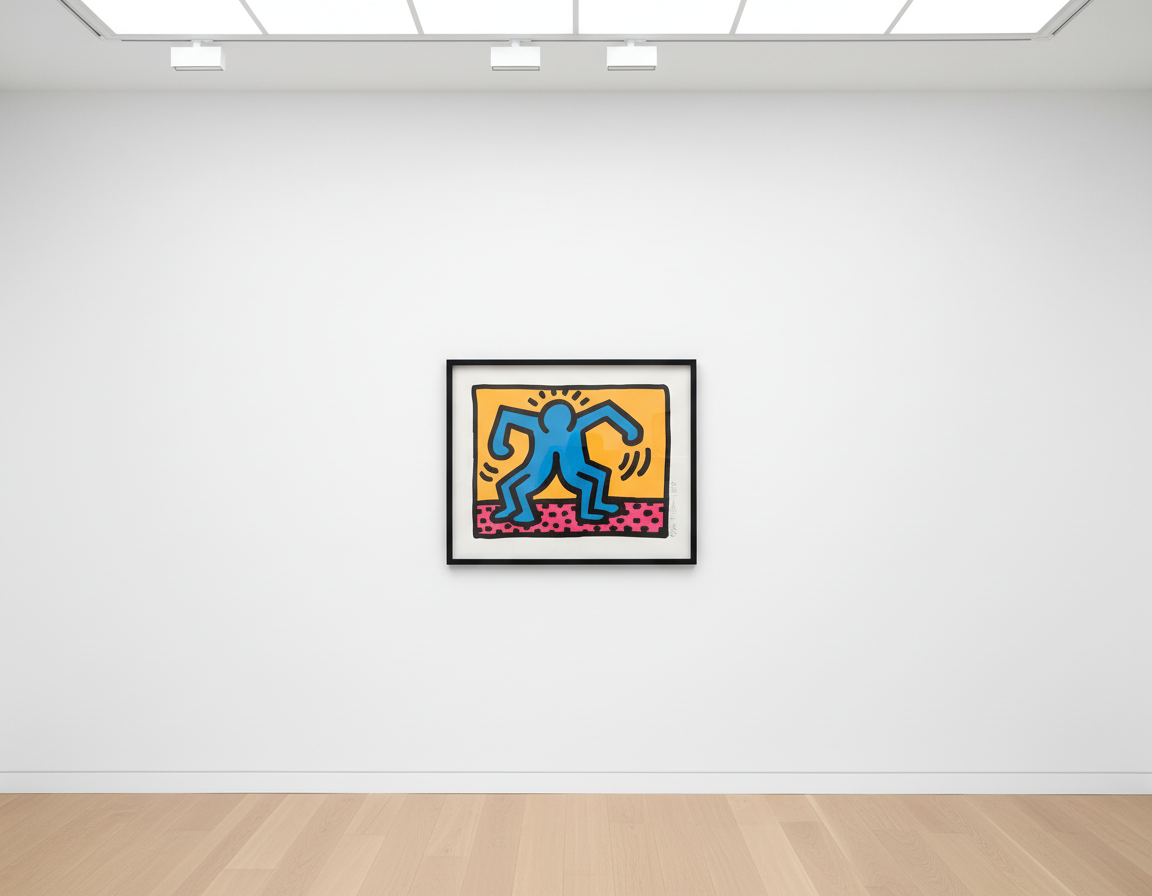
Pop Shop II (A) (Littmann PP. 96) — Keith Haring. Available at Guy Hepner, New York.
Thematically, these prints engage with subjects that preoccupied Haring throughout his career: the celebration of human connection, the critique of technological dehumanisation, the advocacy for social justice, and the pure joy of physical movement. Dancing figures interlock and support one another; television sets sprout menacing appendages; hearts and dolphins appear as symbols of love and freedom. This visual lexicon, developed through years of Subway Drawings and public murals, achieves particular refinement in the Pop Shop editions.
The Pop Shop prints occupy a distinctive position within the contemporary art market, combining museum-quality artistic achievement with the democratic accessibility that defined Haring's practice. According to market analyses conducted by major auction houses including Christie's and Sotheby's, Haring's prints have demonstrated consistent appreciation over the past two decades, with the Pop Shop editions commanding particular attention from discerning collectors.
Several factors contribute to the enduring desirability of these works. The editions are strictly limited, with most sets comprising between 100 and 200 signed impressions. Haring's untimely death in 1990 at age thirty-one means no additional works will enter the market, creating finite supply against Growing global demand. Furthermore, the Art Basel and UBS Global Art Market Report has repeatedly identified Haring as a leading figure in the post-war and contemporary category, with collectors across generations responding to his accessible yet sophisticated visual language.
The Pop Shop provenance adds another dimension of value. These prints were created specifically for distribution through Haring's own space, representing his most direct artistic statement about the relationship between creation and commerce. Collectors acquiring Pop Shop editions own not merely beautiful objects but tangible connections to a pivotal moment in art history - the moment when an artist of Haring's calibre chose to challenge institutional gatekeeping and bring his work directly to the people.
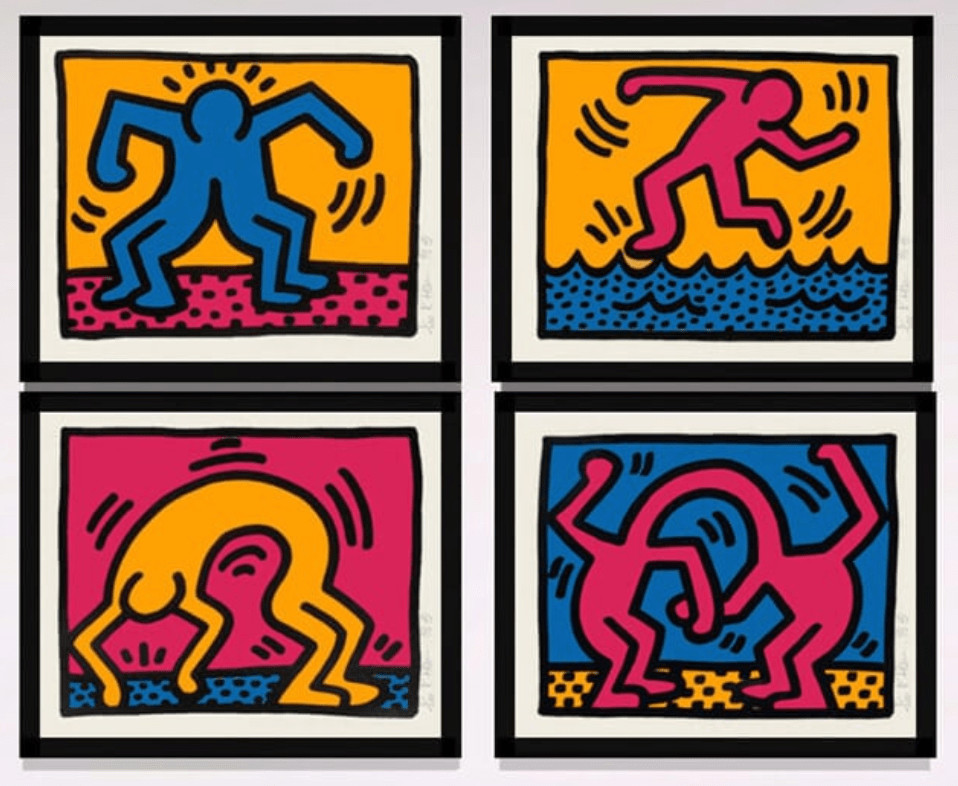
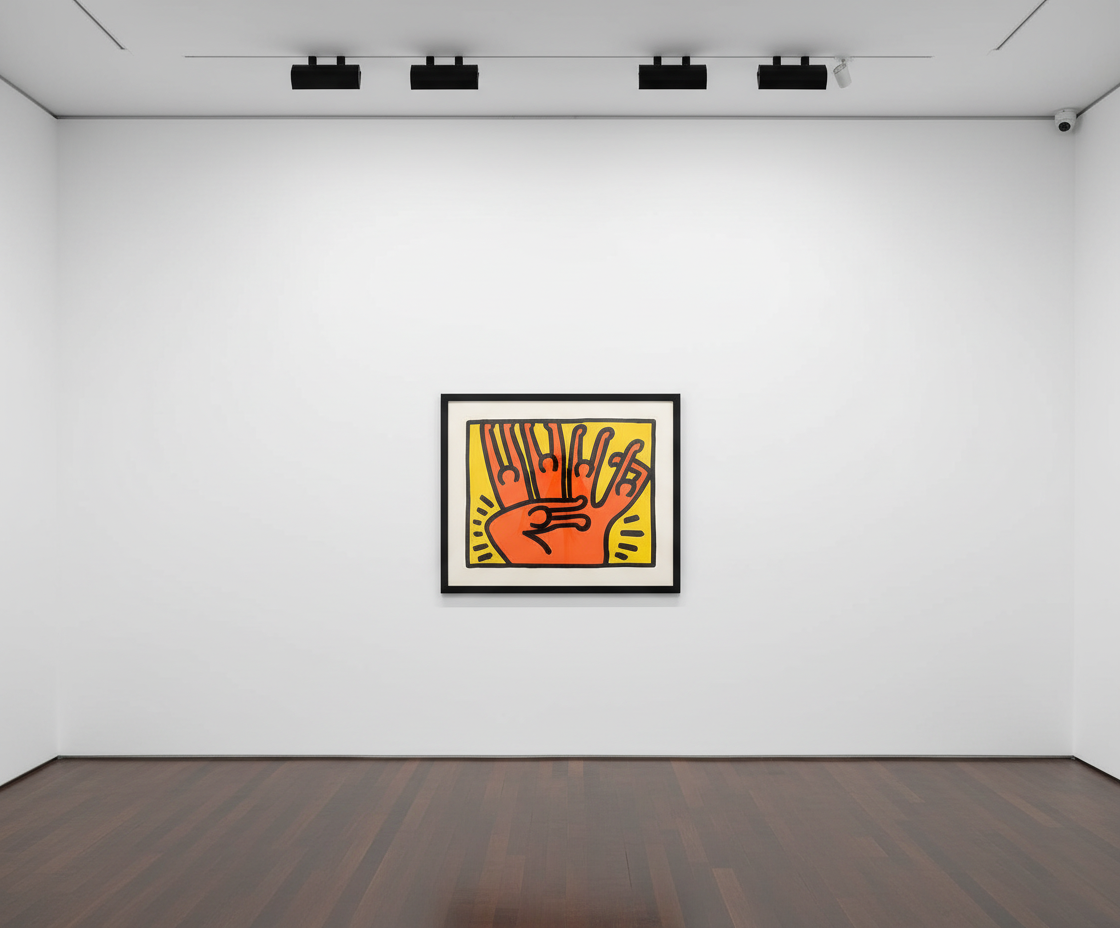
Pop Shop II (Littmann PP. 96-97) — Keith Haring. Available at Guy Hepner, New York.
Condition and authentication remain paramount considerations for serious collectors. Works accompanied by documentation from the Keith Haring Foundation, along with provenance tracing back to original Pop Shop acquisition or authorised gallery distribution, command premium valuations at auction and in private sales.
Guy Hepner maintains an exceptional inventory of Keith Haring Pop Shop editions, offering collectors the opportunity to acquire these historically significant works with complete confidence in authenticity and provenance. Our expertise in post-war and contemporary prints ensures that each work meets the exacting standards discerning collectors require. Whether you seek individual prints from the Pop Shop Set Series or complete suites from the Pop Shop Quad Series, our specialists provide personalised guidance tailored to your collecting objectives and investment considerations. We invite you to contact Guy Hepner to discuss available Keith Haring Pop Shop works and discover how these iconic prints can enhance your collection.
Explore Keith Haring prints for sale at Guy Hepner: Pop Shop I, Pop Shop Ii, Pop Shop Iii, Pop Shop Iv, Pop Shop V.
Related Series