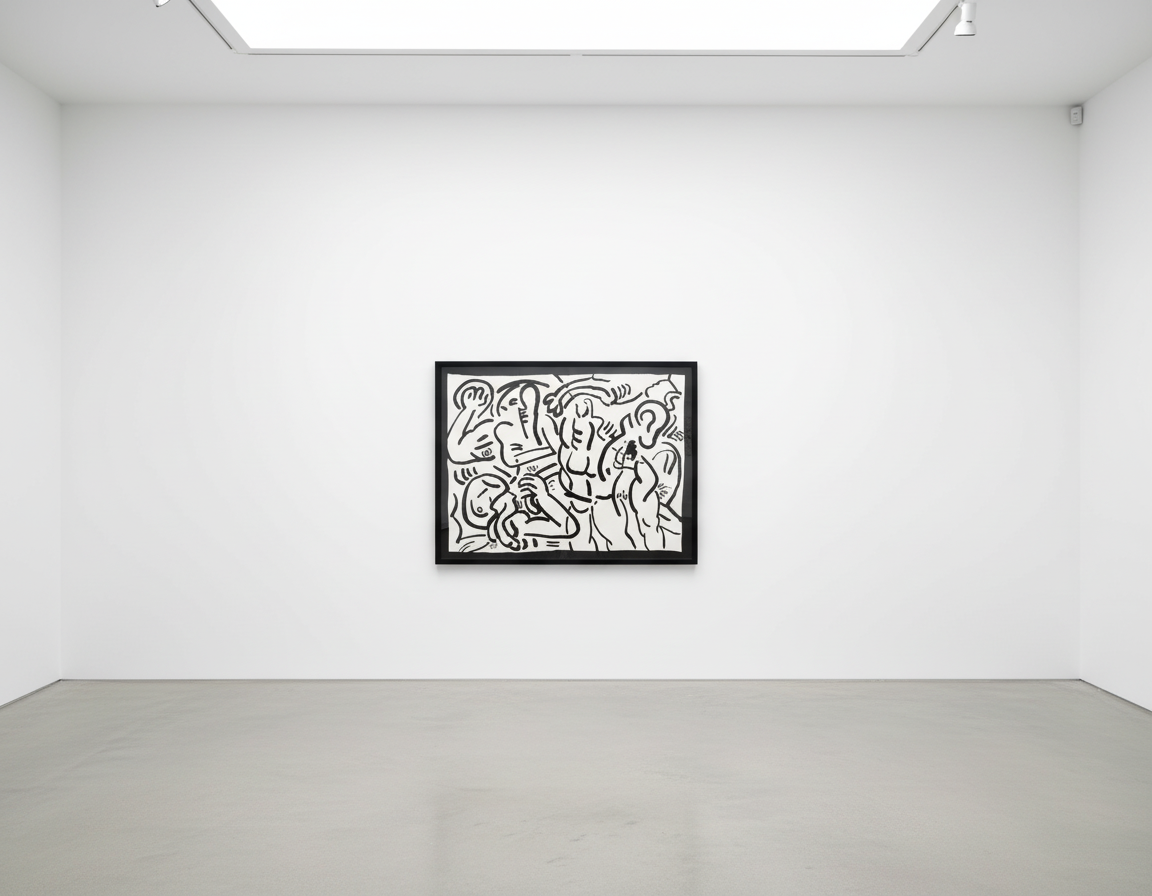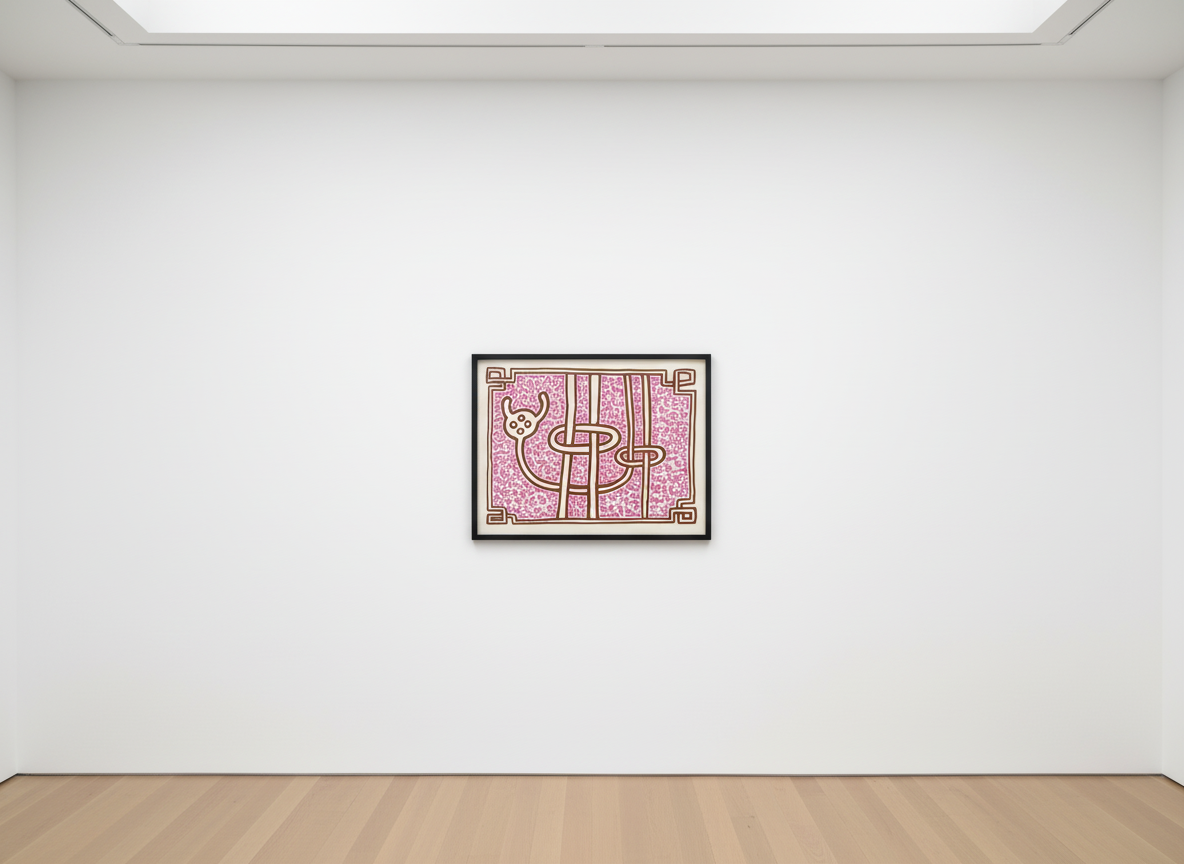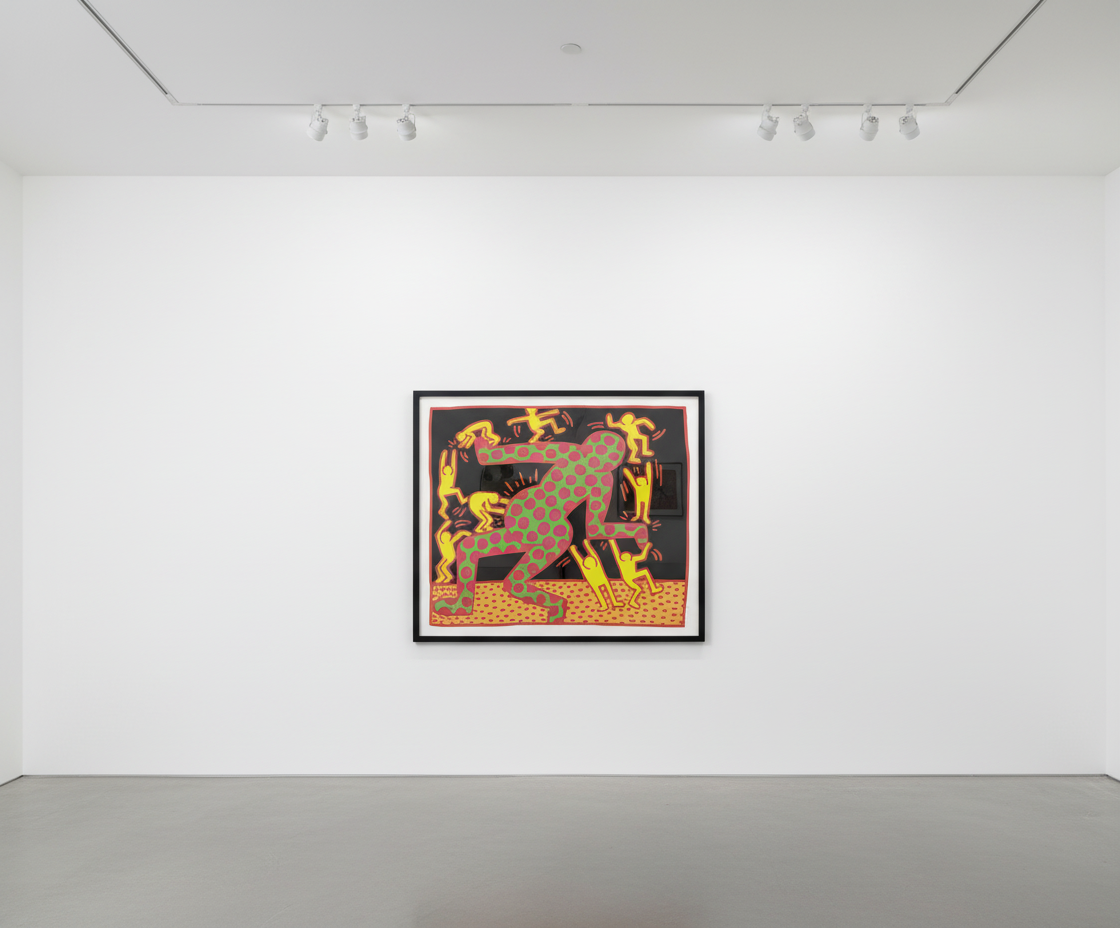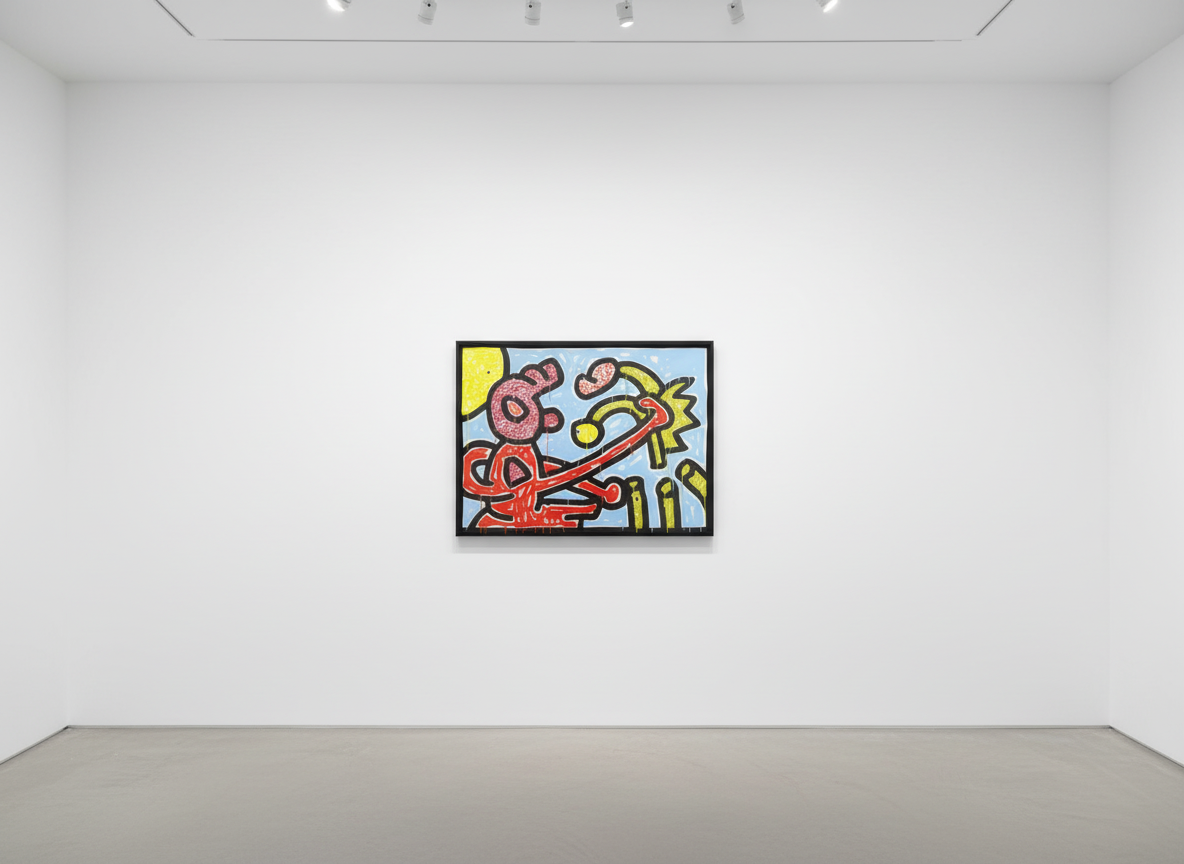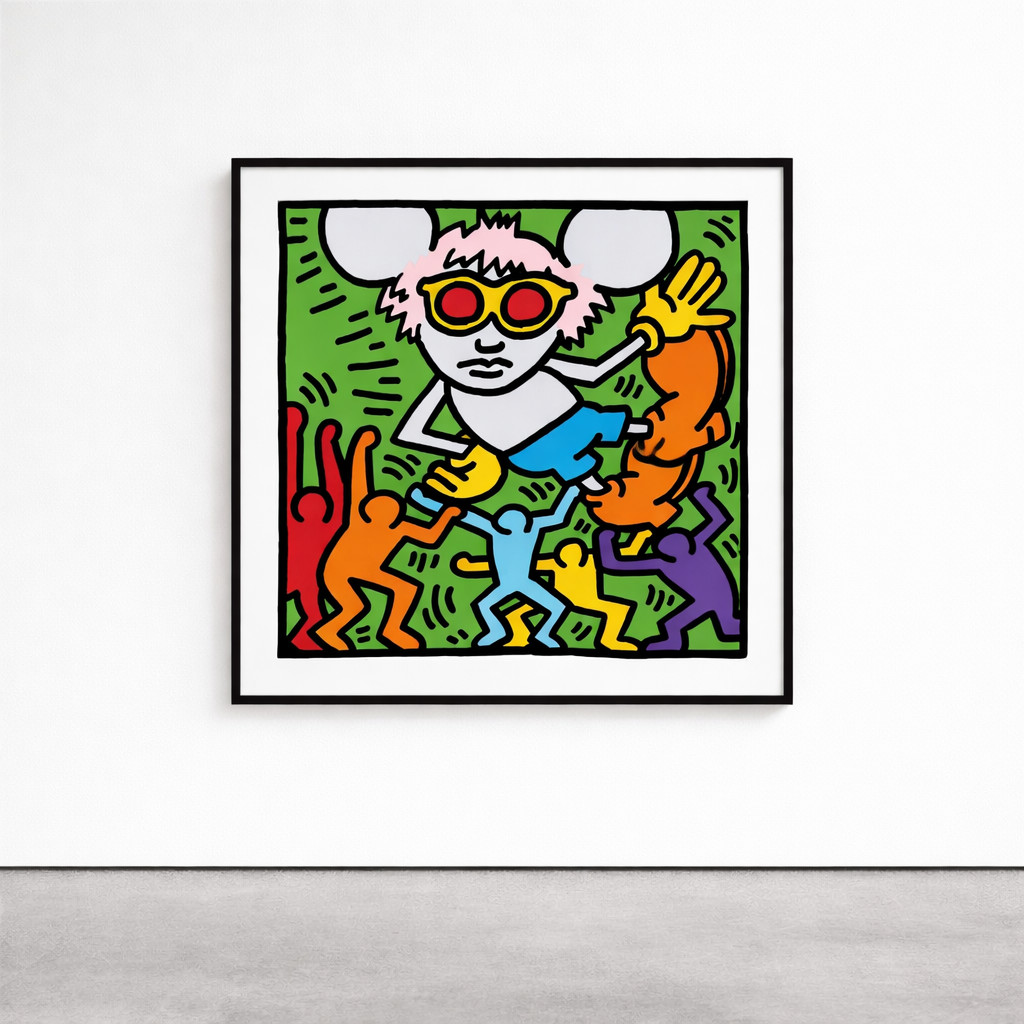
Andy Mouse

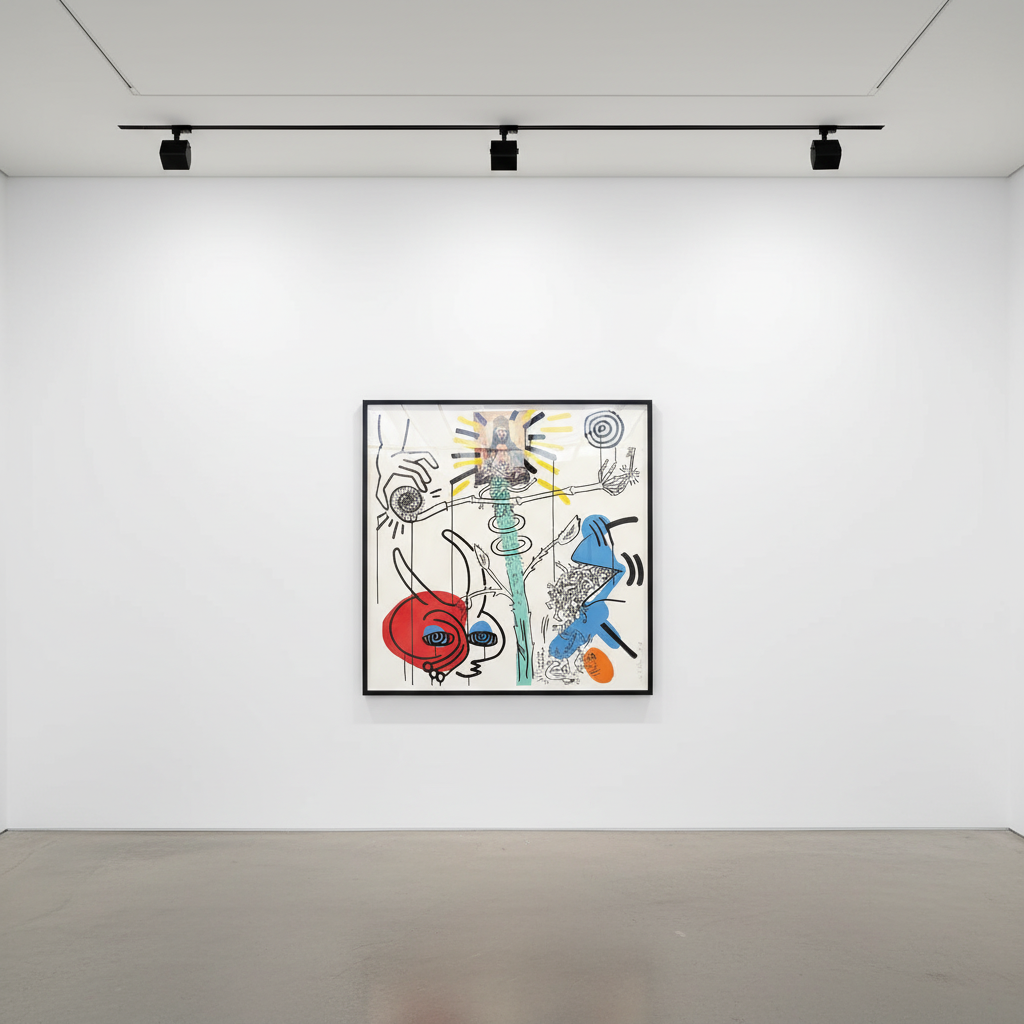
Keith Haring was more than a pop artist. Beneath his signature bold lines, vibrant colors, and cartoon-like figures lay a body of work that was deeply political and unafraid to confront the urgent issues of his time. From the AIDS epidemic and apartheid to capitalism, homophobia, and nuclear disarmament, Haring used his art as a powerful platform for social commentary. While his accessible visual language made his work appealing to broad audiences, the messages embedded in his imagery were pointed, urgent, and unapologetically activist. Today, the political art of Keith Haring stands as both a historical document of 1980s activism and a timeless call for social justice that continues to resonate with contemporary collectors and institutions worldwide.
Keith Haring was diagnosed with AIDS in 1988, but his activism around the epidemic began well before his own diagnosis. At a time when AIDS was still heavily stigmatized, under-researched, and largely ignored by government institutions, Haring became one of the few prominent figures in the art world to confront the disease head-on through his creative practice. His willingness to address this crisis openly transformed him from a celebrated street artist into a vital voice for an entire generation facing an existential threat.
One of his most iconic activist pieces is "Silence = Death" from 1989, which borrowed the pink triangle symbol originally used by the Nazis to identify homosexuals and later reclaimed by the LGBTQ+ community during the AIDS crisis. The work features the phrase in bold text above Haring's signature figures - some covering their eyes, ears, and mouths in a powerful visual representation of willful ignorance. This imagery directly challenged the silence surrounding the epidemic and demanded acknowledgment from a society that preferred to look away.
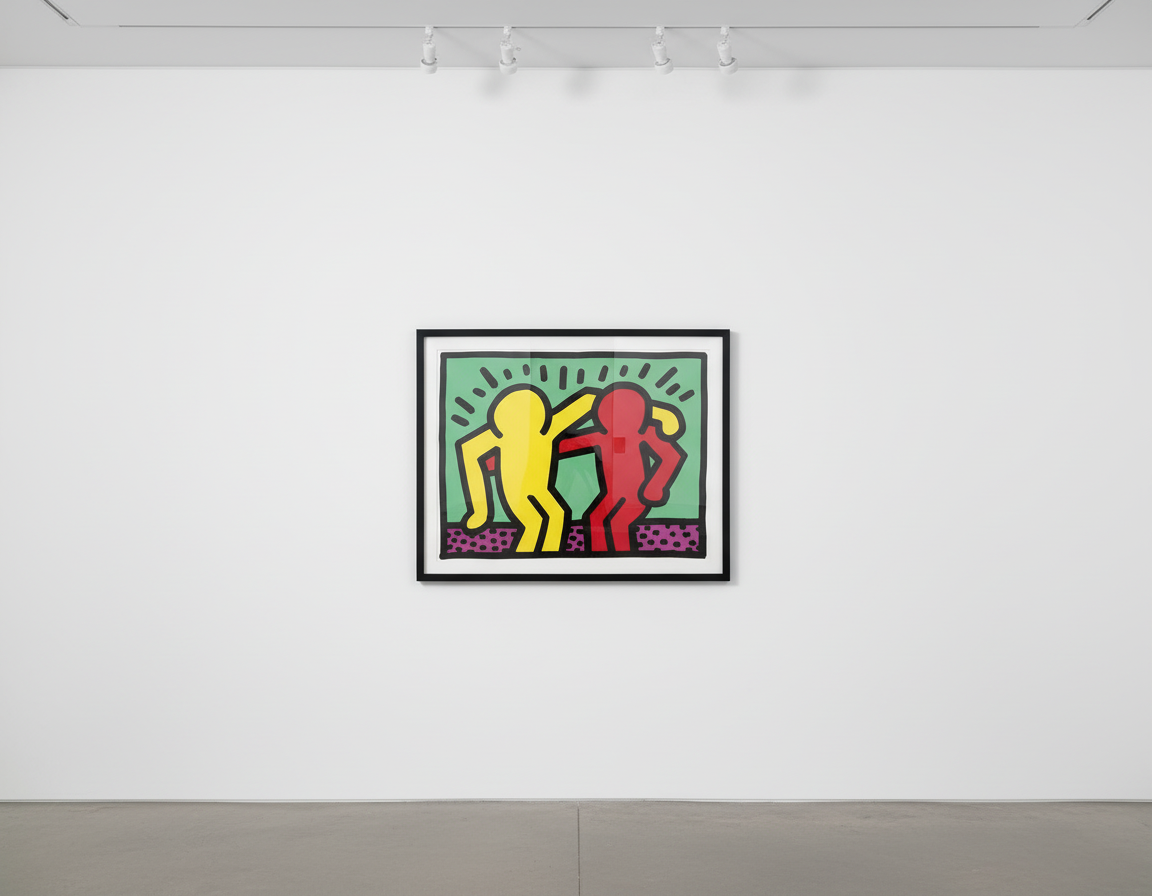
Pop Shop I (A) (Littmann PP. 82) — Keith Haring. Available at Guy Hepner, New York.
Beyond individual works, Haring established the Keith Haring Foundation in 1989, shortly after his diagnosis, to ensure his legacy would continue supporting AIDS research and children's programs. His commitment to using art as a vehicle for change exemplified his belief that creativity carried inherent social responsibility. The political art of Keith Haring in this context was not merely commentary but direct action - fundraising, awareness-building, and community solidarity expressed through visual means.
While AIDS activism dominated the final years of his career, Keith Haring's political engagement extended far beyond any single cause. Throughout the 1980s, he created numerous works addressing apartheid in South Africa, producing powerful images that condemned racial segregation and called for international solidarity with the anti-apartheid movement. His "Free South Africa" series from 1985 depicted a small black figure being strangled by a larger white figure, communicating the violence of systemic oppression with characteristic directness.
Nuclear disarmament represented another crucial theme in Haring's political vocabulary. Growing up during the Cold War, Haring belonged to a generation acutely aware of the threat of nuclear annihilation. His imagery frequently featured mushroom clouds, radiant babies threatened by technological destruction, and figures fleeing from apocalyptic scenarios. These works captured the existential anxiety of the era while demanding viewers confront humanity's capacity for self-destruction.
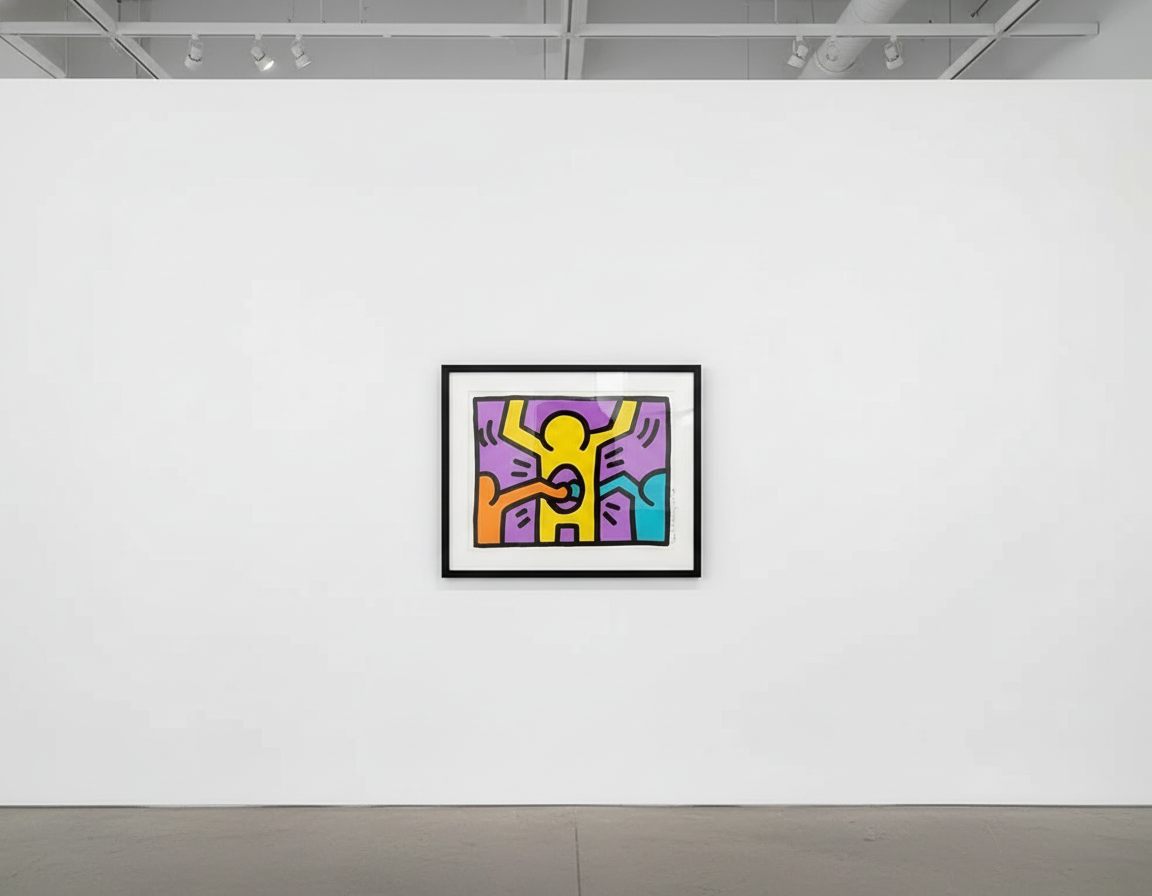
Pop Shop I (C) (Littmann PP. 83) — Keith Haring. Available at Guy Hepner, New York.
Haring also critiqued capitalism, consumerism, and the commodification of culture - even as his own work achieved commercial success. This tension led to fascinating creative decisions, including the establishment of his Pop Shop in New York in 1986. Rather than viewing commercial accessibility as antithetical to artistic integrity, Haring saw democratizing art ownership as itself a political act. By offering affordable merchandise featuring his designs, he challenged the exclusivity of the traditional art market while maintaining his provocative messaging.
The Pop Shop represents one of Keith Haring's most significant contributions to discussions about art, commerce, and accessibility. Located in SoHo, the retail space sold t-shirts, posters, magnets, and other items featuring Haring's iconic imagery at accessible price points. Critics initially dismissed this venture as selling out, but Haring defended it as consistent with his street art origins - both practices aimed to bring art to people who might never enter a gallery or museum.
The Pop Shop prints, including works from the celebrated Pop Shop I portfolio, demonstrate how Haring translated his political and social concerns into reproducible formats without diminishing their impact. These screenprints feature the same dynamic figures, bold outlines, and energetic compositions found in his larger works, proving that scale and exclusivity were never prerequisites for meaningful art. The portfolio captures Haring's visual vocabulary at its most refined - dancing figures, barking dogs, and radiant babies rendered in vibrant color combinations that remain instantly recognizable decades later.
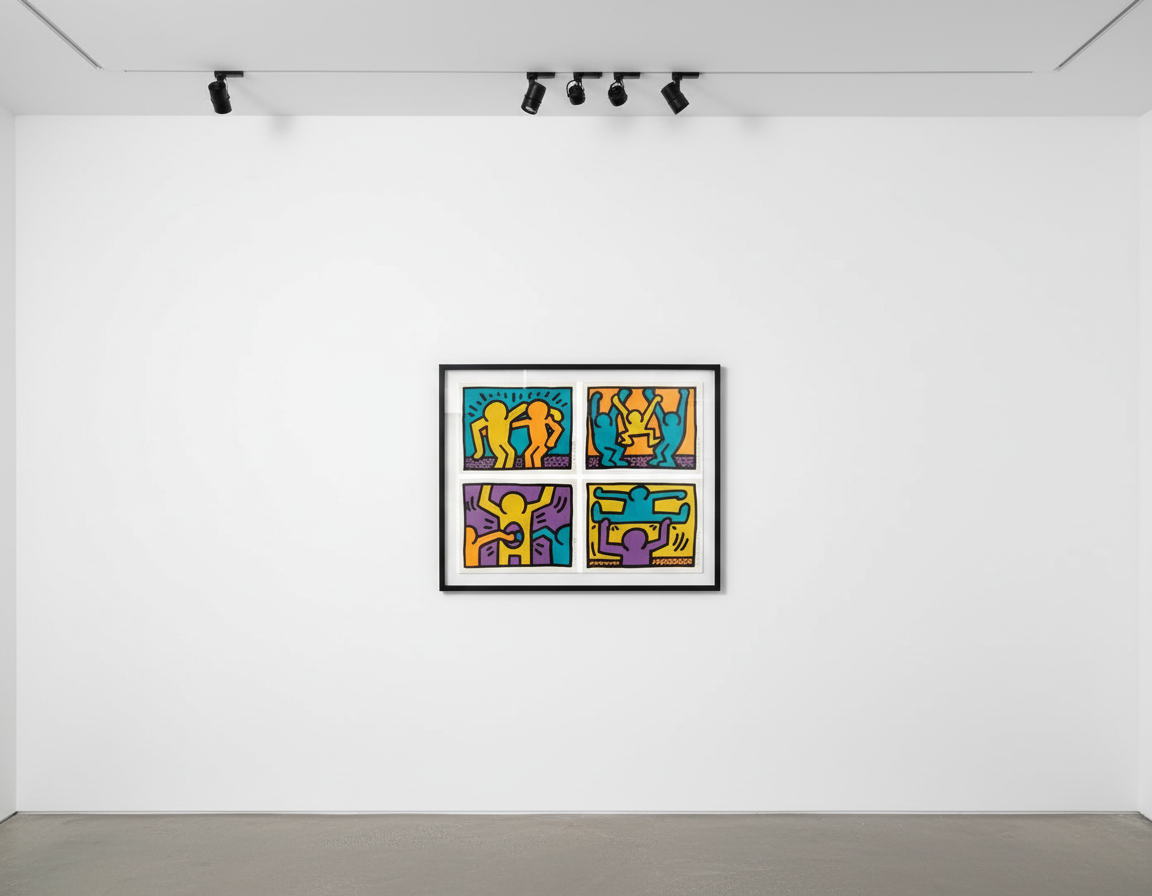
Pop Shop I (Littmann PP. 82 - 83) — Keith Haring. Available at Guy Hepner, New York.
According to the Art Basel and UBS Global Art Market Report, works by artists who successfully bridged fine art and popular culture have demonstrated remarkable market resilience. Haring's prints consistently perform strongly at auction, with both Christie's and Sotheby's regularly featuring his work in contemporary sales. Collectors increasingly recognize that Haring's political art offers not only aesthetic appeal but historical significance as documentation of crucial social movements.
The market for Keith Haring's political art has strengthened considerably as institutions and private collectors reassess the importance of activist art from the 1980s. Major auction results at Christie's and Sotheby's confirm sustained demand across Haring's oeuvre, with particular interest in works that directly address social and political themes. This collector enthusiasm reflects broader cultural conversations about art's role in advocacy and the enduring relevance of Haring's messaging.
For contemporary collectors, acquiring the political art of Keith Haring represents an opportunity to own work that functions simultaneously as aesthetic object, historical artifact, and ongoing statement of values. Unlike purely decorative pieces, Haring's politically engaged works invite continued dialogue about issues that remain unresolved - healthcare access, racial justice, economic inequality, and LGBTQ+ rights. This layered significance ensures that his work maintains both cultural relevance and market desirability.
Guy Hepner is proud to offer exceptional works by Keith Haring, including prints from his iconic Pop Shop series. Our gallery specializes in sourcing museum-quality pieces by this influential artist, providing collectors with access to authenticated works accompanied by comprehensive provenance documentation. Whether you are building a focused collection of political art or seeking a statement piece that embodies the energy of 1980s New York, our team offers personalized guidance throughout the acquisition process. Contact Guy Hepner today to inquire about available works by Keith Haring and discover how his revolutionary vision can enhance your collection.
Explore Keith Haring prints for sale at Guy Hepner: Andy Mouse, Apocalypse, Bad Boys, Chocolate Buddha, Fertility.
Related Series