Keith Haring’s Iconography
Keith Haring's Iconography
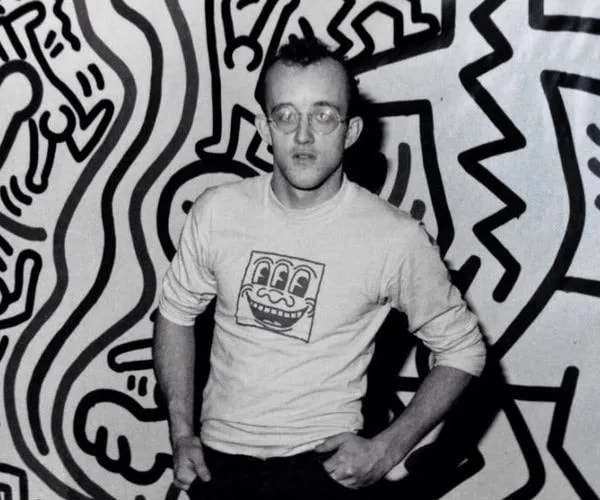
Keith Haring remains one of the most influential American artists of the twentieth century, his bold visual vocabulary transcending the boundaries of fine art to become embedded in global popular culture. Emerging from the vibrant New York art scene of the early 1980s, Haring developed an instantly recognizable pictorial language—thick black outlines, pulsating energy lines, and a cast of repeating symbolic figures that communicate across linguistic and cultural barriers. His iconography speaks to universal human experiences: love, birth, death, technology, sexuality, and social justice. Understanding Keith Haring's symbols is essential for appreciating both the depth of his artistic practice and the enduring relevance of his work in today's art market.
The Radiant Baby: Innocence, Hope, and Spiritual Energy
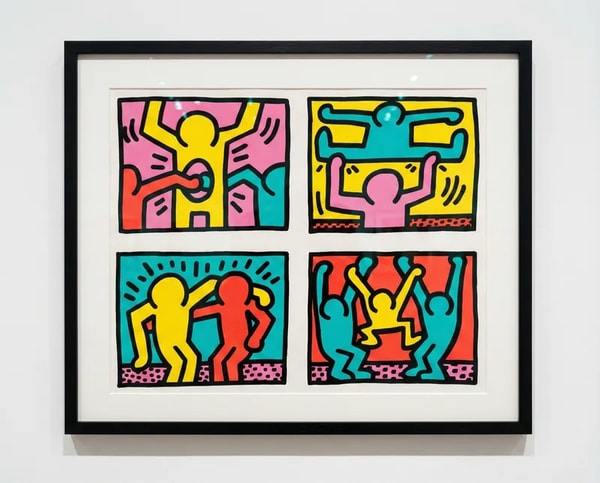
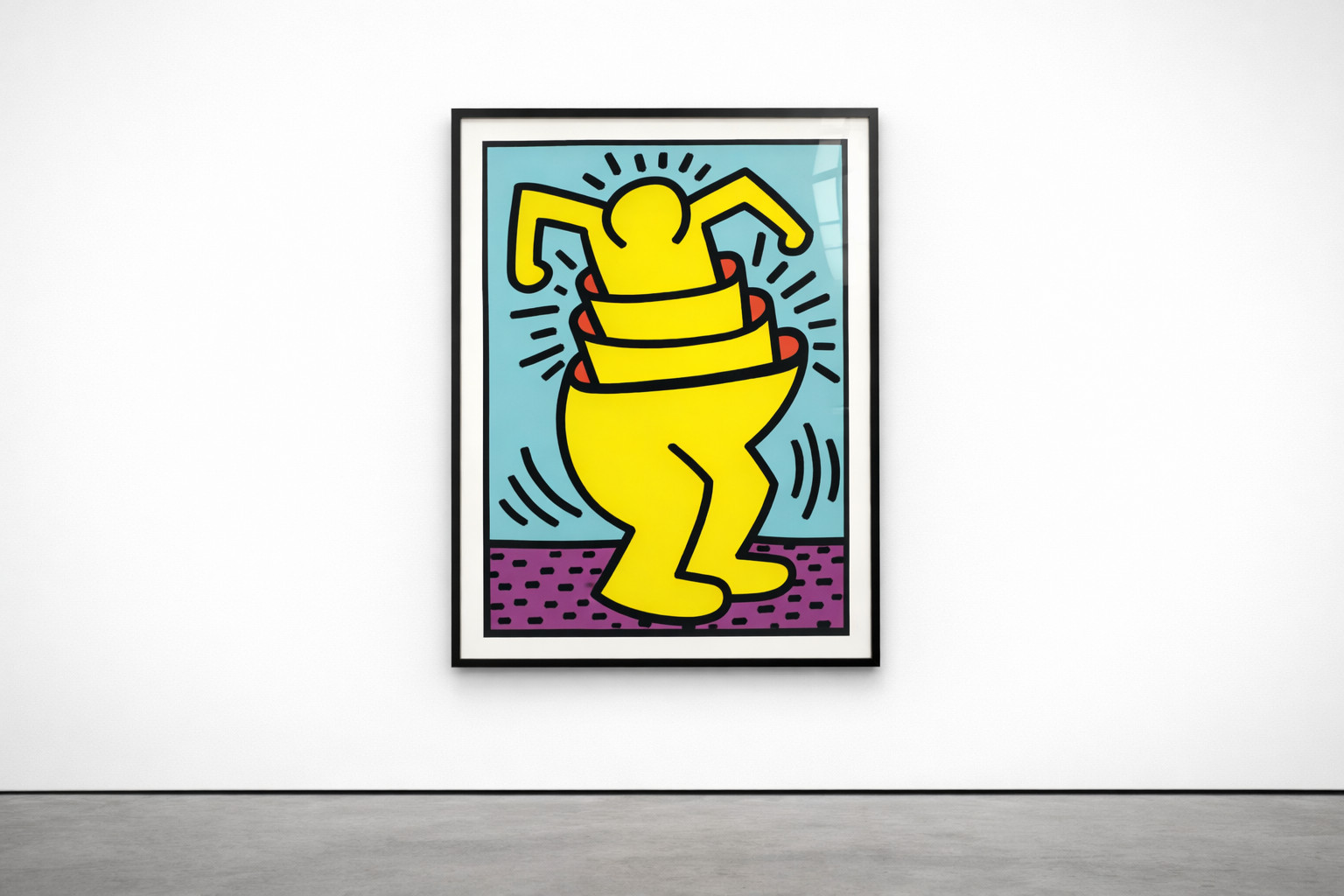
At the center of Keith Haring's iconographic system stands the Radiant Baby—a crawling infant rendered in bold black lines, surrounded by emanating rays of energy. This deceptively simple image became Haring's most recognizable tag, appearing on subway walls, gallery canvases, and public murals throughout his prolific career. The Radiant Baby represents purity, potential, and the transformative power of new life. For Haring, this motif carried quasi-spiritual significance, embodying what he described as the untarnished truth that children bring into the world.
"Babies represent the possibility of the future," Haring explained in interviews. "They are the bearers of all potential." The radiating lines surrounding the infant suggest both divine illumination and kinetic energy—a visual language borrowed equally from Christian iconography and the pulsing rhythms of hip-hop and electronic music that defined downtown Manhattan in the 1980s. The Radiant Baby appears throughout Haring's oeuvre, from his earliest chalk drawings in New York subway stations to his monumental public commissions, serving as a consistent reminder of humanity's capacity for renewal and hope.
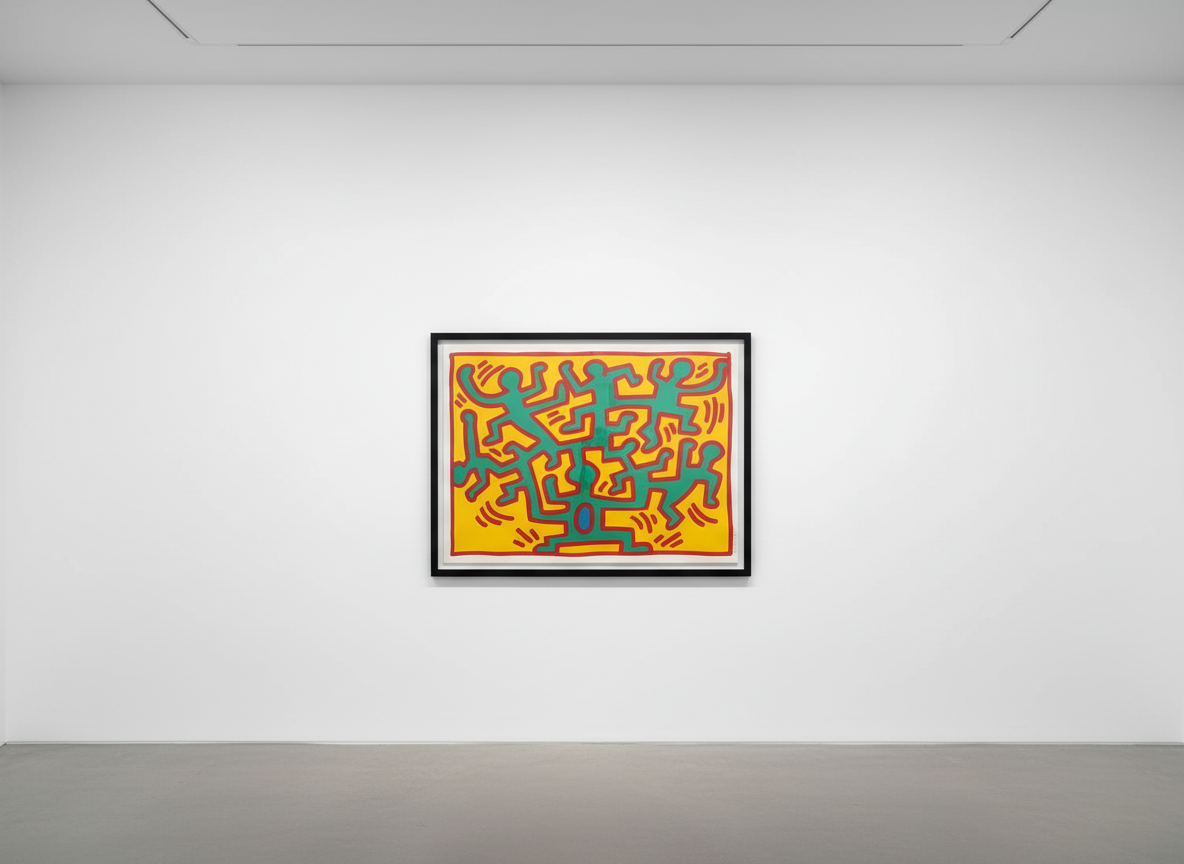
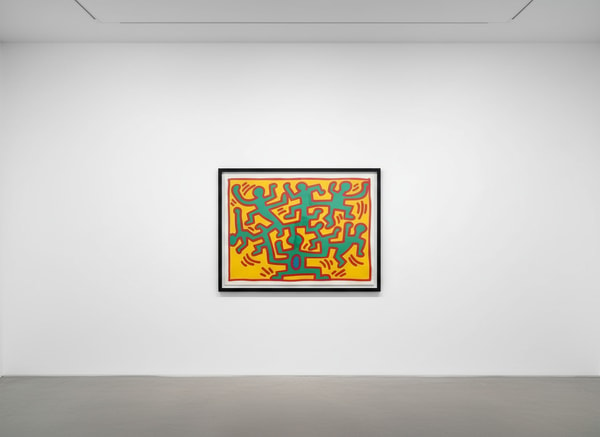
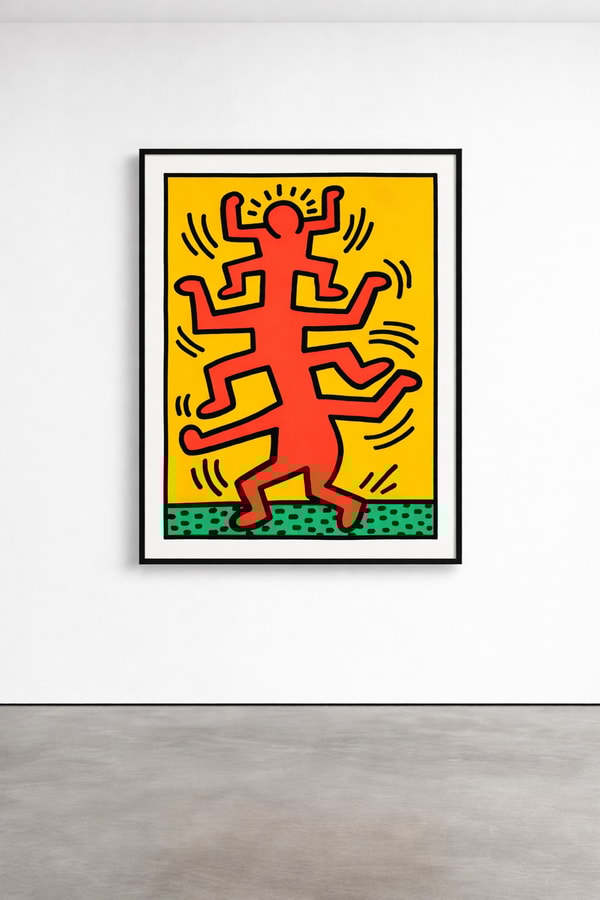
Growing 2 (Littmann PP. 90) — Keith Haring. Available at Guy Hepner, New York.
Barking Dogs, Three-Eyed Monsters, and the Critique of Power
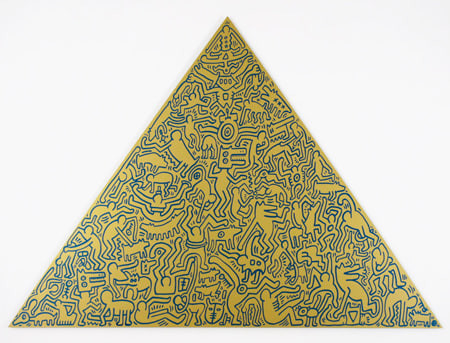
Beyond the optimism of the Radiant Baby, Keith Haring's iconography encompasses darker, more confrontational symbols that reflect his engagement with social and political issues. The Barking Dog—a stylized canine figure with an open mouth and aggressive posture—appears throughout Haring's work as a symbol of authority, aggression, and the abuse of power. This motif often represents oppressive systems, whether governmental, corporate, or societal, that threaten individual freedom and collective well-being.
Equally significant is the Three-Eyed Monster, a menacing creature that embodies the destructive forces Haring observed in contemporary society. These figures frequently appear in compositions depicting violence, nuclear threat, and systemic oppression—themes that preoccupied Haring throughout his career. His work from the mid-1980s increasingly addressed the AIDS crisis, apartheid in South Africa, and the dangers of unchecked capitalism, with these monstrous figures serving as visual stand-ins for institutional malevolence.
The UFO and television motifs extend Haring's critique into the realm of technology and media manipulation. Flying saucers appear as ambiguous symbols—sometimes threatening, sometimes liberating—while television sets often represent the hypnotic, controlling influence of mass media on public consciousness. In Haring's visual lexicon, the TV becomes a kind of mind-control device, its screen replacing human faces or radiating the same energy lines that emanate from his more positive symbols. This prescient commentary on media saturation resonates powerfully in our current digital age.
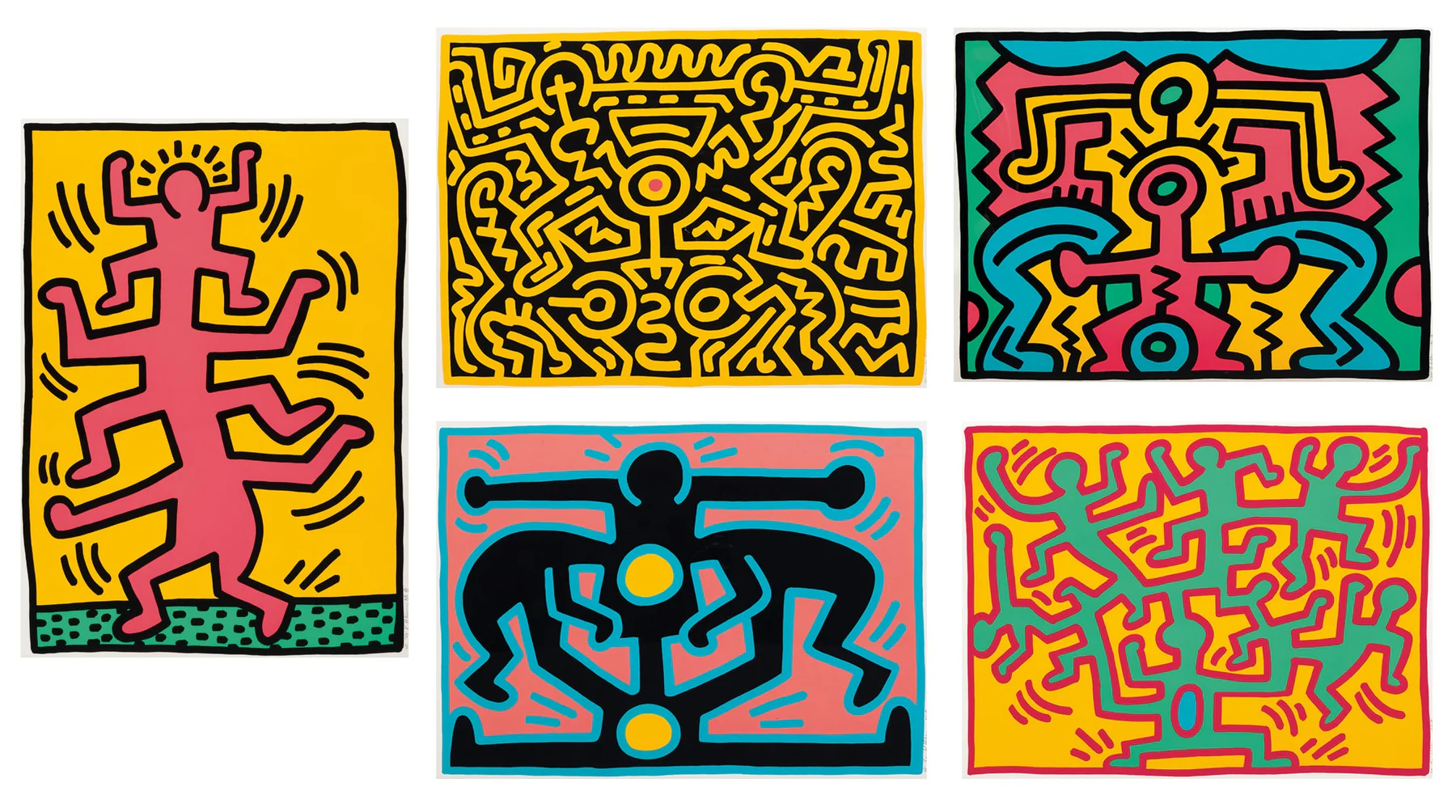
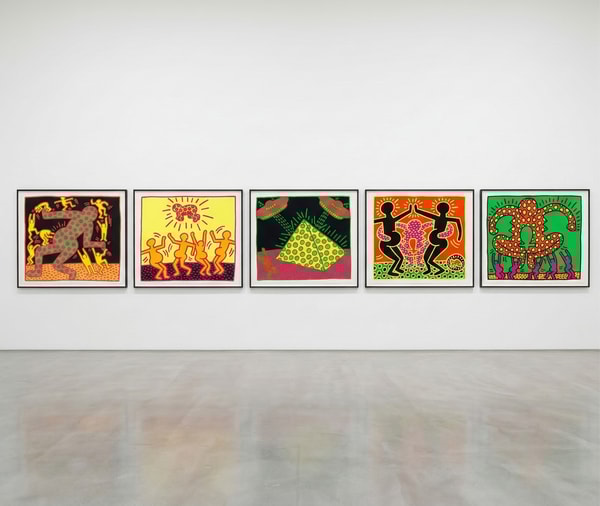
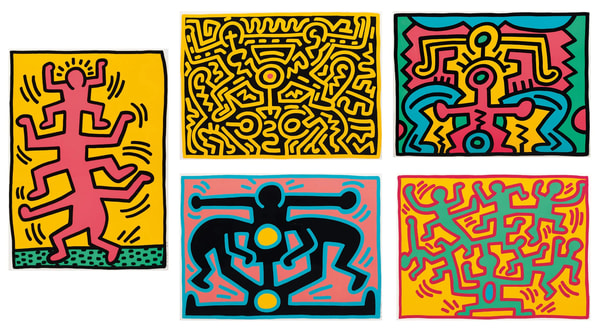
Growing 1-5 (Littmann PP. 88 -91) — Keith Haring. Available at Guy Hepner, New York.
Growth, Transformation, and the Living Line
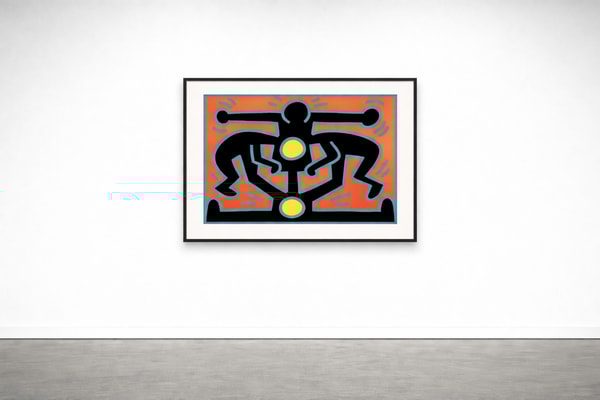
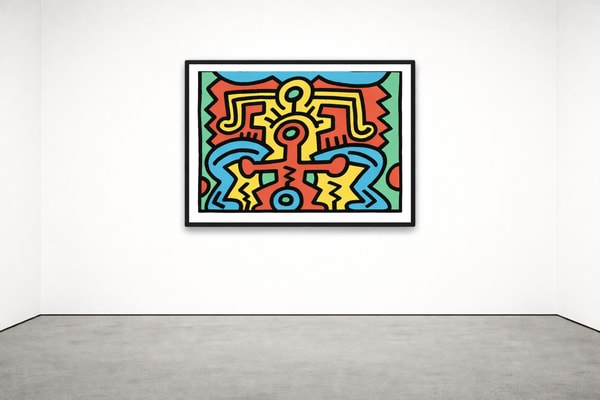
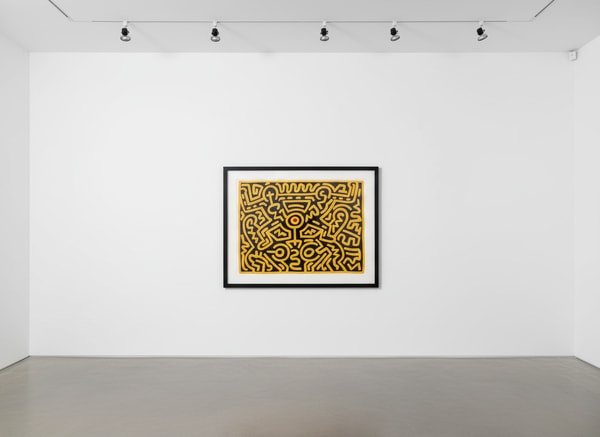
Keith Haring's Growing series exemplifies his ability to imbue simple graphic forms with profound metaphorical weight. These works depict human figures in states of transformation—bodies sprouting additional limbs, merging with plant forms, or multiplying in fractal patterns that suggest both biological growth and spiritual evolution. The Growing prints demonstrate Haring's masterful command of the silkscreen medium, with their precise registration and vibrant color relationships achieving a visual impact that transcends their modest scale.
In these compositions, Haring explores themes of human potential and interconnectedness. Figures branch outward like trees, their forms suggesting both individual development and collective expansion. The energy lines that define Haring's style take on new significance here, representing the life force that animates all living things. This series connects to broader artistic traditions—from Henri Matisse's cut-outs to indigenous pictographic systems—while remaining unmistakably contemporary in its graphic directness.
The Growing works also reflect Haring's understanding of art as a democratic medium. Like all his printed editions, these pieces were conceived to be accessible, bringing museum-quality artworks into the hands of collectors who might not afford unique canvases. This democratizing impulse defined Haring's practice, from his Pop Shop enterprise to his public murals, and continues to inform how his work circulates in the market today.
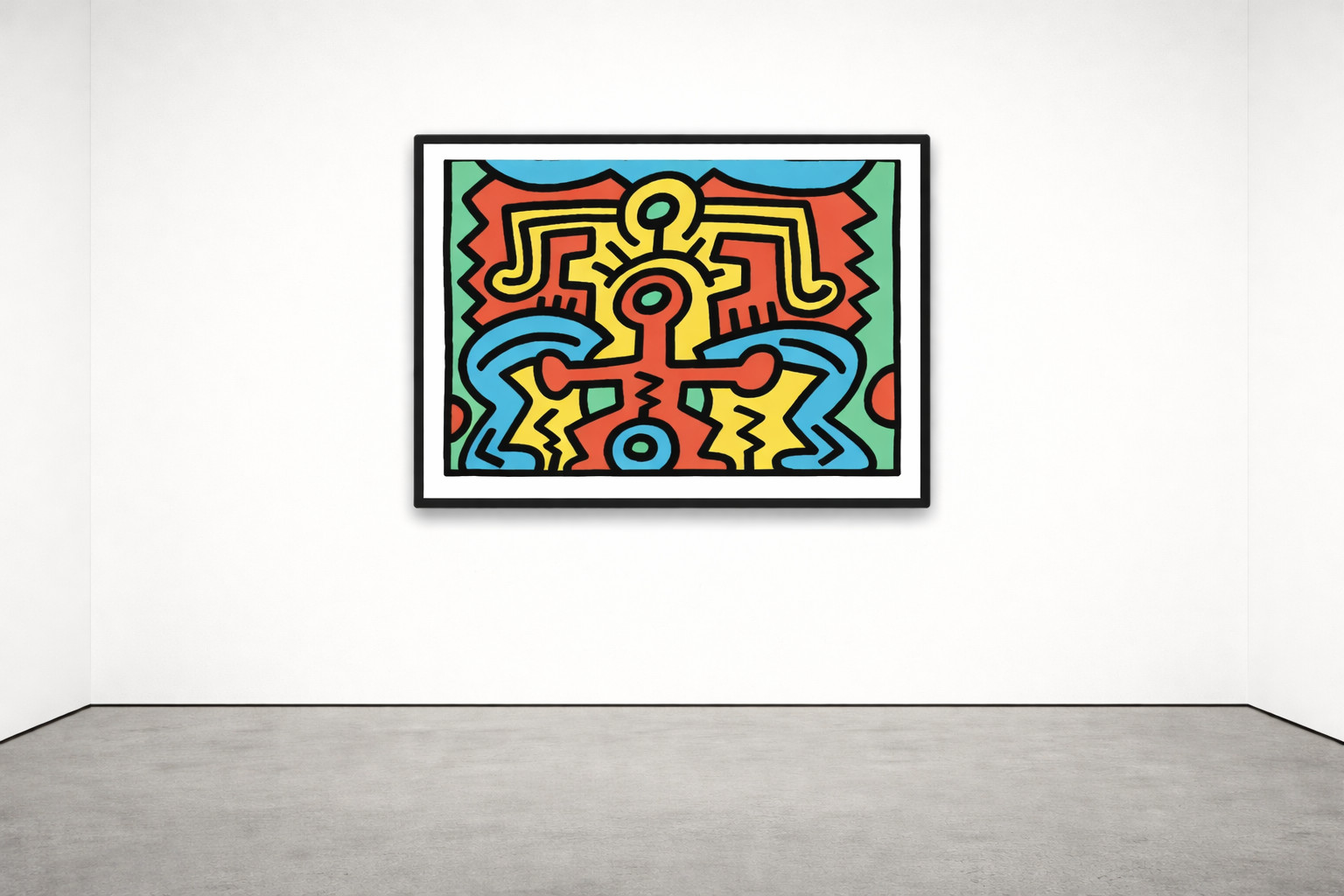
Growing 5 (Littmann PP. 91) — Keith Haring. Available at Guy Hepner, New York.
Market Significance and Collector Interest
Keith Haring's position in the contemporary art market reflects both his historical importance and his continued cultural relevance. According to the Art Basel and UBS Global Art Market Report, post-war and contemporary American artists with strong brand recognition and accessible visual languages continue to attract significant collector interest across demographics. Haring's work exemplifies this category, appealing equally to established collectors seeking blue-chip holdings and younger buyers drawn to his graphic sensibility and social messaging.
Auction results at Christie's and Sotheby's demonstrate sustained demand for Haring's prints and works on paper, with his signed editions achieving consistent results. The Growing series represents a particularly compelling entry point for collectors, combining the artist's signature style with the tactile quality and editioning transparency that characterize his finest print work. As institutional interest in 1980s New York art intensifies—evidenced by major museum retrospectives and scholarly publications—Haring's market position continues to strengthen.
Acquire Keith Haring at Guy Hepner
Guy Hepner is pleased to offer exceptional works by Keith Haring, including prints from the celebrated Growing series. Our gallery specializes in sourcing museum-quality pieces by the most significant artists of the twentieth and twenty-first centuries, providing collectors with expert guidance and comprehensive provenance documentation. To inquire about available Keith Haring works or to discuss building your collection, contact our team at Guy Hepner for a private consultation.
Browse Series
Works For Sale
Available through Guy Hepner
Keith Haring
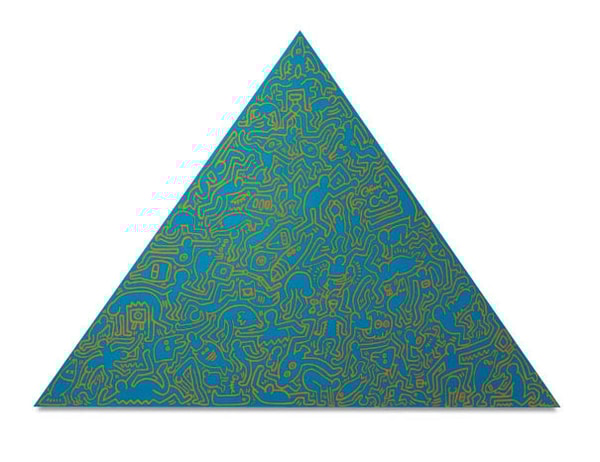
Pyramid Teal
1989
Enquire →
Keith Haring
Growing 3 (Littmann PP. 90)
1988
Enquire →
Keith Haring
Growing 2 (Littmann PP. 90)
1988
Enquire →
Keith Haring
Growing 1-5 (Littmann PP. 88 -91)
1988
Enquire →
Keith Haring
Growing 5 (Littmann PP. 91)
1988
Enquire →
Keith Haring
Growing 4 (Littmann PP. 91)
1988
Enquire →
Keith Haring
Pyramid Gold
1989
Enquire →
Keith Haring
Growing 1 (Littmann PP. 88 - 89)
1988
Enquire →
More from Guy Hepner