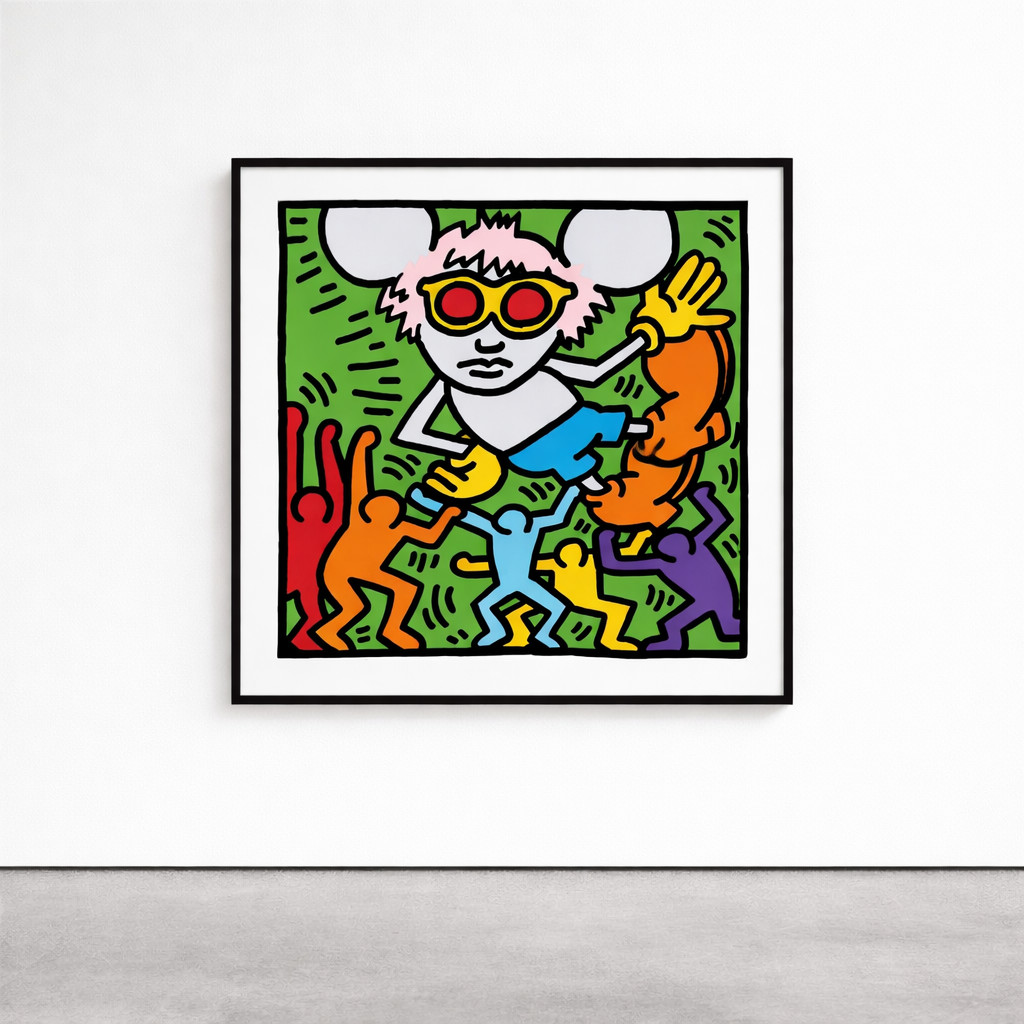
Andy Mouse

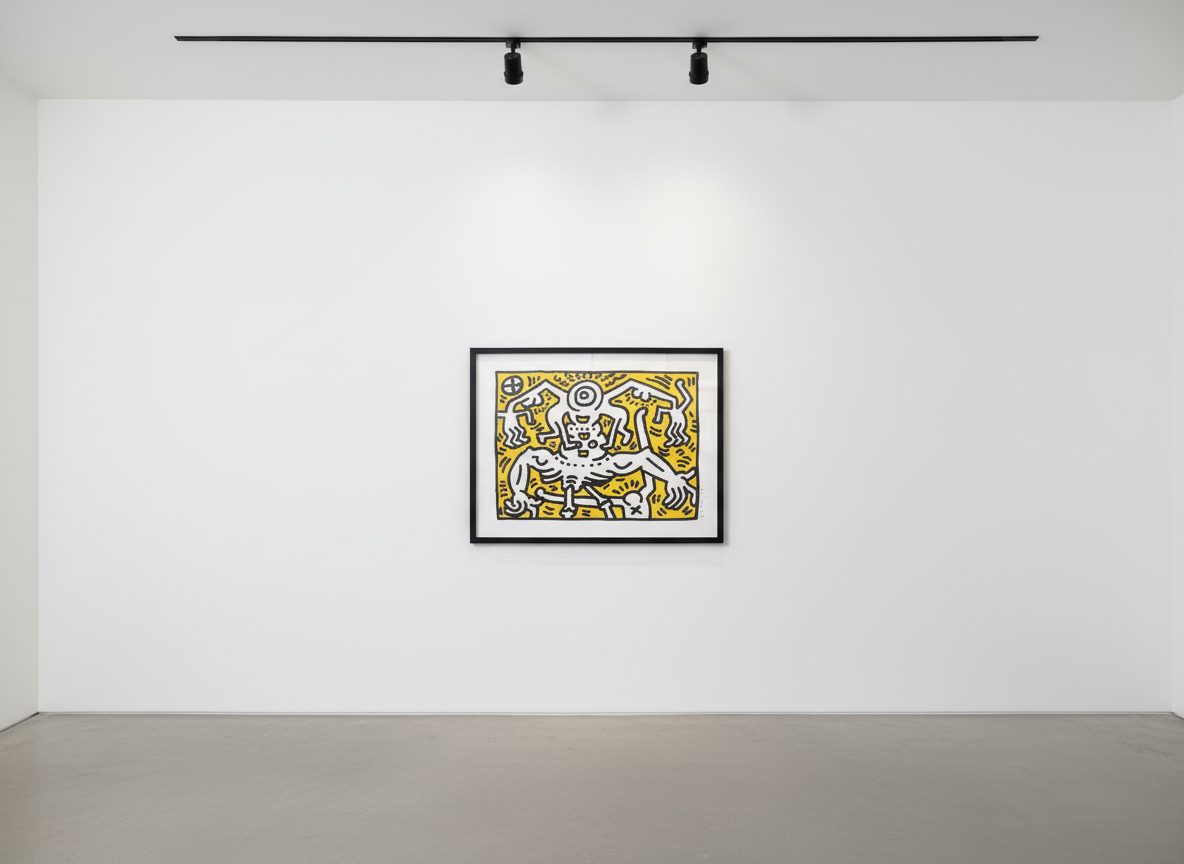
In the vibrant landscape of 1980s New York City, amidst the dynamic interplay of art, culture, and commerce, Keith Haring emerged as one of the most influential artists of his generation. His instantly recognizable visual language—bold lines, kinetic figures, and symbolic imagery—transformed urban spaces into public galleries and redefined the relationship between fine art and popular culture. Keith Haring's work resonated with audiences across socioeconomic boundaries, establishing him as a pivotal figure in the downtown New York art scene alongside contemporaries like Jean-Michel Basquiat and Andy Warhol.
The establishment of the Pop Shop in 1986 represented a groundbreaking venture that would challenge conventional boundaries between art and the public sphere. Keith Haring, already renowned for his infectious, emblematic imagery that adorned subway walls and cityscapes, sought to create a space where his art could be accessible to everyone, transcending the traditional confines of galleries and museums. This democratization of art was not merely a business decision but a philosophical stance that defined Keith Haring's entire artistic practice and continues to influence how we understand the intersection of commerce and creativity.
The Pop Shop, located in SoHo—a neighborhood synonymous with the avant-garde art scene—was more than just a retail outlet. It was an extension of Keith Haring's artistic ethos and a physical manifestation of his democratic vision for art. The shop's interior, adorned with Haring's signature motifs including barking dogs, radiant babies, and flying saucers, offered a dizzying immersion into his world. The walls, floor, and ceiling became canvases, blurring the lines between commercial space and art installation in ways that presaged contemporary experiential retail decades before it became standard practice.
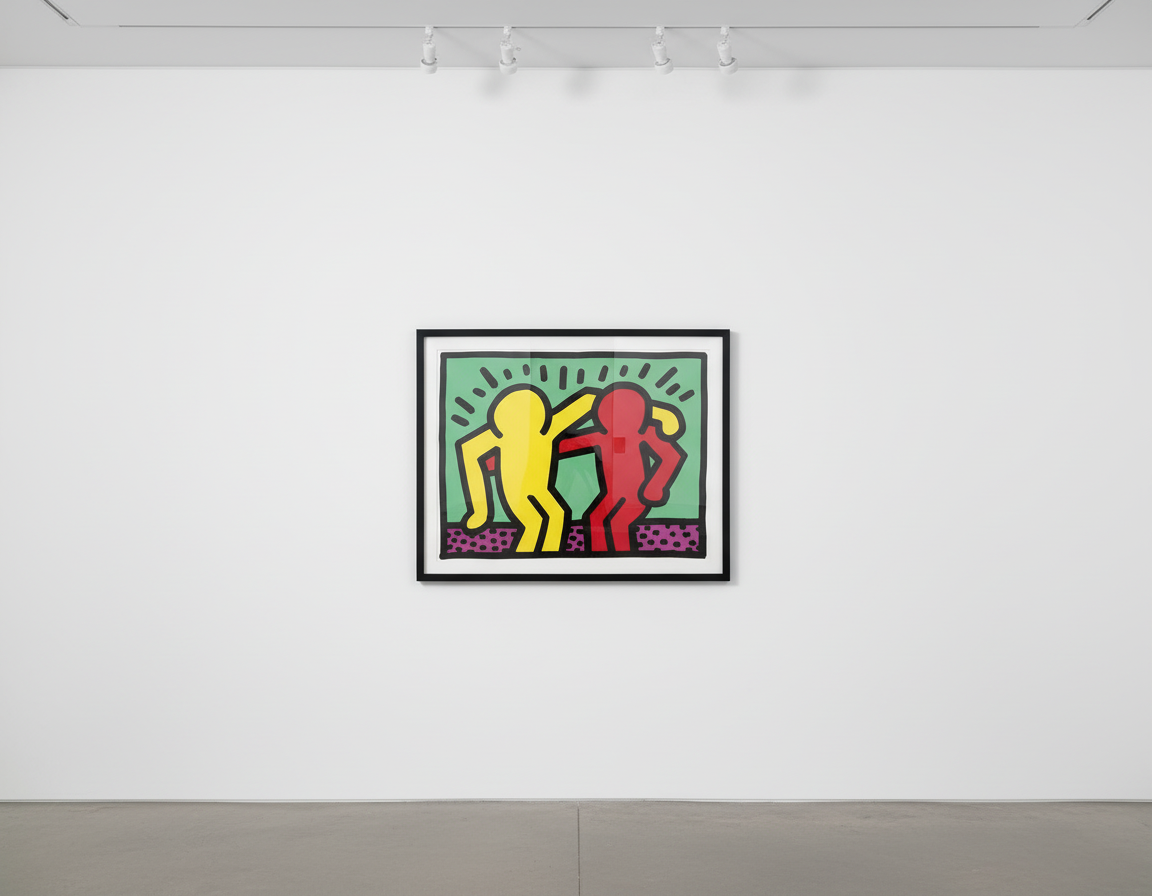
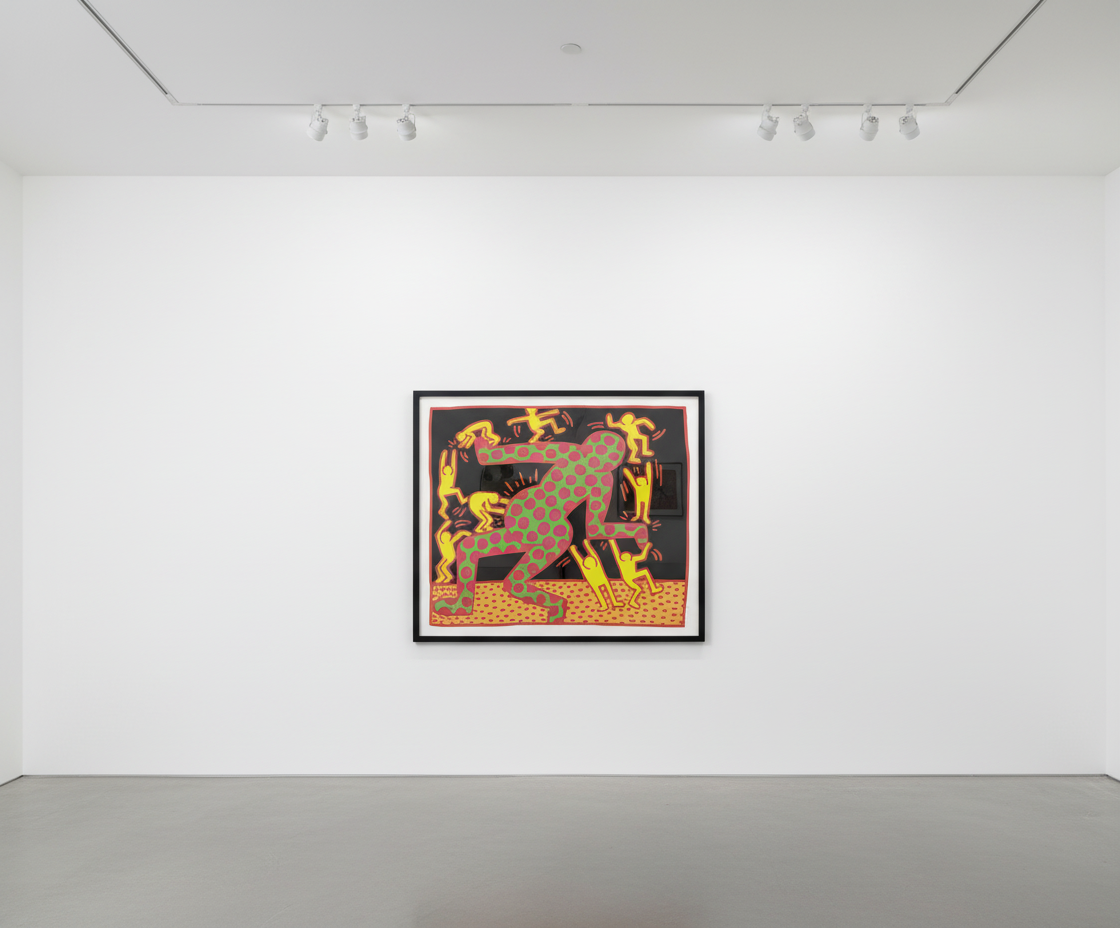
Pop Shop I (A) (Littmann PP. 82) — Keith Haring. Available at Guy Hepner, New York.
Keith Haring's decision to sell his artwork and merchandise at affordable prices was revolutionary. He faced criticism from some quarters of the art establishment, who viewed the commercialization of his work as a dilution of artistic integrity. However, Haring defended his approach passionately, arguing that art should not be the exclusive province of the wealthy and that the Pop Shop allowed him to bypass the traditional gallery system that often alienated ordinary people from engaging with contemporary art.
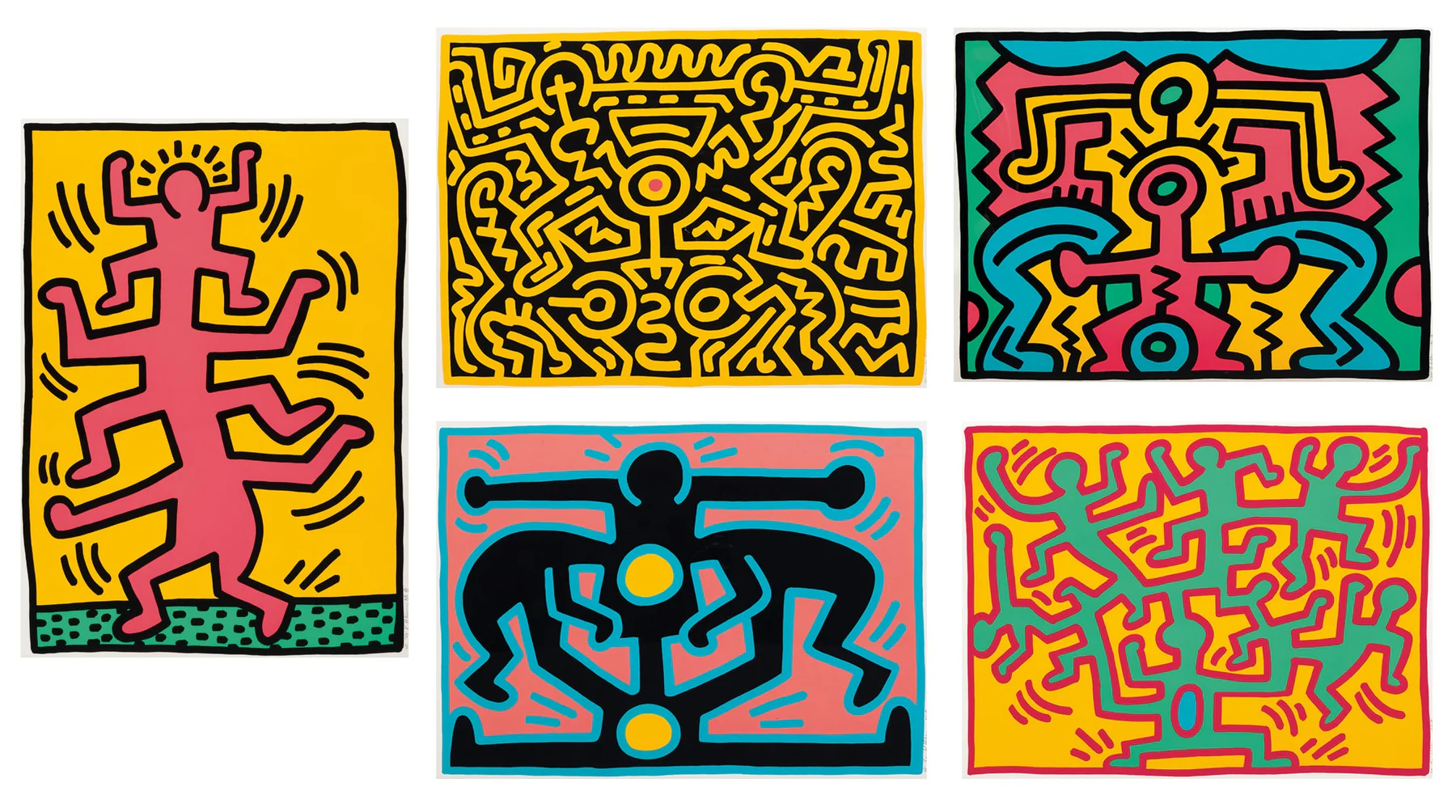
The Pop Shop print series, created to commemorate and extend the shop's mission, stands as one of Keith Haring's most celebrated bodies of work. These screenprints capture the essential vitality that made Haring's art so compelling—dynamic figures in perpetual motion, bold outlines filled with vibrant colors, and a sense of joy and energy that remains palpable decades later. The Pop Shop I portfolio exemplifies Keith Haring's masterful ability to distill complex emotions and ideas into deceptively simple graphic forms that communicate across cultural and linguistic barriers.
Each print in the series demonstrates Keith Haring's sophisticated understanding of composition and color theory. The works feature his characteristic interlocking figures, dancing humans, and symbolic imagery that addresses themes of love, unity, birth, death, and the celebration of life. The technical execution of these screenprints reveals Haring's printmaking expertise, with precise registration and saturated colors that maintain their intensity and appeal to this day.
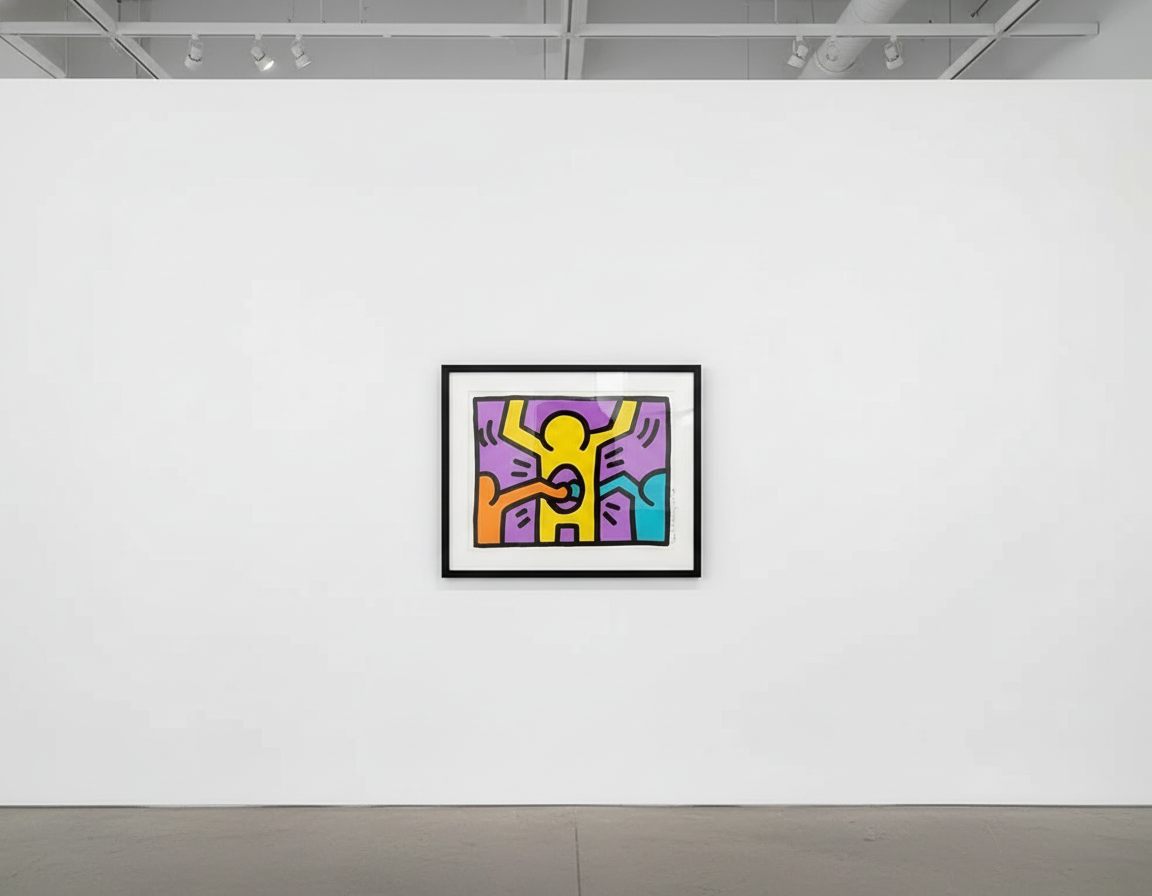
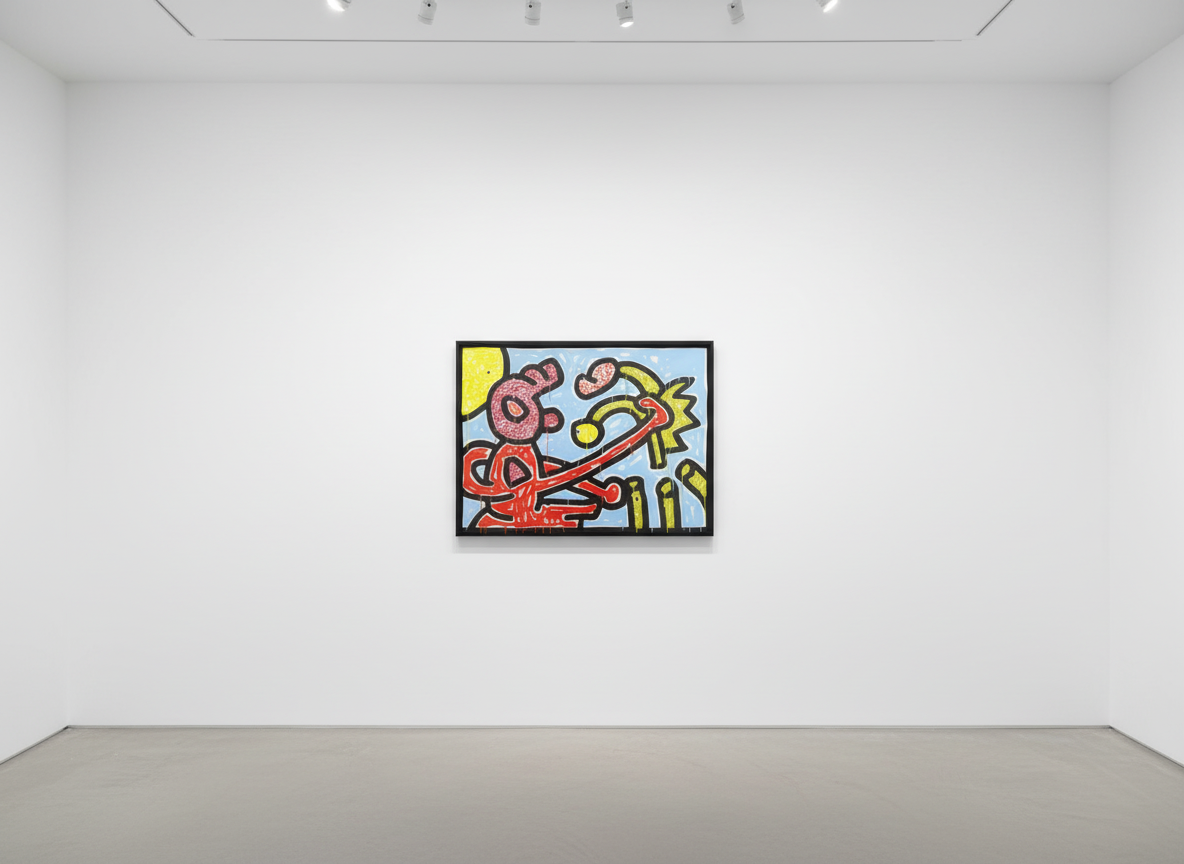
Pop Shop I (C) (Littmann PP. 83) — Keith Haring. Available at Guy Hepner, New York.
The market for Keith Haring's work has demonstrated remarkable strength and consistent growth over the past two decades. According to data from Christie's and Sotheby's, Haring's auction results have repeatedly exceeded estimates, reflecting sustained institutional and private collector interest. The Art Basel and UBS Global Art Market Report has consistently identified Haring as a key figure in the post-war and contemporary art segment, with his prints and works on paper representing accessible entry points for new collectors while his major paintings command multi-million dollar results at international auctions.
Keith Haring's Pop Shop prints hold particular significance within his oeuvre for several reasons. They represent a confluence of his artistic vision and social philosophy, embodying his belief that art should be integrated into daily life rather than sequestered in elite spaces. For collectors, these works offer direct engagement with one of the twentieth century's most important artistic voices at relative accessibility compared to unique works. The prints' museum-quality production values and limited editions ensure their continued desirability among serious collectors building comprehensive contemporary art holdings.
The enduring appeal of Keith Haring's work extends beyond nostalgia for 1980s New York. His imagery addresses universal themes—the celebration of human connection, the critique of social injustice, and the affirmation of life in the face of mortality—that resonate powerfully with contemporary audiences. Haring's premature death in 1990 from AIDS-related complications at age thirty-one adds poignant weight to works that celebrate vitality and human energy, making his artistic legacy both a cultural time capsule and a timeless meditation on existence.
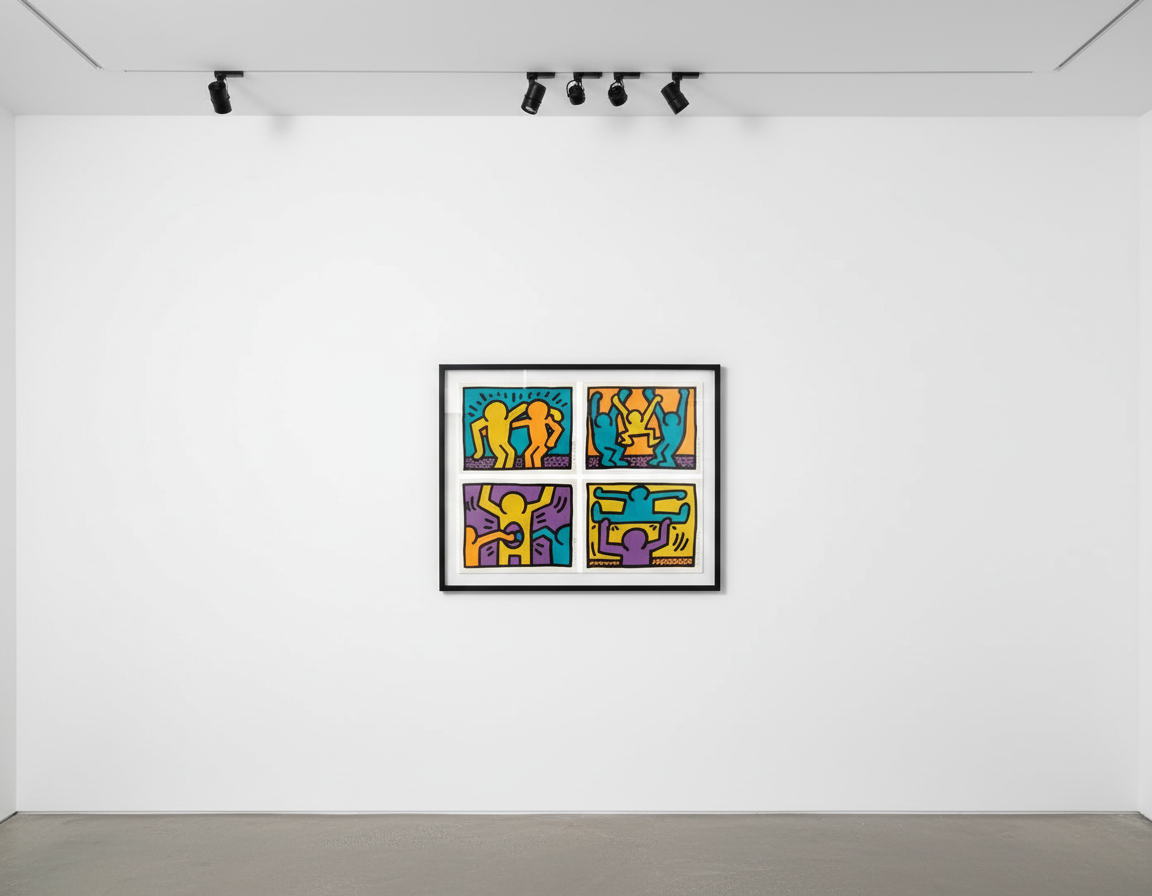
Pop Shop I (Littmann PP. 82 - 83) — Keith Haring. Available at Guy Hepner, New York.
Keith Haring's influence on subsequent generations of artists, designers, and cultural practitioners cannot be overstated. His integration of fine art principles with street art sensibilities, his embrace of commercial platforms as vehicles for artistic expression, and his unwavering commitment to social causes established templates that continue to inform contemporary practice. Major museum retrospectives at institutions worldwide have cemented his position in the art historical canon, while his imagery remains instantly recognizable to audiences who may have never visited a gallery.
The Pop Shop itself, though the original SoHo location closed in 2005, lives on through the Keith Haring Foundation, which continues to honor his legacy through education, AIDS-related causes, and programs serving children. The prints created for the shop stand as tangible artifacts of a moment when an artist dared to imagine a different relationship between creator and audience, between art and commerce, between the exclusive world of galleries and the democratic space of the street.
Guy Hepner is honored to offer works from Keith Haring's celebrated Pop Shop print series. Our gallery specializes in museum-quality contemporary art and maintains strong relationships with estates, foundations, and private collections worldwide. We invite collectors to inquire about available Keith Haring works by contacting our team via email at info@guyhepner.com or by telephone. Our specialists provide comprehensive acquisition services including condition reporting, provenance research, and installation consultation for collectors seeking to add significant Keith Haring pieces to their holdings.
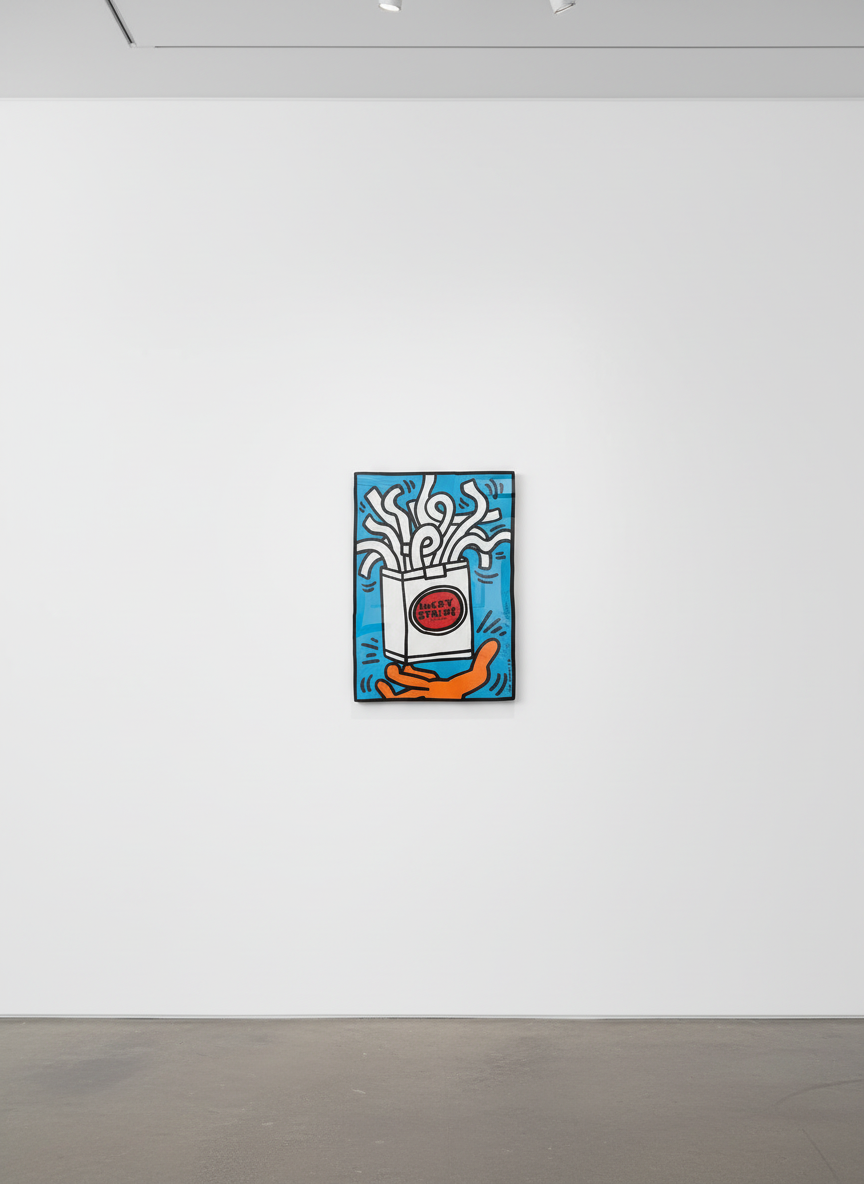
Explore Keith Haring prints for sale at Guy Hepner: Andy Mouse, Fertility, Flowers, Growing, Lucky Strike.
Related Series