Diamond Dust

The art of facial deconstruction has captivated contemporary collectors for decades, yet few artists have mastered this visual language with the distinctive clarity of James Joyce. Working at the intersection of pop art sensibility and conceptual abstraction, Joyce has developed an immediately recognisable artistic vocabulary that reduces the human face to its most essential components. His deconstructed faces - scattered arrangements of eyes, mouths, and circular forms - challenge viewers to recognise humanity in fragmented geometry, creating works that are simultaneously playful and profound.
James Joyce emerged as a significant voice in contemporary British art through his singular focus on the deconstructed smiley and clown face. His artistic practice centres on a compelling paradox: by separating the distinctive features that compose a recognisable face and scattering them across the canvas, Joyce creates compositions that are objectively abstract yet instantly readable. The viewer's mind instinctively reconstructs what the artist has deliberately dismantled, engaging in an unconscious act of pattern recognition that speaks to our fundamental human need to find faces in our environment.
This psychological phenomenon - known as pareidolia - becomes Joyce's artistic medium. Where other artists might paint portraits or explore figurative representation, Joyce strips the face down to its bare essentials: curved lines suggesting smiles, circular forms evoking eyes, geometric shapes implying the boundaries of expression. The result is work that operates on multiple levels simultaneously, functioning as pure abstraction while communicating unmistakable figurative content.
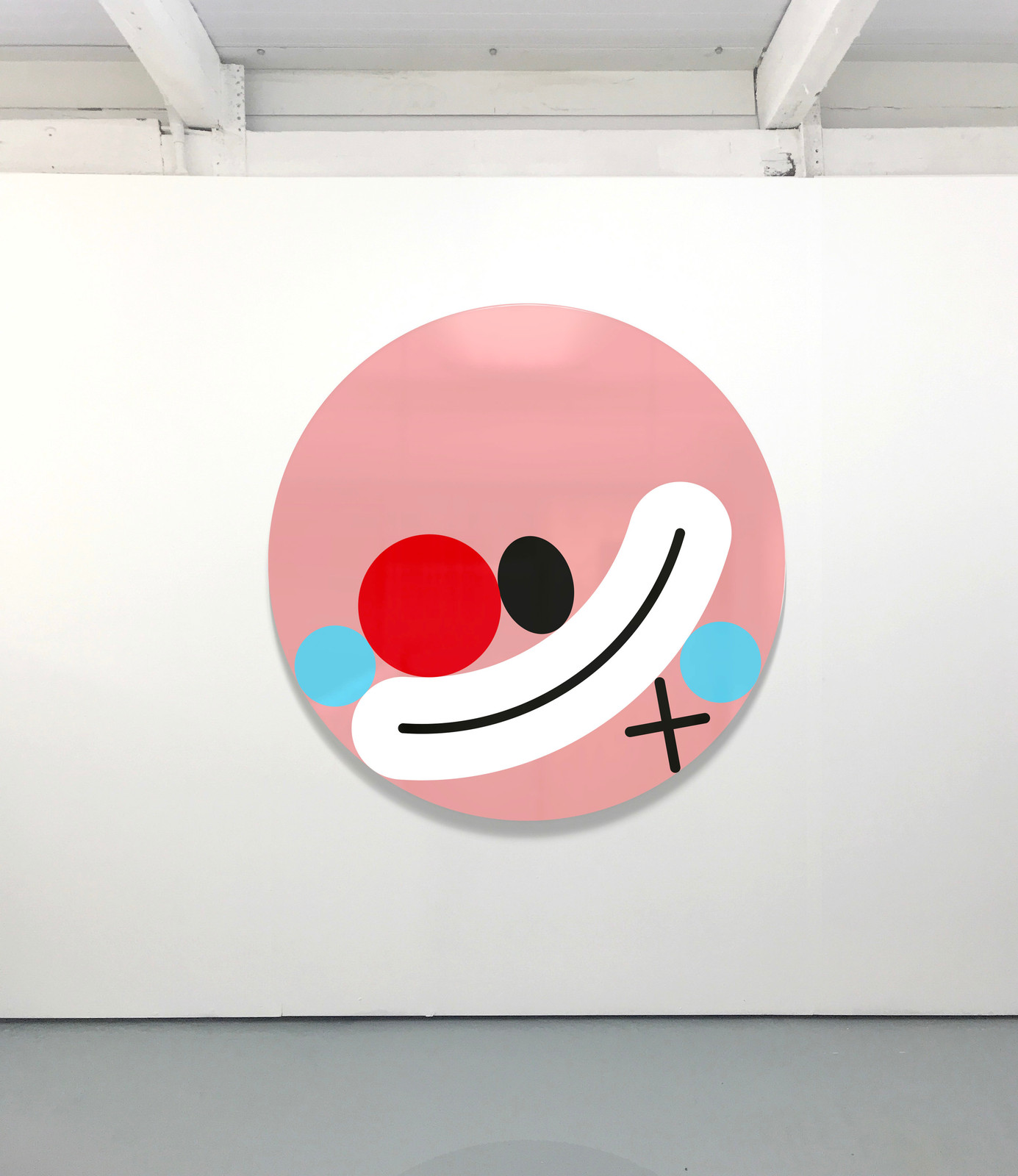
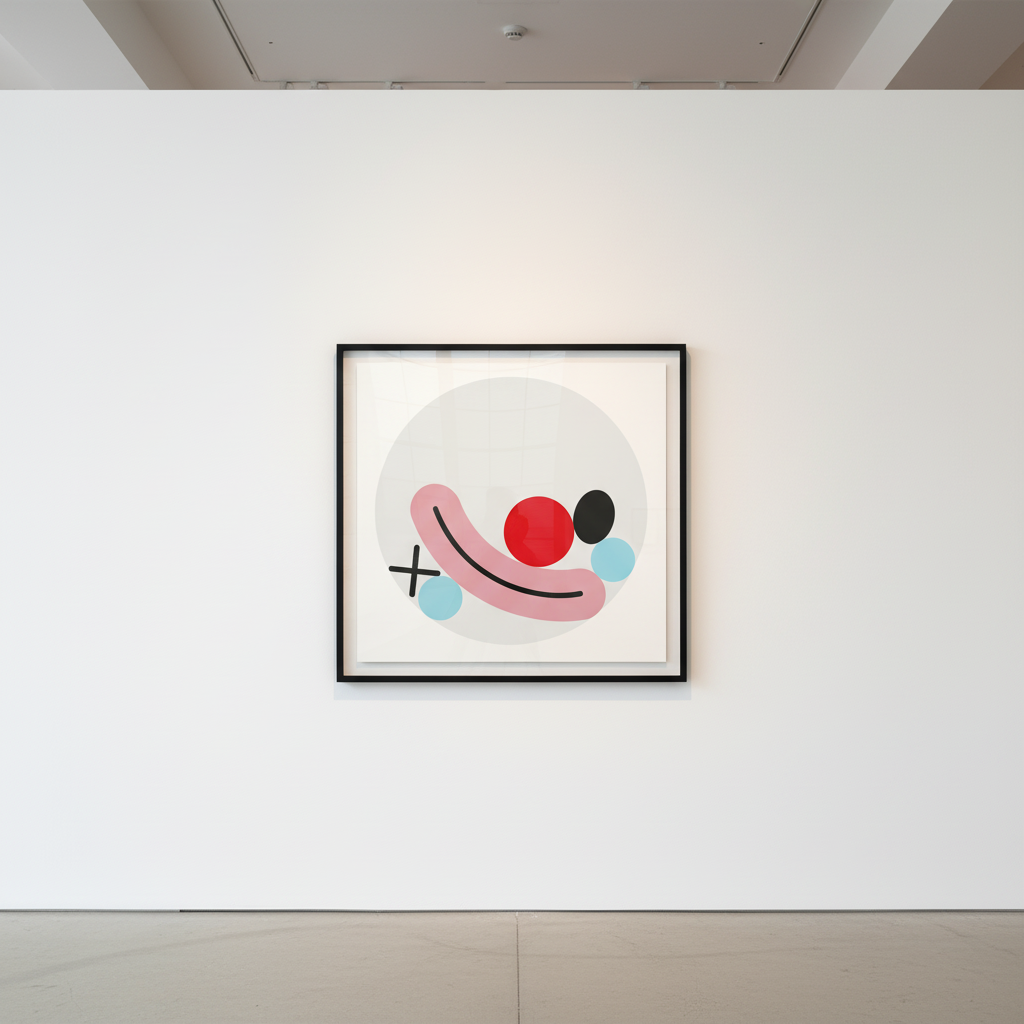
Pink Clown — James Joyce. Available at Guy Hepner, New York.
Joyce's significance within the contemporary art landscape was notably affirmed when Banksy selected him to participate in Dismaland, the provocative 2015 exhibition that reimagined the theme park as dystopian commentary. At this landmark show, Joyce presented a video installation featuring his iconic deconstructed face, introducing his work to an international audience and cementing his position within the sphere of contemporary artists engaging with popular iconography and cultural critique.
The practice of reducing recognisable imagery to essential forms has a distinguished lineage in contemporary art. Joyce's approach invites comparison to Damien Hirst's Mickey and Minnie Mouse series, where the YBA titan extrapolated the crude shapes composing the two Disney characters into compositions that appear as mere arrangements of circles yet remain unmistakably identifiable to viewers. Both artists understand that recognition operates through suggestion rather than literal representation - that the mind completes what the artist merely implies.
This territory of deconstructed popular imagery has demonstrated considerable strength at auction. According to market analyses referenced in Art Basel and UBS Survey reports, works that engage with recognisable cultural symbols while maintaining conceptual sophistication continue to attract serious collector interest. The accessibility of Joyce's subject matter - the universal smiley face, the archetypal clown - combined with the intellectual rigour of his deconstructive approach positions his work at a compelling intersection of commercial appeal and artistic credibility.
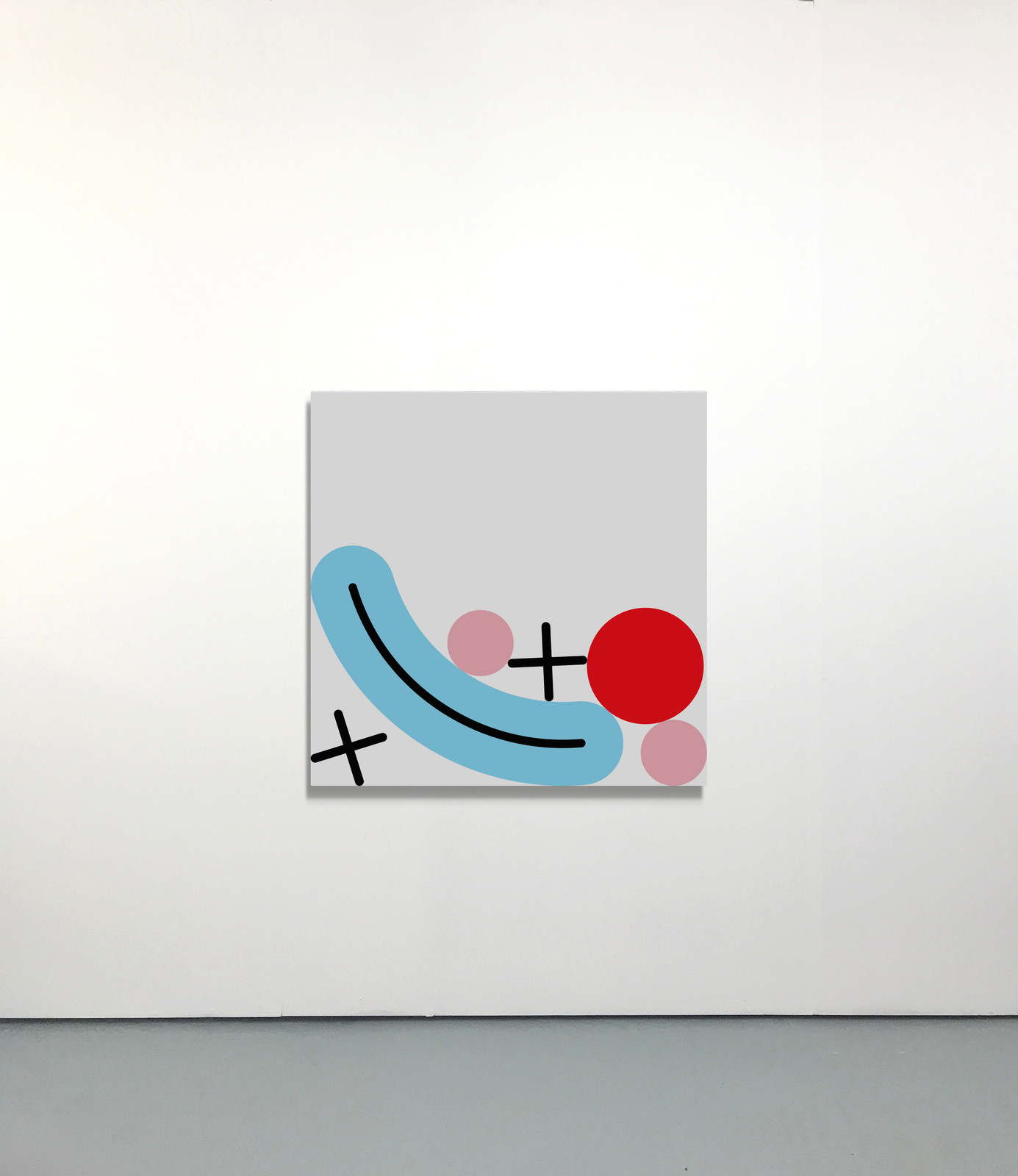
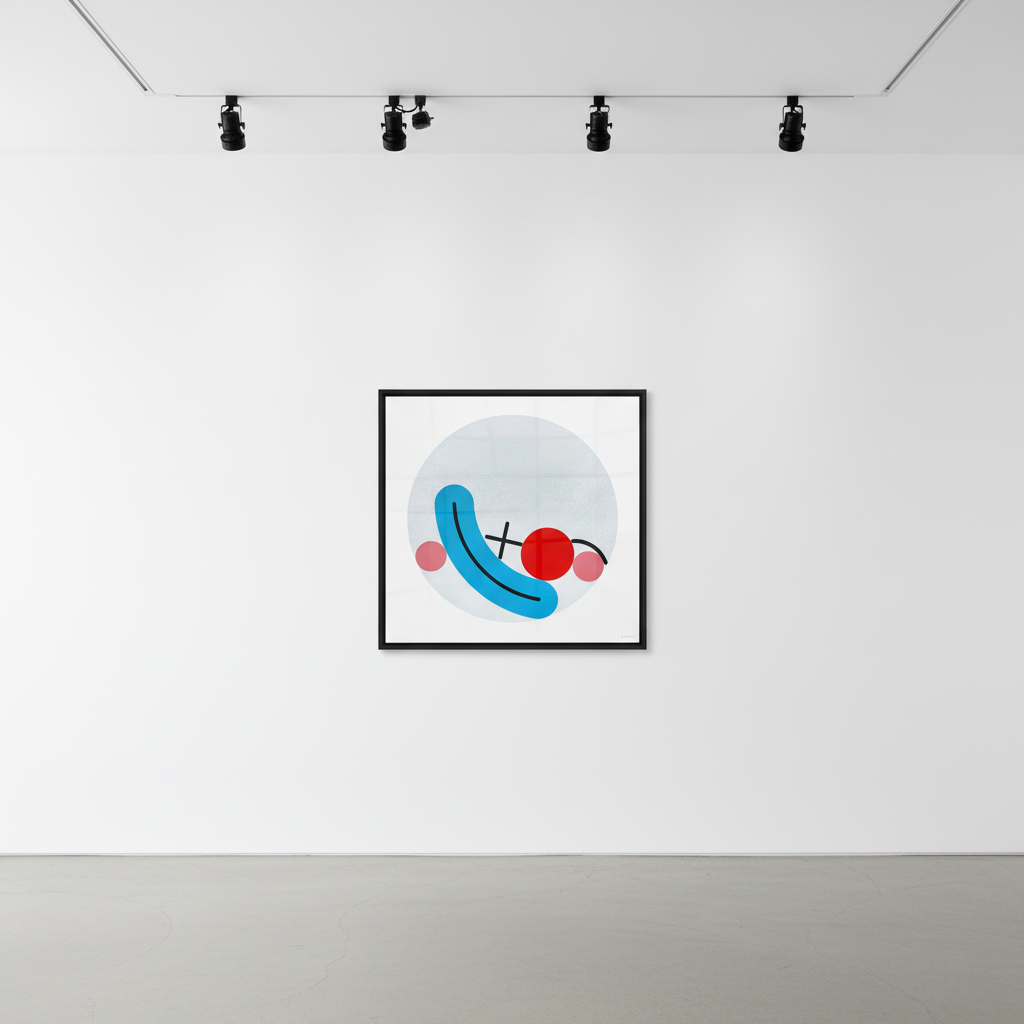
Square Clown (grey) — James Joyce. Available at Guy Hepner, New York.
Joyce's methodology demonstrates remarkable consistency while allowing for genuine evolution. For years, he worked primarily within a circular medium, the format itself echoing the rounded forms of the faces he deconstructs. His colour palette favoured bright, saturated tones that reinforced connections to pop art traditions and the cheerful associations of his smiley face subjects. Each canvas became an exercise in recognition and abstraction, training viewers to see faces where technically none exist.
The most recent chapter in Joyce's artistic development represents a significant formal departure. After years of working exclusively with circular canvases, Joyce has released a series of works in square format - a transition that fundamentally alters the relationship between his deconstructed imagery and the space it occupies. Where the circular format created harmony between subject and support, the square introduces productive tension, containing the organic curves of facial features within rigid geometric boundaries.
This new body of work also marks an evolution in Joyce's chromatic approach. Moving from his established bright colour palette to more muted, darker colour tones, Joyce has created works that possess greater visual weight and psychological complexity. The shift suggests maturation - both artistic and thematic - as the playful deconstructed faces take on more contemplative qualities without sacrificing their essential accessibility.
The series includes both paintings and prints, with Joyce creating limited edition prints directly from the original canvases. This dual approach allows collectors entry points at various levels while maintaining the artistic integrity that distinguishes serious printmaking from mere reproduction. The Pink Clown and Square Clown works exemplify this new direction, demonstrating how Joyce's fundamental visual language translates across format and medium while revealing new dimensions through formal constraint.
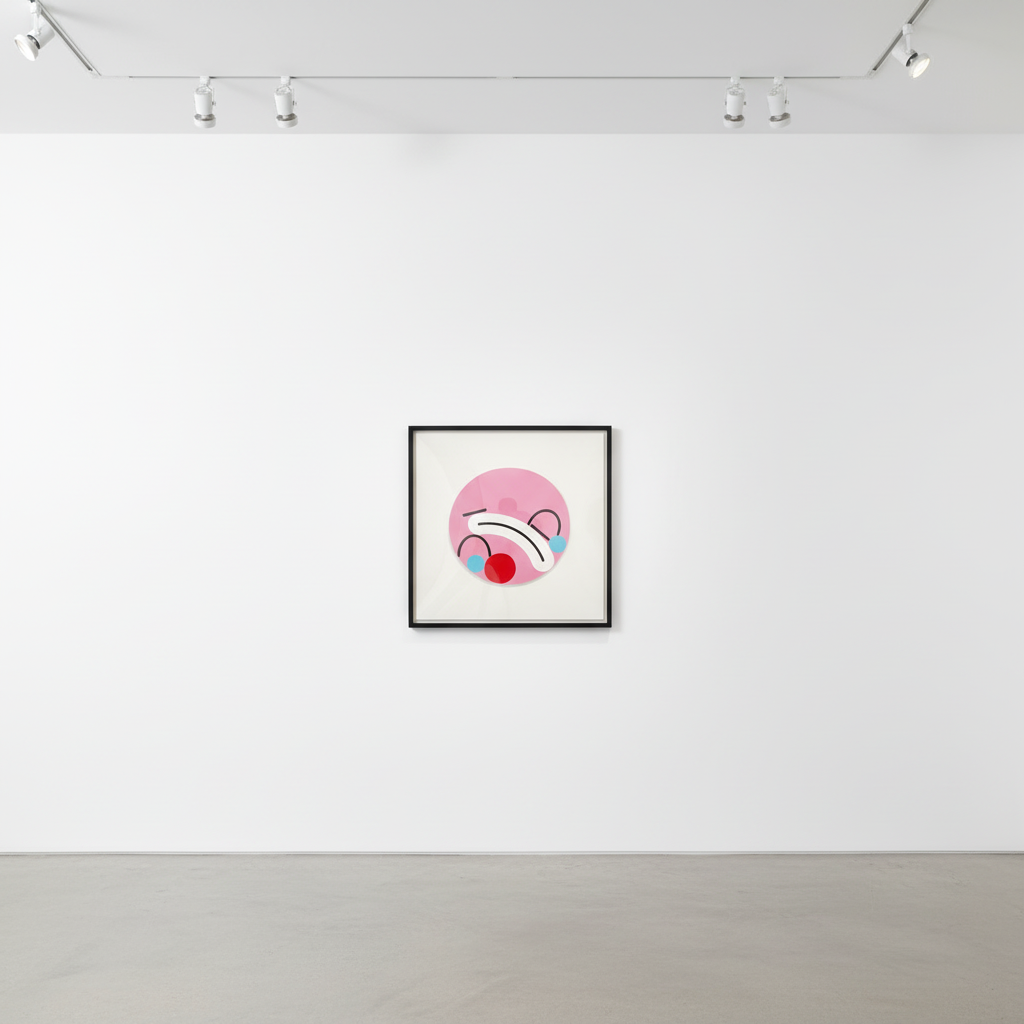
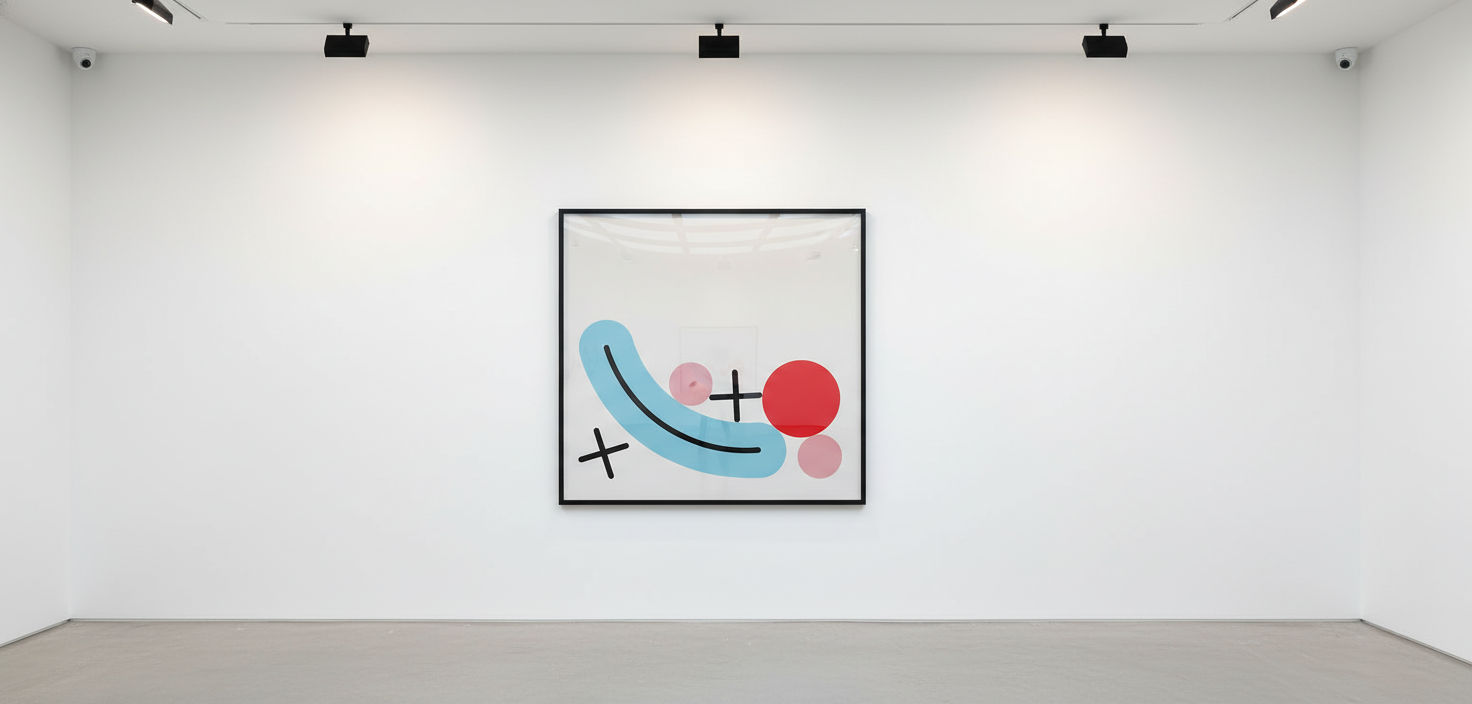
Clown Series (Pink) — James Joyce. Available at Guy Hepner, New York.
The market for works engaging with deconstructed imagery and pop cultural iconography has shown consistent strength. Christie's and Sotheby's have both noted sustained collector appetite for contemporary works that balance conceptual rigour with visual accessibility - precisely the territory Joyce occupies. His pieces appeal equally to collectors drawn to pure aesthetic pleasure and those seeking work with intellectual substance, a rare combination that supports long-term value retention.
Joyce's deconstructed faces also possess exceptional versatility within collection contexts. Their bold graphic quality allows them to anchor contemporary interiors while their conceptual depth ensures they reward sustained attention. For collectors building coherent holdings in contemporary British art or pop-adjacent practices, Joyce represents an opportunity to acquire work by an artist with established institutional recognition and clear artistic vision.
Guy Hepner is privileged to offer exclusive access to James Joyce's new square format paintings and prints, representing a pivotal moment in this distinctive artist's evolution. These works are available exclusively through the gallery, providing collectors with a rare opportunity to acquire pieces from a significant new body of work before broader market exposure. Our art advisors offer comprehensive consultation services to assist collectors in selecting works that complement existing holdings while representing sound aesthetic and investment considerations. To inquire about availability, pricing, and acquisition of works from James Joyce's deconstructed faces series, contact Guy Hepner directly for a personalised consultation.
Explore James Joyce prints for sale at Guy Hepner: Diamond Dust , Works on Paper.
Related Series