Fertility

Keith Haring stands among the most influential American artists of the twentieth century, his work transcending the boundaries between fine art, street culture, and social activism. Born in Reading, Pennsylvania, in 1958, Haring developed his artistic sensibilities from an early age, learning to draw from his father, who entertained him by creating cartoon animals. Though his father never pursued art professionally, he recognized and nurtured his son's talent, encouraging Haring to continue developing his skills throughout his formative years. This early foundation in accessible, character-driven imagery would later evolve into one of the most recognizable visual languages in contemporary art history.
Drawing became more than a creative outlet for the young Haring - it served as his primary means of communication and connection with others. By eighteen, his predominantly cartoon-focused work began shifting toward abstraction and spontaneous gestural expression. He developed a deep appreciation for Eastern calligraphy and the art of mark-making, influences that would profoundly shape his mature style. When Haring relocated to New York City at twenty, he found himself at the epicenter of a vibrant creative scene that included Jean-Michel Basquiat, Andy Warhol, and Kenny Scharf. It was within this dynamic environment that Haring began channeling his artistic talents toward raising awareness for causes he believed in, establishing himself as both a visual innovator and committed activist.
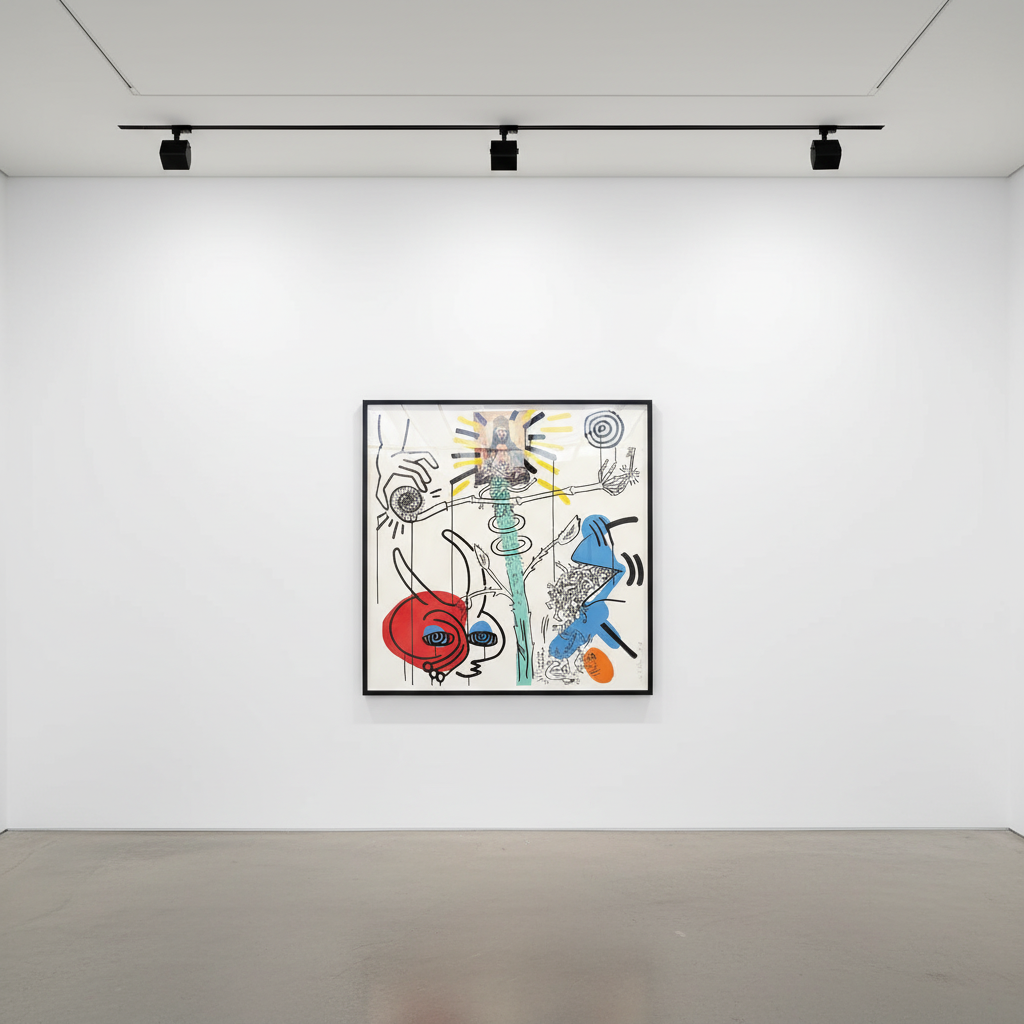
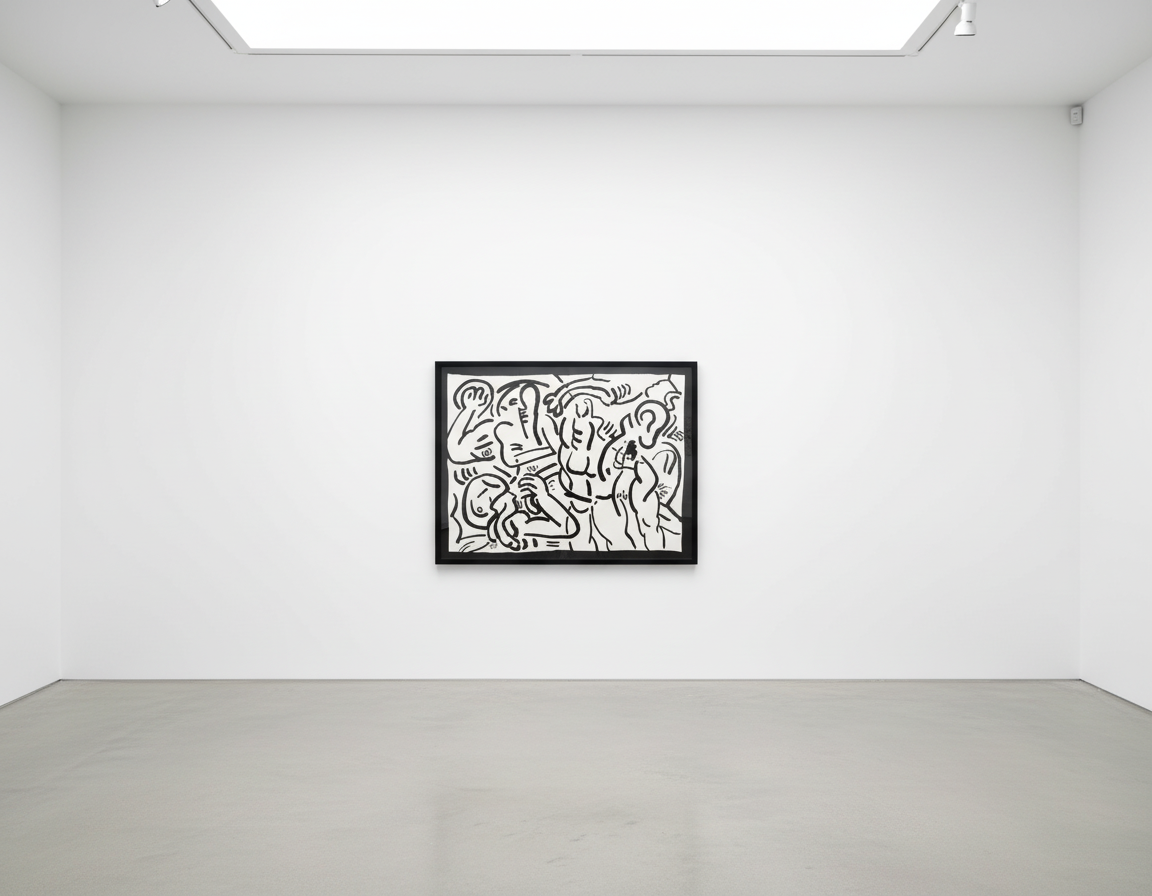
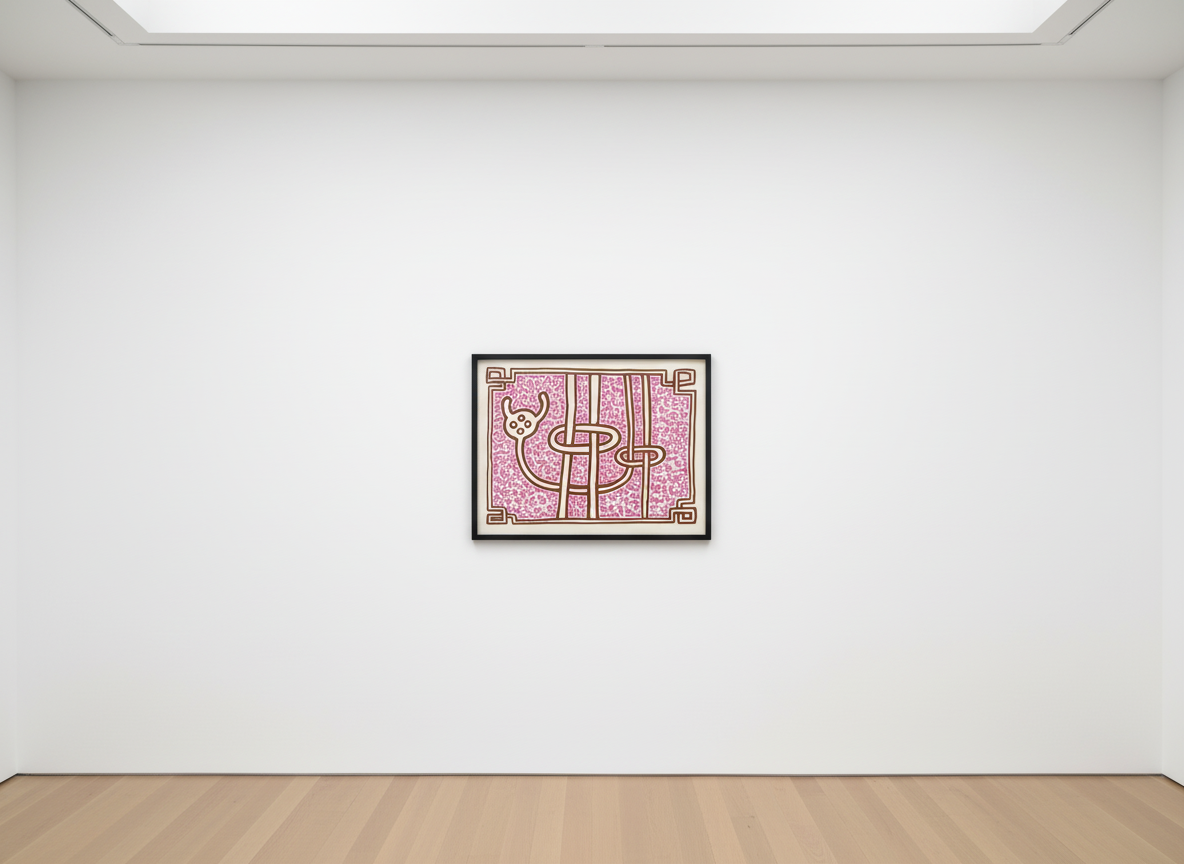
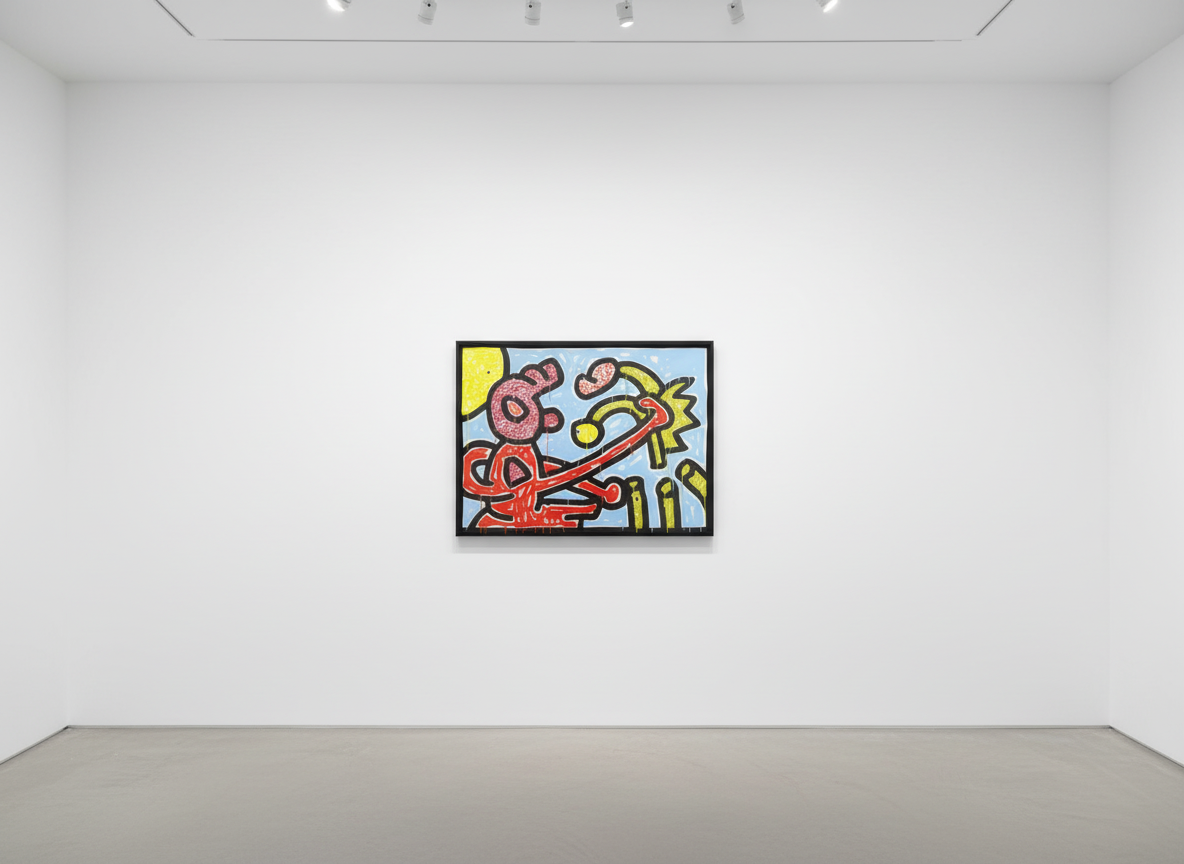
Among Haring's most significant bodies of work is the Fertility series, a collection of five screen prints created in 1983 that addresses themes of reproduction, life, and the interconnectedness of human experience. This series emerged during a pivotal moment in Haring's career when he was actively exploring how art could serve as a vehicle for social commentary while maintaining visual accessibility. The Fertility prints demonstrate Haring's remarkable ability to distill complex subjects into bold, immediate imagery that resonates across cultural boundaries.
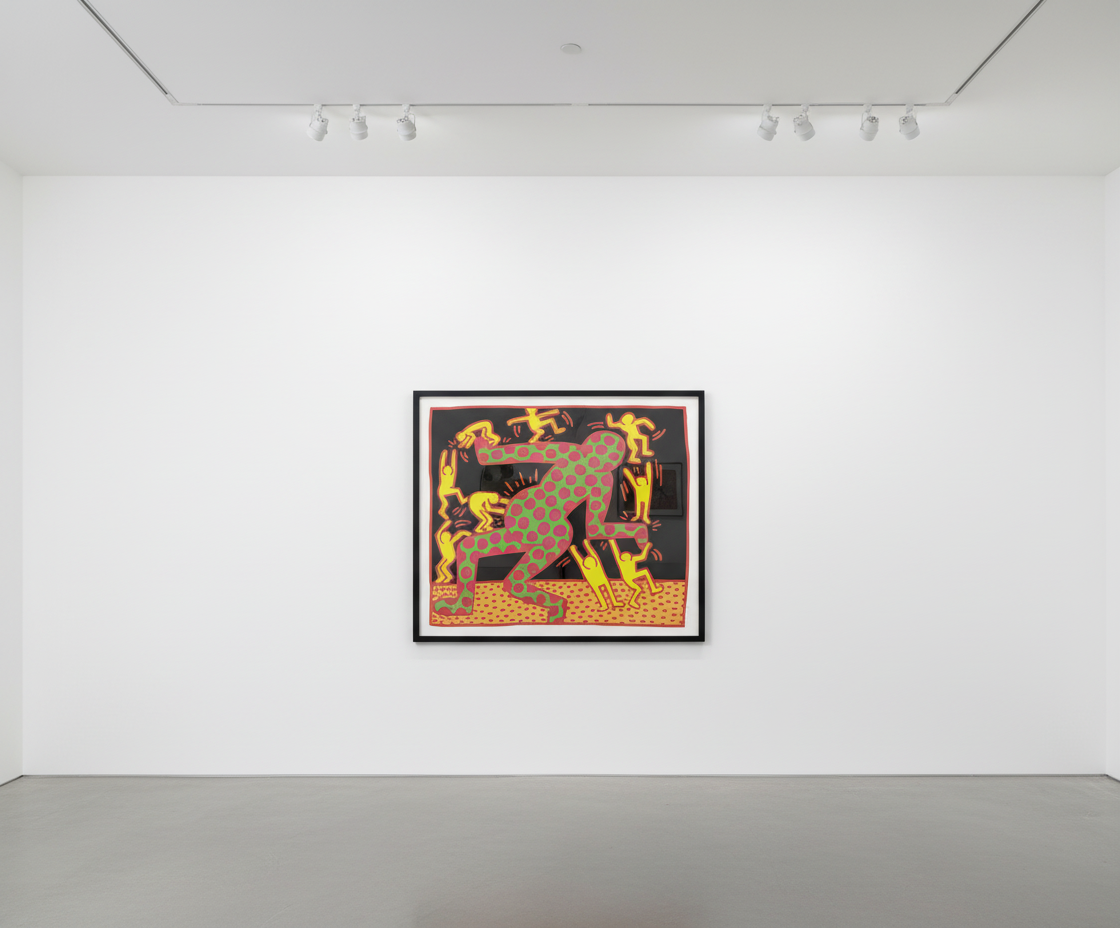
Fertility 4 (Littmann PP. 33) — Keith Haring. Available at Guy Hepner, New York.
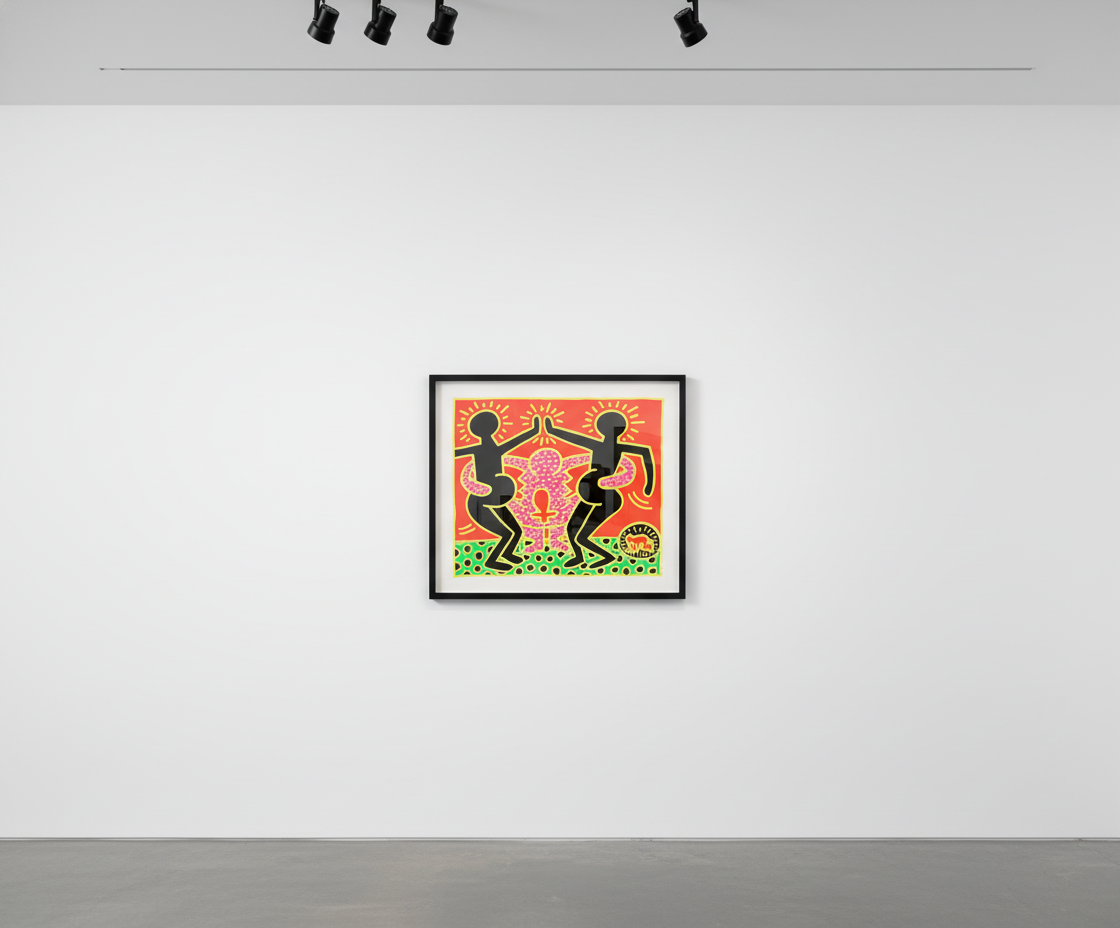
In these works, Haring reinterprets his iconic radiant figures - those distinctive outlined forms that became synonymous with his artistic identity. Each composition in the Fertility series features his characteristic matchstick-style figures, typically rendered faceless, but here imbued with pronounced energy and movement that speaks to themes of creation and vitality. The figures intertwine, multiply, and emanate the kinetic lines that Haring termed "radiant energy," suggesting the perpetual cycle of life and human connection. Through vibrant color combinations and dynamic compositional arrangements, these prints capture the essence of fertility as both a biological phenomenon and a metaphor for creative potential.
The series arrived at a moment when Haring was increasingly concerned with global issues affecting marginalized communities. His bold palette and powerful imagery worked to reframe difficult conversations, making them approachable while losing none of their urgency. The Fertility prints exemplify Haring's belief that art should be democratic and accessible - a position that led him to create work in public spaces and eventually open his Pop Shop in 1986.
The visual vocabulary Haring employs in the Fertility series reflects the culmination of his artistic evolution from cartoon-influenced drawings to sophisticated symbolic imagery. His line work - confident, unbroken, and instantly recognizable - derives from his studies of Eastern calligraphy and his practice of creating spontaneous subway chalk drawings throughout New York's transit system. These unauthorized public works had already made Haring a familiar figure to millions of commuters, and the Fertility series translated that same accessible energy into the realm of fine art printmaking.
Fertility 3 (Littmann PP. 32) — Keith Haring. Available at Guy Hepner, New York.
Each of the five prints in the series presents a variation on the fertility theme, with figures depicted in states of multiplication, embrace, and energetic radiation. The screen print medium allowed Haring to achieve the flat, graphic quality he favored while producing editions that could reach a broader audience than unique works. This democratizing impulse was central to Haring's philosophy - he believed passionately that art belonged to everyone, not merely those with access to elite gallery spaces.
The Fertility series also demonstrates Haring's sophisticated understanding of color theory. The prints feature bold combinations of primary and secondary hues set against contrasting backgrounds, creating visual impact that commands attention from across any room. This chromatic intensity, combined with the rhythmic quality of his line work, produces images that feel simultaneously ancient and contemporary - as if Haring had tapped into a universal visual language that transcends specific time periods or cultural contexts.
Keith Haring's position in the contemporary art market has strengthened considerably over the past two decades, with major auction results at Christie's and Sotheby's consistently demonstrating robust collector demand. His prints, in particular, have attracted significant attention from both established collectors and those newly entering the market, drawn by the combination of art historical importance and visual appeal that characterizes his output. According to the Art Basel and UBS Global Art Market Report, post-war and contemporary works by artists who bridged street culture and fine art continue to see strong performance across market segments.
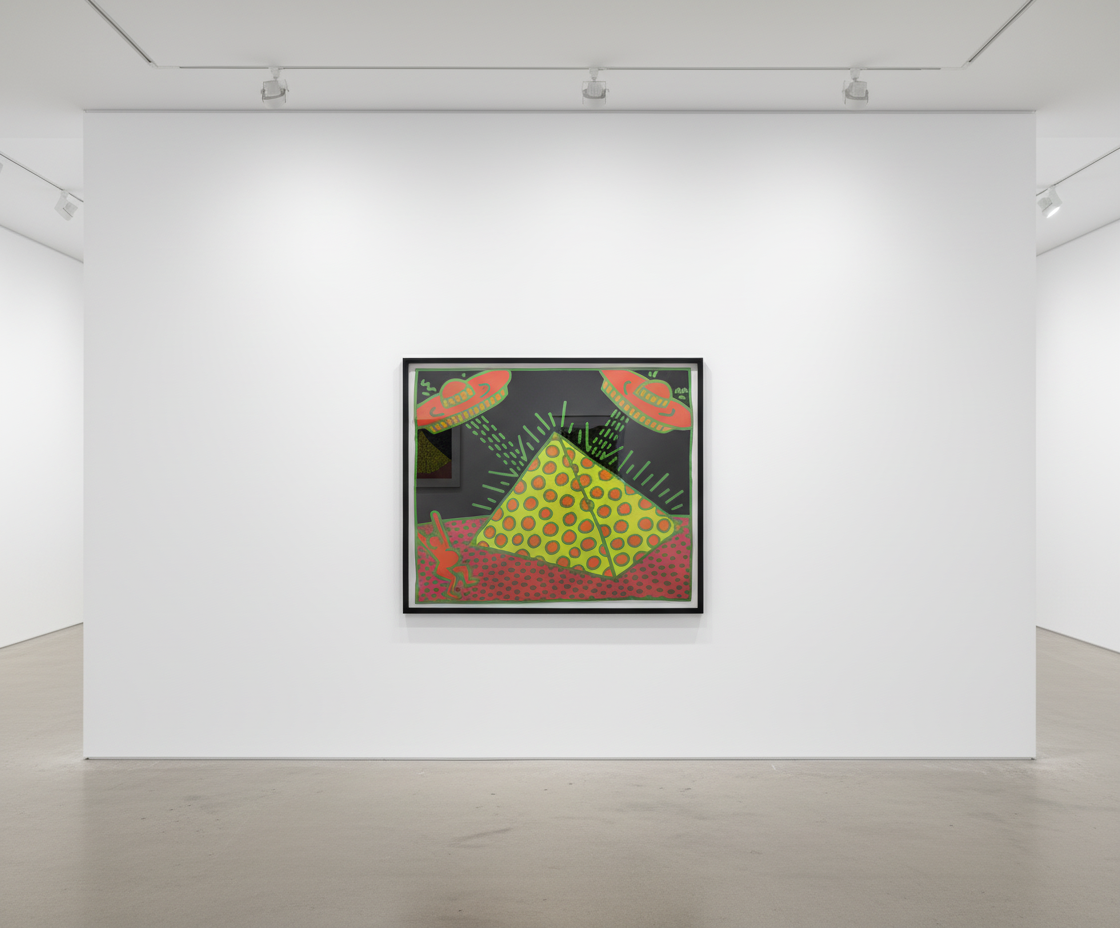
Fertility 2 (Littmann PP. 32) — Keith Haring. Available at Guy Hepner, New York.
The Fertility series holds particular appeal for collectors seeking works that encapsulate Haring's artistic philosophy and technical accomplishment. As complete suites become increasingly rare on the secondary market, individual prints from the series offer entry points into this important chapter of Haring's production. The works' relatively modest edition sizes, combined with Growing institutional recognition of Haring's significance, suggest continued appreciation potential for well-preserved examples.
Collectors are drawn to the Fertility series not only for its aesthetic qualities but also for its documentation of Haring's evolution as an artist-activist. These prints capture a moment when Haring was refining his visual language while simultaneously expanding his engagement with social issues - a combination that defines his most celebrated work. The series represents an opportunity to acquire pieces that embody both the exuberance of 1980s New York art culture and the enduring human themes that give Haring's work its lasting resonance.
Guy Hepner is pleased to offer works from Keith Haring's Fertility series to discerning collectors worldwide. As a leading New York gallery specializing in contemporary art and modern masters, Guy Hepner provides access to authenticated examples from this important body of work, accompanied by comprehensive provenance documentation and condition reporting. Our team of specialists offers personalized guidance throughout the acquisition process, from initial consultation through installation and collection management. To inquire about available works from Keith Haring's Fertility series or to discuss other pieces by this seminal artist, please contact Guy Hepner directly.
Explore Keith Haring prints for sale at Guy Hepner: Fertility, Andy Mouse, Apocalypse, Bad Boys, Chocolate Buddha.
Related Series