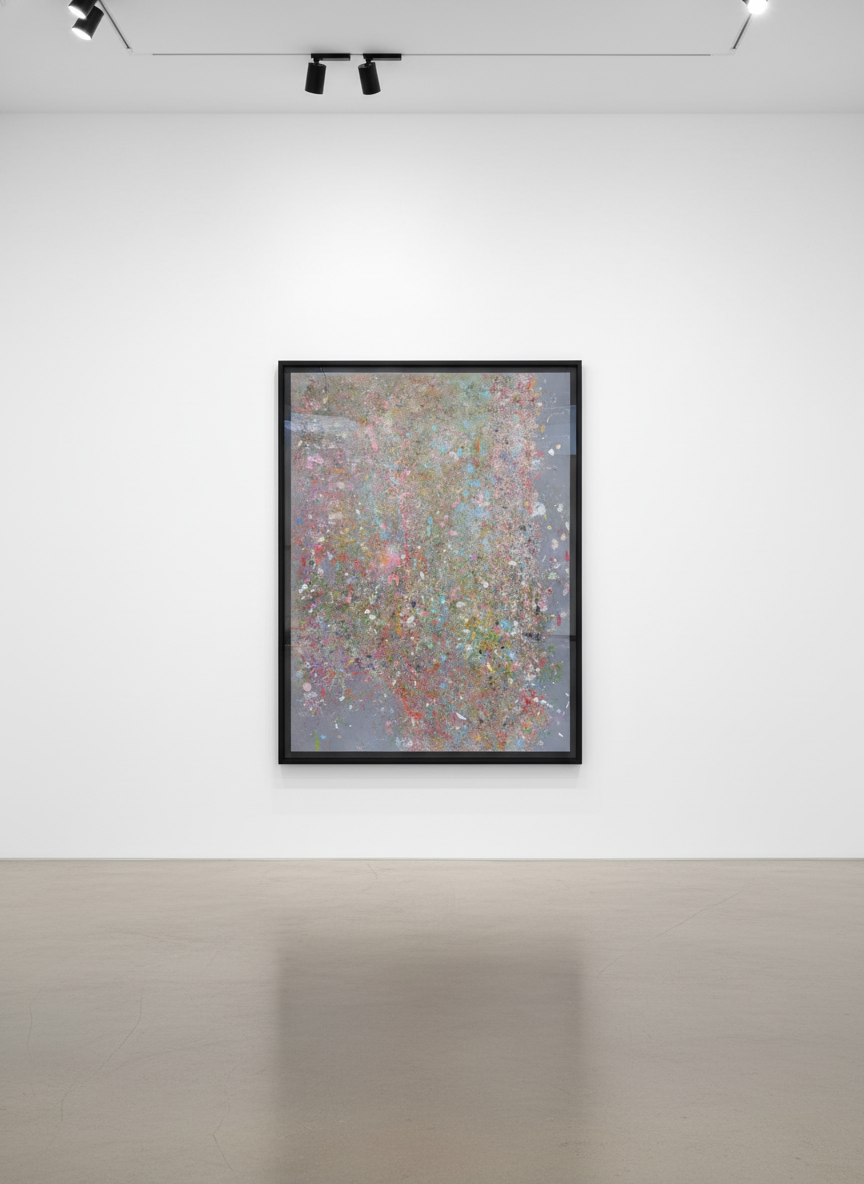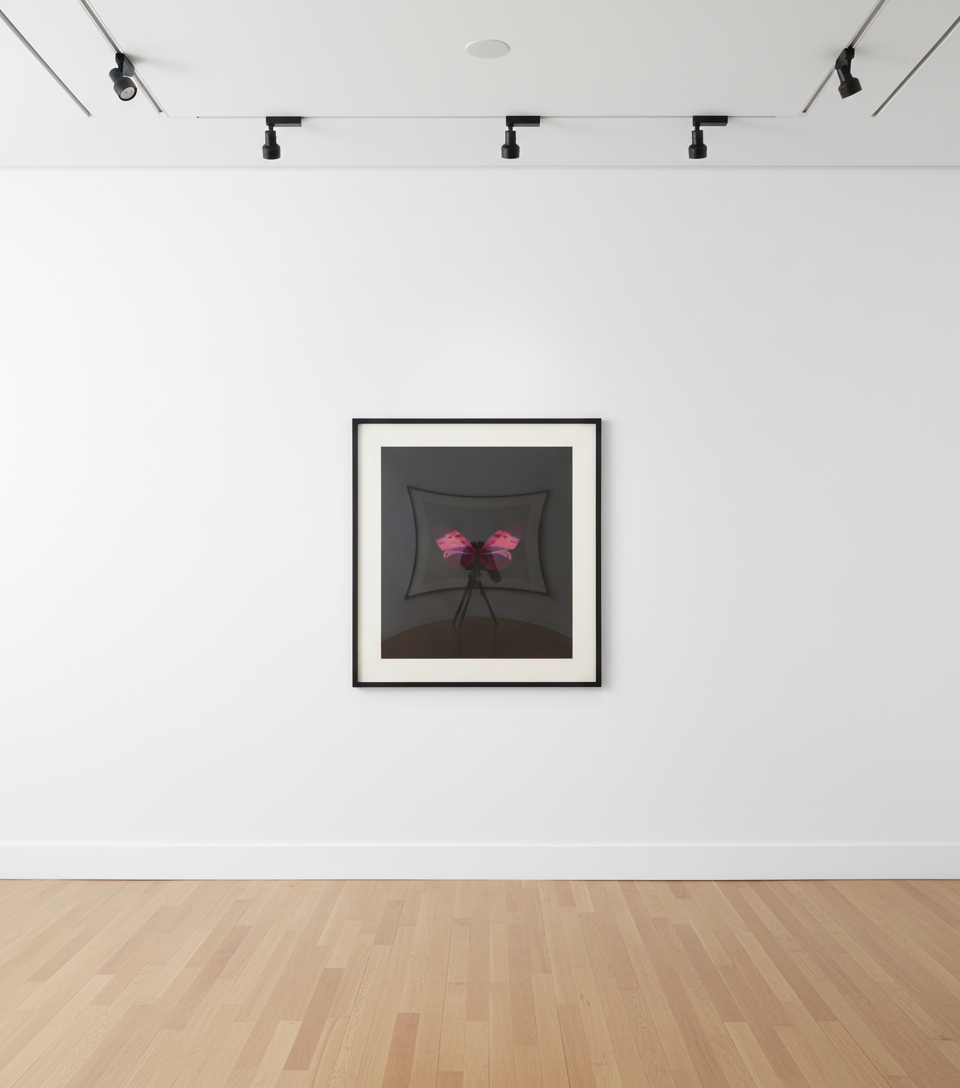
Blossoms

Damien Hirst stands as one of the most financially significant artists of the contemporary era, with auction records and private sales that have repeatedly redefined the boundaries of the art market. His ascent to global prominence remains inseparable from the cultural, economic, and artistic shifts that reshaped the contemporary art world at the close of the twentieth century. Born in Bristol in 1965 and raised in Leeds by his mother following his parents' separation, Hirst's early life was marked by both instability and an acute awareness of authority, discipline, and transgression. As a teenager, he developed an interest in drawing and art while also encountering the realities of institutional systems - experiences that would later inform his fascination with control, order, and the structures that govern human behaviour. These formative years coincided with a Britain undergoing profound social change, as post-war consensus gave way to Thatcher-era individualism, creating fertile ground for a generation of artists willing to challenge established norms.
Hirst enrolled at Goldsmiths College in London in 1986, an institution that was redefining art education by prioritising conceptual rigour over traditional technical training. At Goldsmiths, Hirst absorbed the legacies of conceptual art and minimalism while cultivating the entrepreneurial instincts that would later distinguish his career. His organisation of the landmark Freeze exhibition in 1988 announced not only his arrival but the emergence of the Young British Artists as a cultural force that would dominate the following decade.
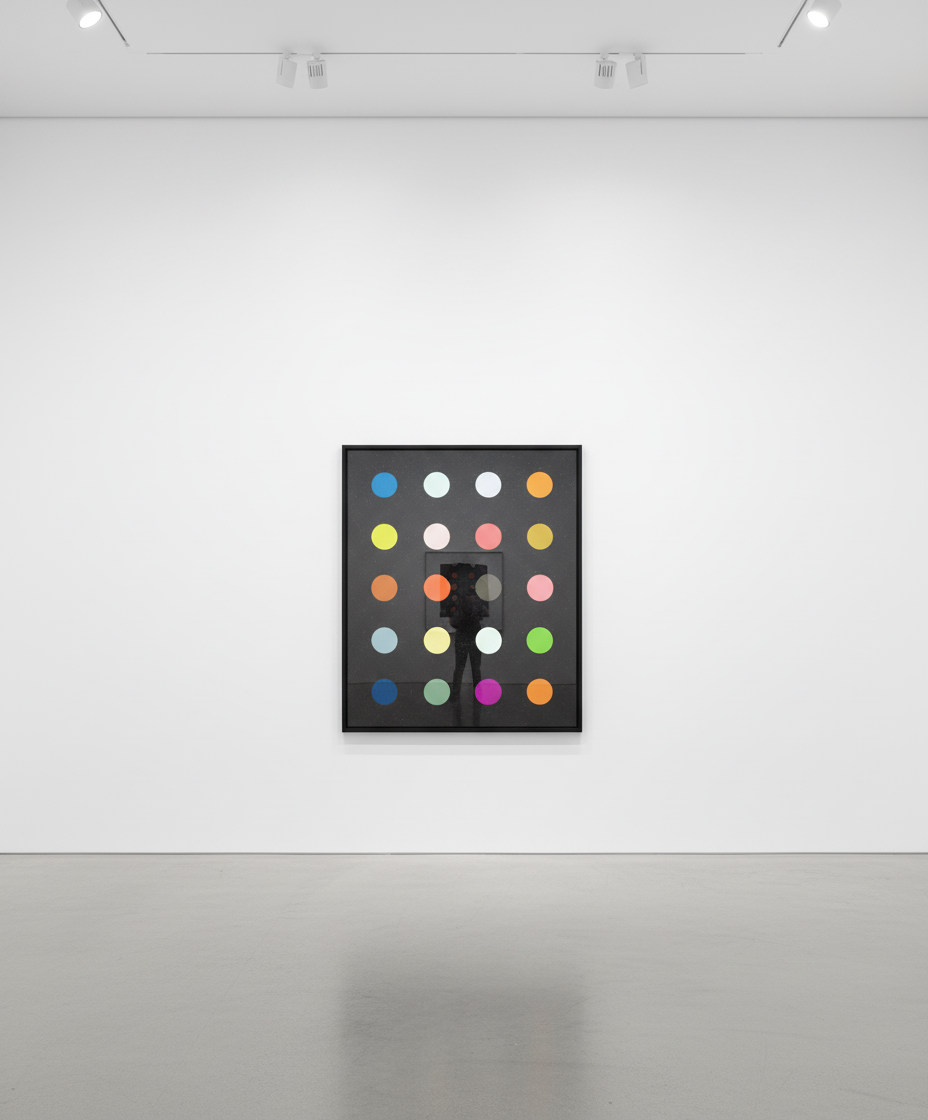
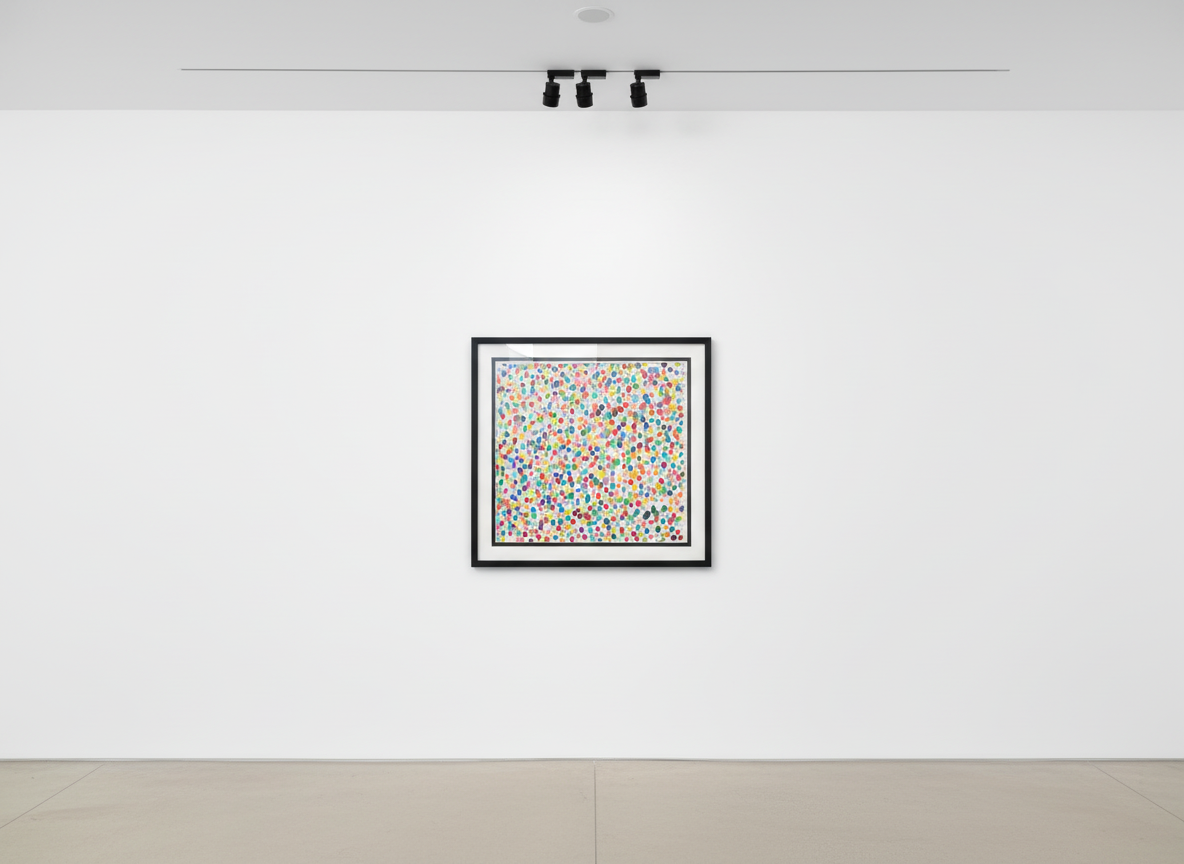
Methylamine 13c — Damien Hirst. Available at Guy Hepner, New York.
The trajectory of Damien Hirst's most expensive artworks reveals an artist who has consistently commanded extraordinary prices across multiple decades. His 2008 Beautiful Inside My Head Forever sale at Sotheby's London remains one of the most audacious moments in auction history. Bypassing traditional gallery representation entirely, Hirst consigned 223 works directly to auction, generating approximately £111 million over two days - a figure achieved remarkably on the very eve of the global financial crisis. This single event demonstrated both the artist's market power and his willingness to disrupt conventional art world hierarchies.
Among Hirst's highest-achieving individual works, The Golden Calf - a bull preserved in formaldehyde with eighteen-carat gold hooves and horns - sold for £10.3 million at the 2008 sale, establishing a record for a single Hirst artwork at auction. His shark piece, The Physical Impossibility of Death in the Mind of Someone Living, reportedly changed hands privately for approximately $12 million in 2004, a transaction that signalled the escalating appetite for his most iconic conceptual statements. The Sotheby's contemporary art department has repeatedly highlighted Hirst as a market bellwether, with his results frequently analysed as indicators of broader collector confidence.
Christie's has similarly recorded significant Hirst transactions, with his Spot Paintings, butterfly works, and pharmaceutical cabinets achieving strong results across their contemporary sales. The Art Basel and UBS Global Art Market Report has consistently positioned Hirst among the top-selling living artists by value, acknowledging his sustained relevance in a market that frequently cycles through contemporary names.
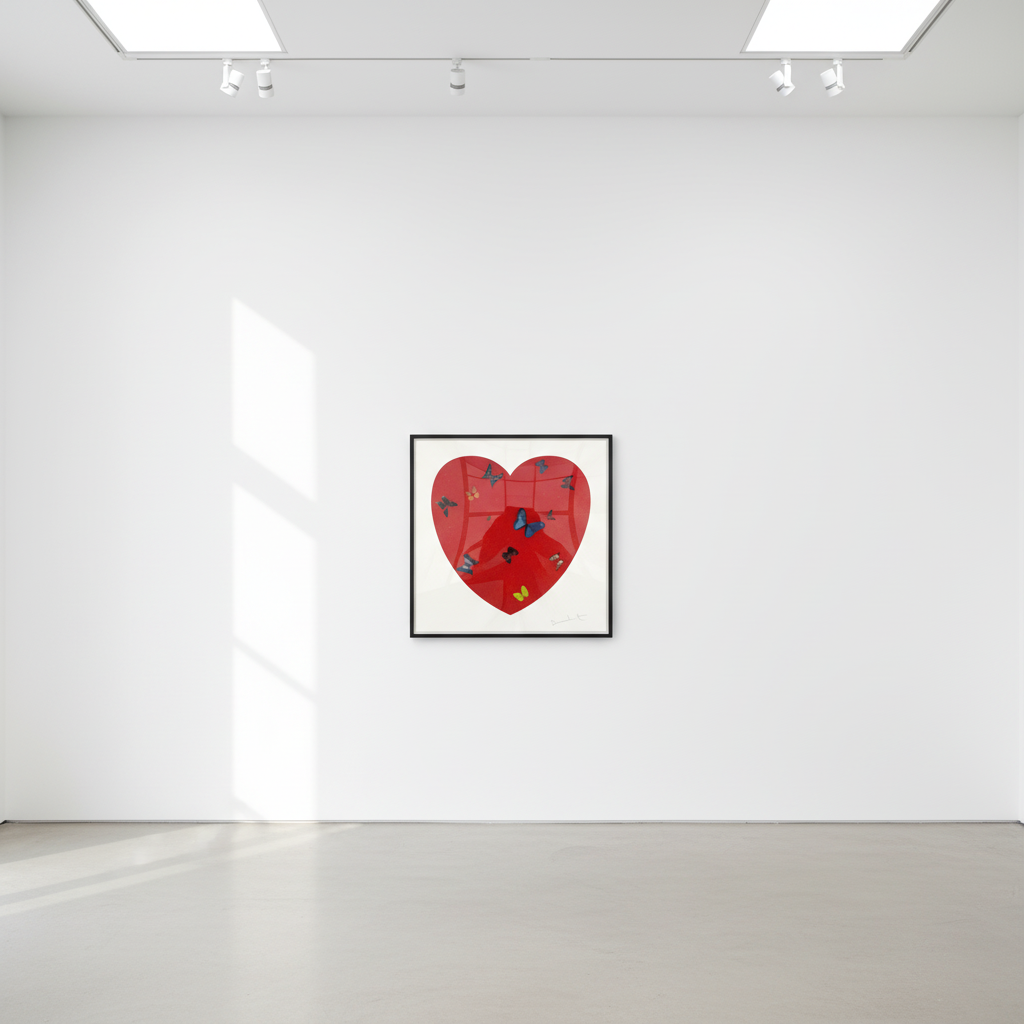
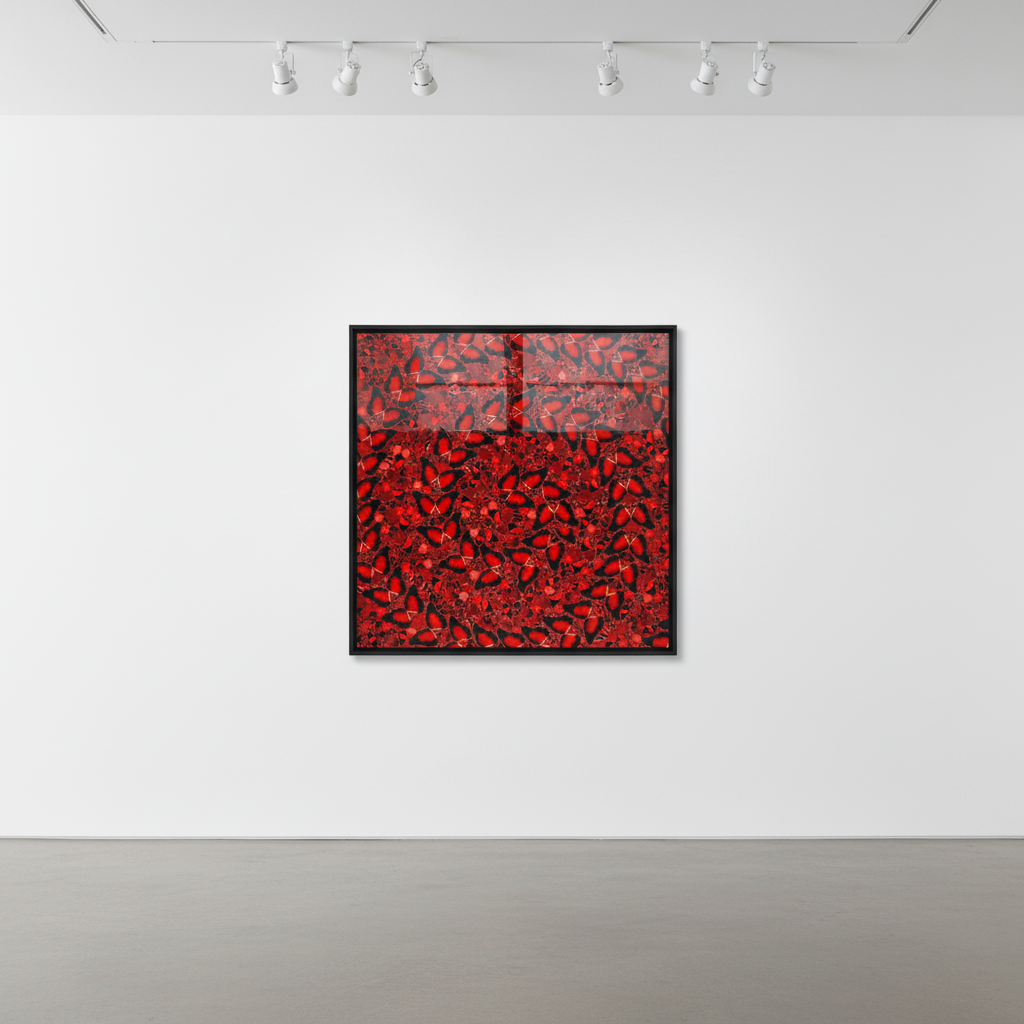
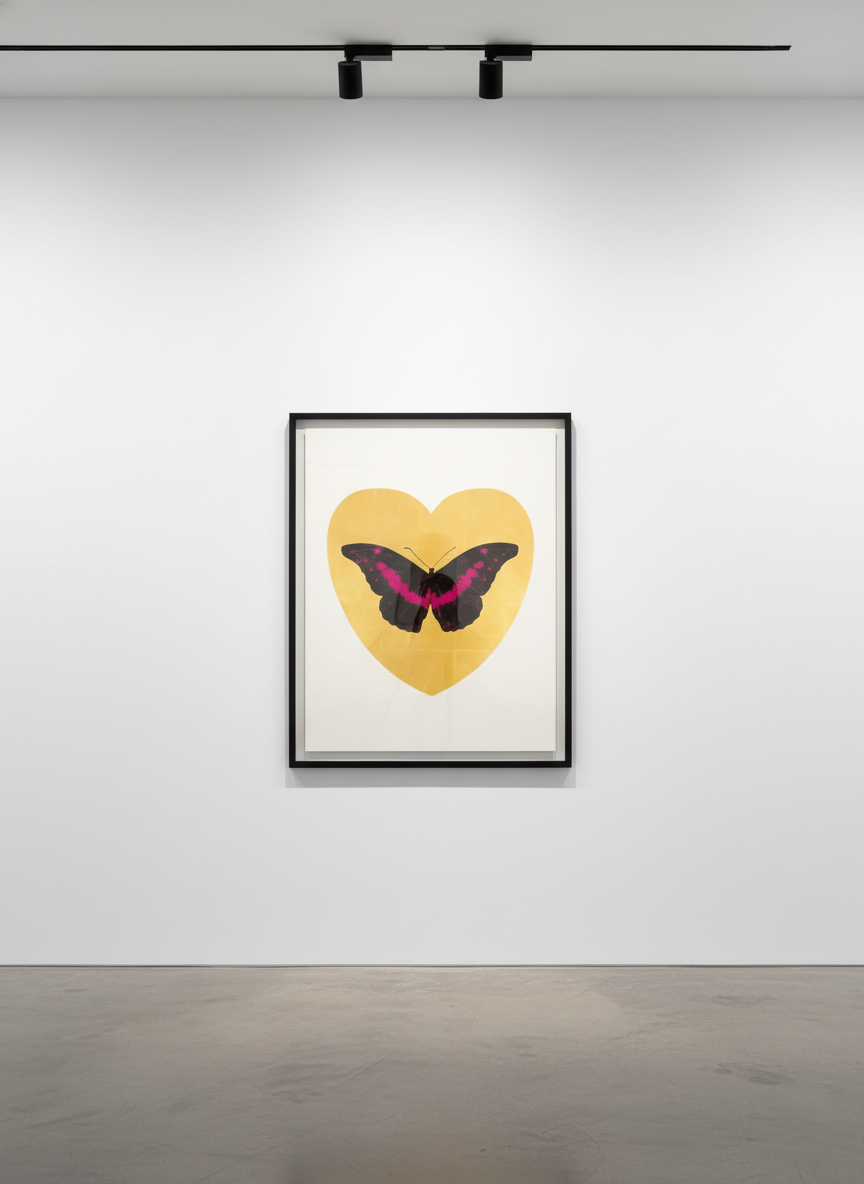
All you need is love, love, love (Diamond Dust) — Damien Hirst. Available at Guy Hepner, New York.
Understanding why Damien Hirst's most expensive artworks command such premiums requires examination of the conceptual depth beneath their provocative surfaces. His work engages persistently with mortality, belief, medicine, and the systems through which humanity attempts to impose order upon chaos. The spot paintings - of which Methylamine 13c and Mannitol serve as exemplary specimens - reduce pharmaceutical compounds to pure chromatic arrangement, suggesting both the promise and the clinical detachment of modern medicine. These works function simultaneously as decorative objects and conceptual statements about faith in science as a replacement for religious belief.
The butterfly compositions, including pieces incorporating diamond dust such as All You Need Is Love, Love, Love, transform symbols of fragile beauty and transformation into meditations on mortality and desire. The memento mori tradition finds contemporary expression in works like Memento 4, where Hirst's engagement with Skulls and decay connects his practice to art historical precedents spanning Holbein to Warhol. Meanwhile, pieces such as Opium reference both pharmaceutical culture and altered states of consciousness, continuing his exploration of substances that promise transcendence or oblivion.
This thematic consistency - maintained across varied media including formaldehyde tanks, paintings, prints, and sculpture - provides collectors with a coherent artistic vision that has proven remarkably durable. The most expensive Hirst artworks typically combine strong conceptual foundations with exceptional visual impact and impeccable provenance.
The sustained market for Damien Hirst's most expensive artworks reflects several factors that sophisticated collectors understand well. First, Hirst occupies an unassailable position in late twentieth and early twenty-first century art history. His influence on subsequent generations of artists - particularly regarding the relationship between art, commerce, and spectacle - ensures continued institutional and scholarly attention. Major museum retrospectives and acquisitions by leading public collections provide the validation that supports long-term value.
Second, the finite nature of his most significant series creates scarcity that drives competition among collectors. While Hirst has been prolific, the works commanding the highest prices - early medicine cabinets, major formaldehyde pieces, significant butterfly paintings - exist in limited quantities. The Art Basel and UBS market analyses consistently demonstrate that scarcity combined with art historical importance produces the most resilient price performance.
Third, Hirst's work possesses an accessibility that broadens the collector base without sacrificing critical legitimacy. The immediate visual impact of a spot painting or a butterfly kaleidoscope translates across cultural boundaries, while the conceptual sophistication satisfies collectors who prioritise intellectual engagement. This dual appeal positions Hirst works effectively in both private collections and corporate environments.
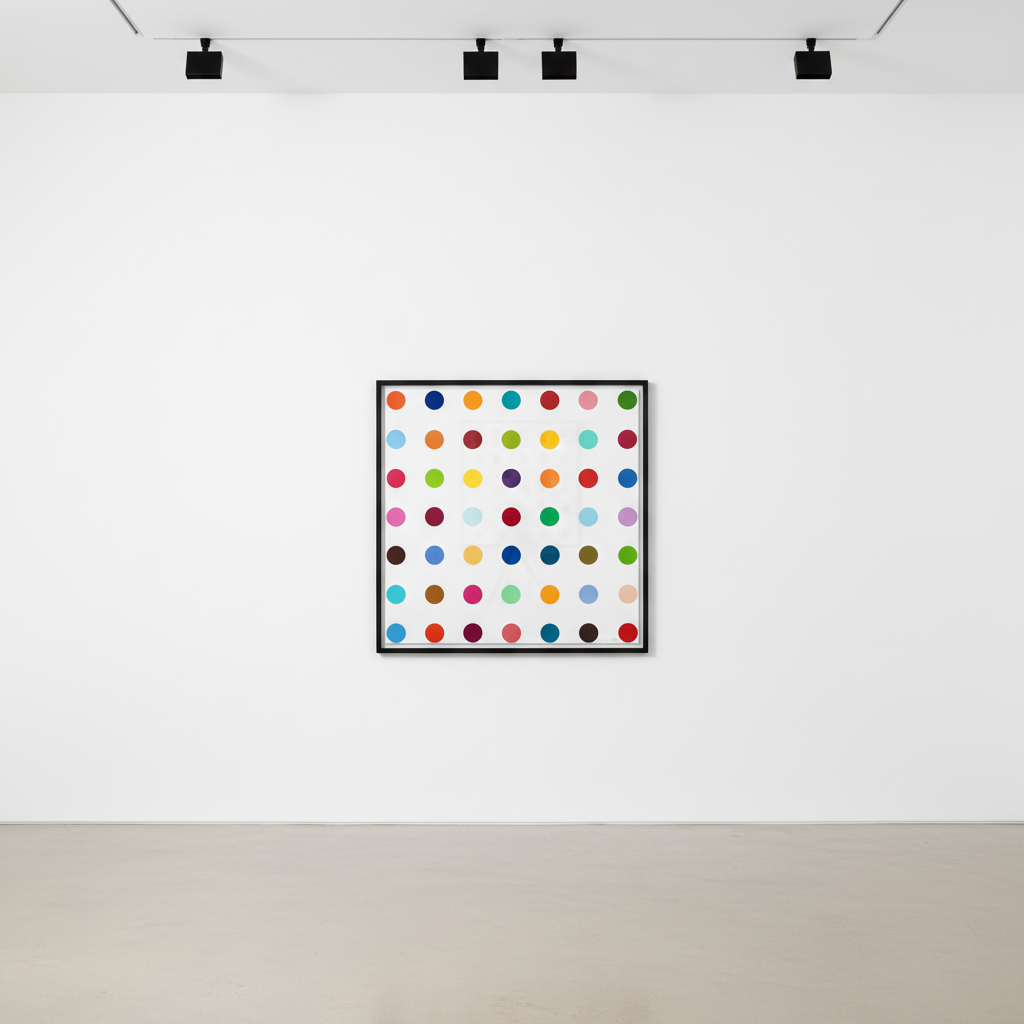
Mannitol — Damien Hirst. Available at Guy Hepner, New York.
Guy Hepner maintains an exceptional selection of works by Damien Hirst, including significant examples from his most celebrated series. Our gallery specialists possess deep expertise in navigating the Hirst market, advising collectors on authentication, provenance, and strategic acquisition. Whether seeking an iconic spot painting, a luminous butterfly composition, or a contemplative memento mori work, Guy Hepner offers access to museum-quality pieces accompanied by the discretion and service that distinguished collectors expect. We invite you to contact our team to discuss currently available Damien Hirst artworks and begin or enhance your collection of this defining contemporary artist.
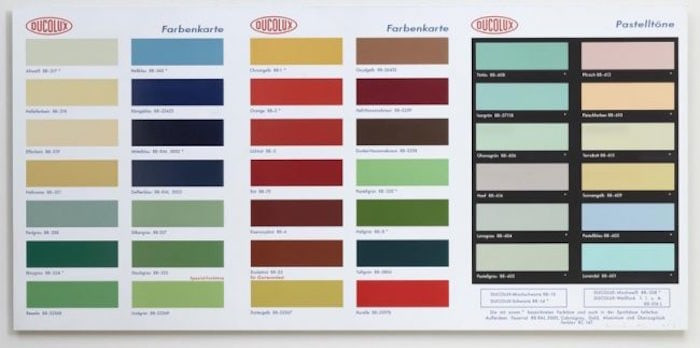
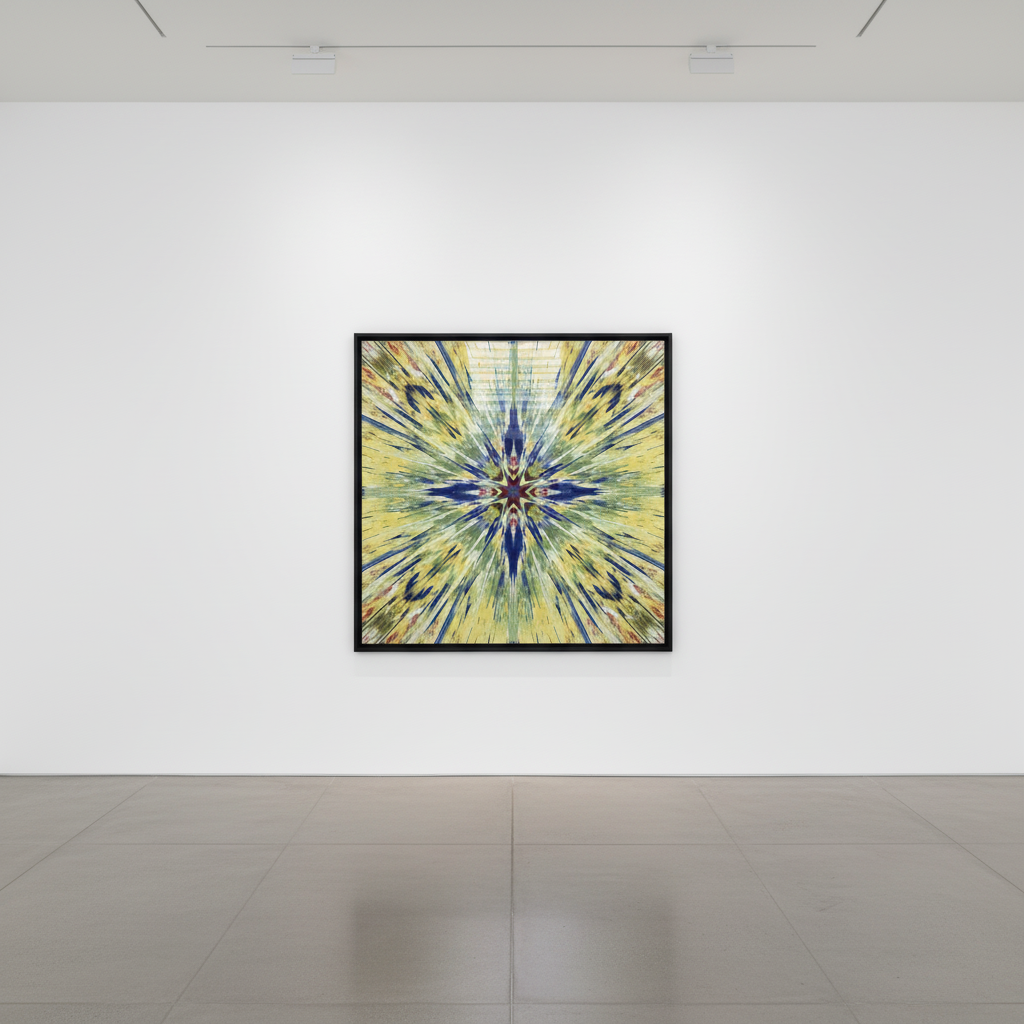
--- **Browse Damien Hirst prints and editions** at Guy Hepner: [Damien Hirst art for sale](/damien-hirst) | [Sell your Damien Hirst](/sell/damien-hirst)Explore Damien Hirst prints for sale at Guy Hepner: Blossoms, Colour Chart, H1 - Enter the Infinite, H10 - the Empresses, H11 - the Currency.
Related Series