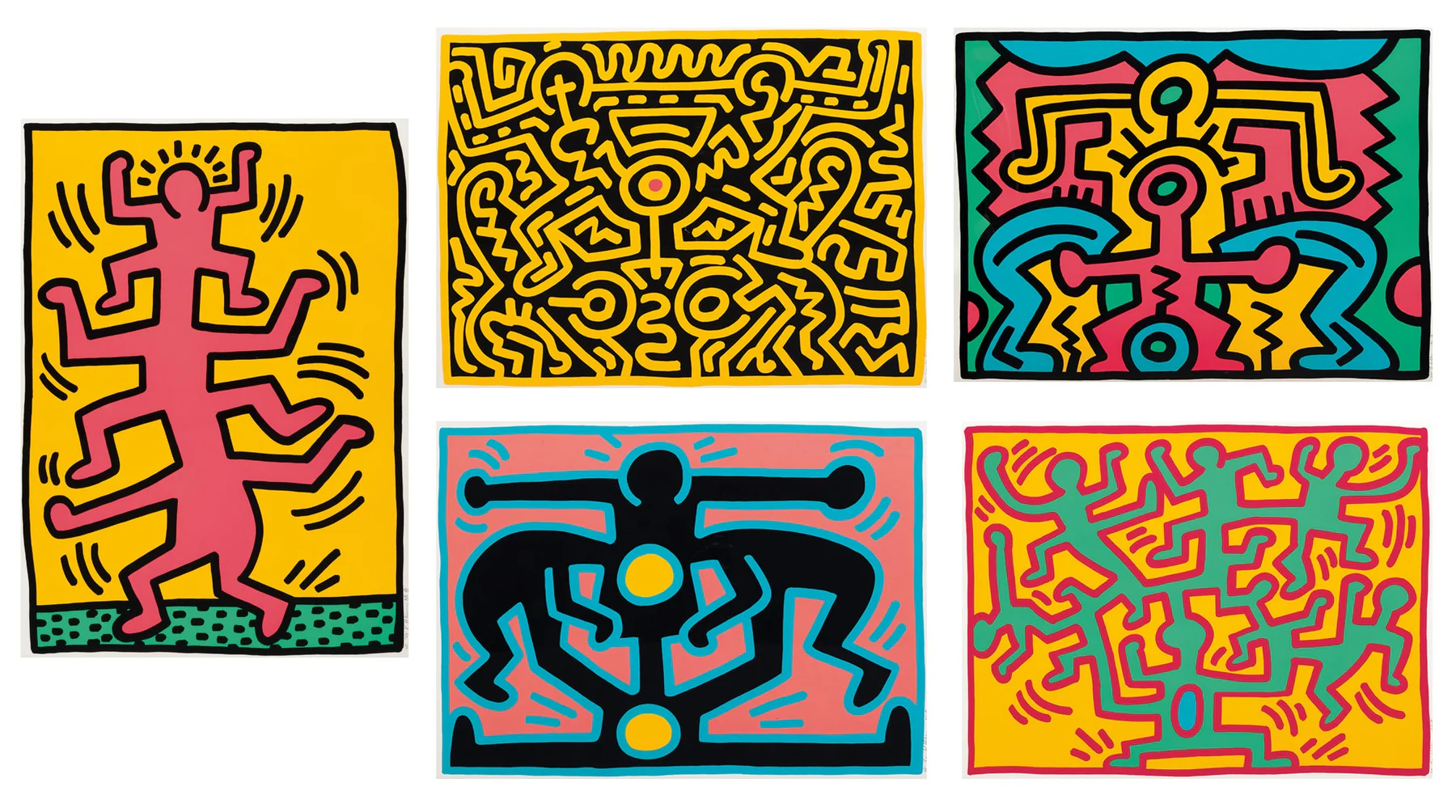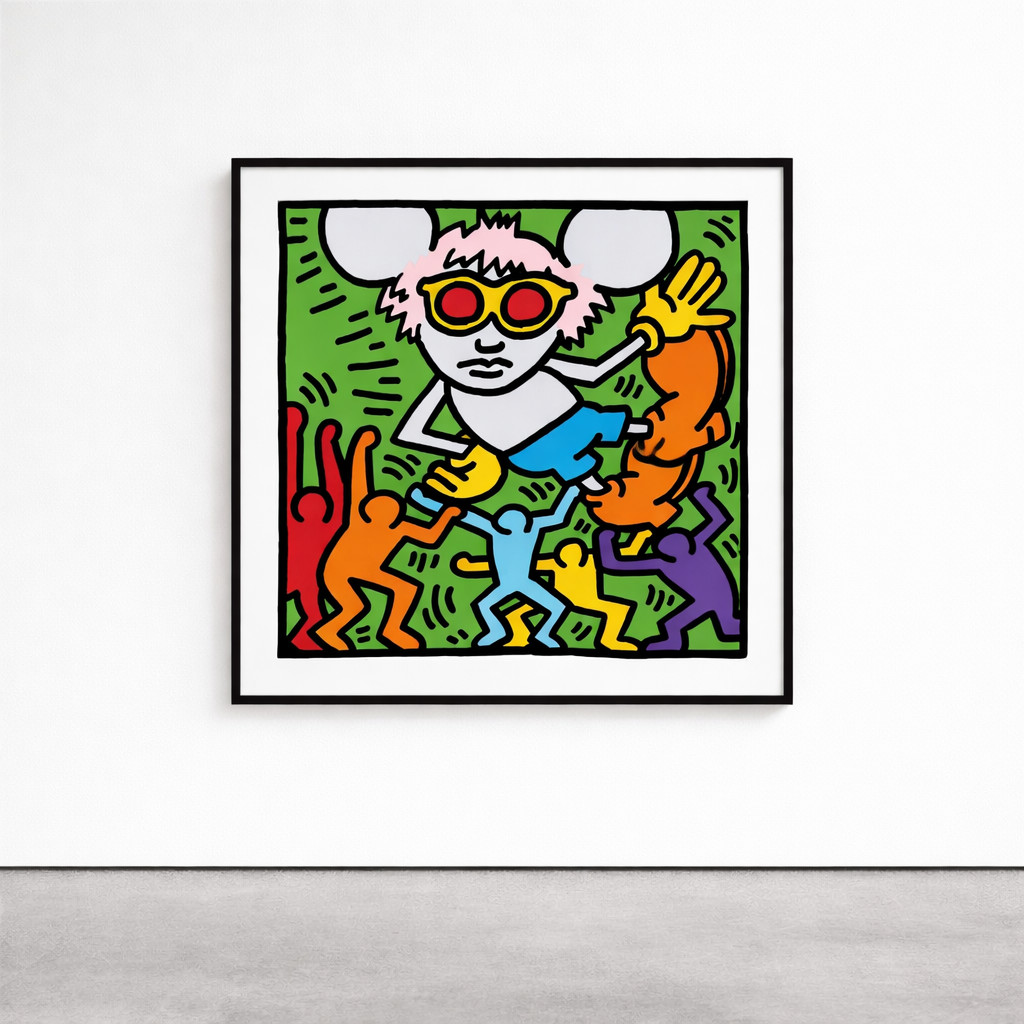
Andy Mouse

Keith Haring emerged as one of the most significant artists of the late twentieth century, transforming the landscape of contemporary art with his unmistakable visual language. Rising from the vibrant streets of New York City during the 1980s, Haring developed an artistic vocabulary that transcended traditional gallery boundaries and spoke directly to the masses. His bold lines, radiant babies, barking dogs and dancing figures became symbols of an era defined by both cultural upheaval and creative revolution. Working alongside contemporaries such as Jean-Michel Basquiat and Andy Warhol, Haring helped redefine what art could be and who it could reach.
Keith Haring fearlessly confronted the socio-political issues of his generation through his work, taking unwavering stances against racism, homophobia, apartheid in South Africa and the AIDS crisis that would ultimately claim his own life. Yet despite engaging with such challenging subject matter, Haring possessed a remarkable ability to infuse his creations with boundless energy and irrepressible optimism. His work drew heavily from New York City's graffiti and street art movements, synthesizing these influences into a distinctive style characterized by bold outlines, vibrant colors and simplified forms. These elements combined to create what many scholars describe as urban hieroglyphs - a visual language that communicated profound truths to audiences regardless of their cultural background or artistic education. This universal accessibility remains central to Keith Haring's enduring appeal and explains why his work continues to resonate with viewers more than three decades after his passing.
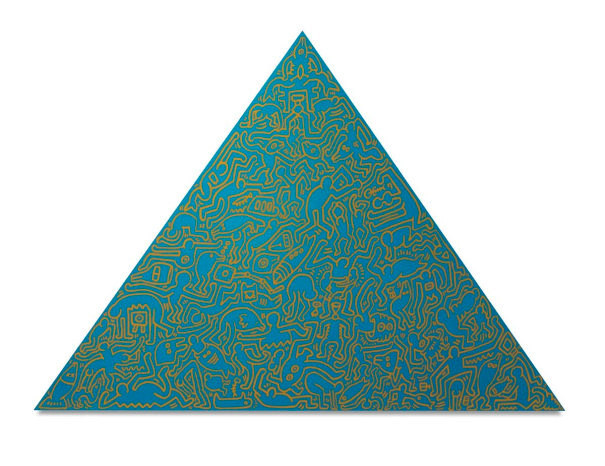
Pyramid Teal — Keith Haring. Available at Guy Hepner, New York.
Among Keith Haring's most ambitious and sought-after works, the Pyramids series stands as a remarkable achievement introduced in 1989, merely one year before the artist's death in February 1990. This extraordinary body of work represents a pivotal moment in Haring's artistic evolution, demonstrating his continued innovation even as he faced his own mortality. For the series, Keith Haring created four silkscreens on anodized aluminum pyramids in a strictly limited edition of thirty pieces each, employing contrasting hues of blue, yellow, teal and gold to bring his iconic imagery into three-dimensional space.
The pyramidal form itself carries profound significance within art history and human civilization. As ancient symbols of permanence, spiritual transcendence and human achievement, pyramids have captivated artists and philosophers for millennia. Keith Haring's decision to utilize this geometric form as his canvas speaks to his understanding of art's capacity to bridge temporal boundaries. By adorning these sculptural objects with his trademark genderless, raceless and classless figures, Haring created works that simultaneously reference ancient traditions while remaining thoroughly contemporary in their execution and message.
Each pyramid surface becomes a stage upon which Haring's characteristic figures perform their ecstatic dance. These symbols function as a universal language of ciphers, celebrating life through movement and interconnection. The opulent figures are meticulously arranged within the large pyramid shapes to form an overarching and interwoven network against single-color backgrounds. Some of the linear figures and symbols appear to climb the pyramid's faces, while others interlock in seemingly endless chains of human connection. The contrasting color combinations - teal against energetic forms, blue providing contemplative depth, yellow radiating warmth and gold suggesting both material and spiritual wealth - demonstrate Keith Haring's sophisticated understanding of how color affects emotional response.
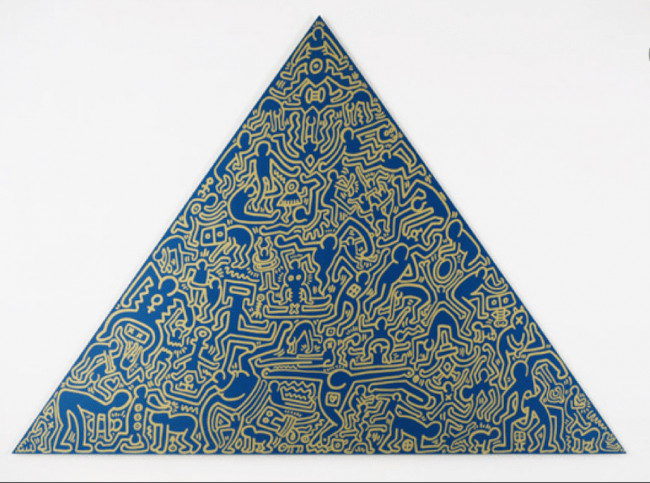
Pyramid Blue — Keith Haring. Available at Guy Hepner, New York.
The market for Keith Haring's work has demonstrated remarkable strength and consistent appreciation over the past two decades. According to data compiled by Sotheby's and Christie's, prices for significant Haring pieces have increased substantially, with major works regularly achieving results that surpass pre-sale estimates. The Art Basel and UBS Global Art Market Report has repeatedly identified Haring as among the most actively traded post-war and contemporary artists, with demand spanning established collectors, institutions and new market participants alike.
The Pyramids series occupies a particularly distinguished position within Keith Haring's oeuvre for several compelling reasons. First, the limited edition of thirty pieces per colorway ensures genuine scarcity in a market increasingly concerned with authenticity and rarity. Second, the three-dimensional sculptural nature of these works sets them apart from Haring's more commonly available prints and paintings, offering collectors a unique opportunity to own a truly distinctive piece. Third, the historical significance of the series - created during the final year of the artist's life - imbues each pyramid with profound biographical weight.
Collectors are drawn to Keith Haring's Pyramids for reasons that extend beyond market considerations. These works encapsulate the artist's entire visual philosophy within a single elegant form. The interplay between ancient symbolism and contemporary iconography speaks to collectors who appreciate conceptual depth alongside visual impact. Furthermore, the sculptural quality of the pyramids allows for dynamic display possibilities, with the work revealing different aspects and details as viewers move around it.
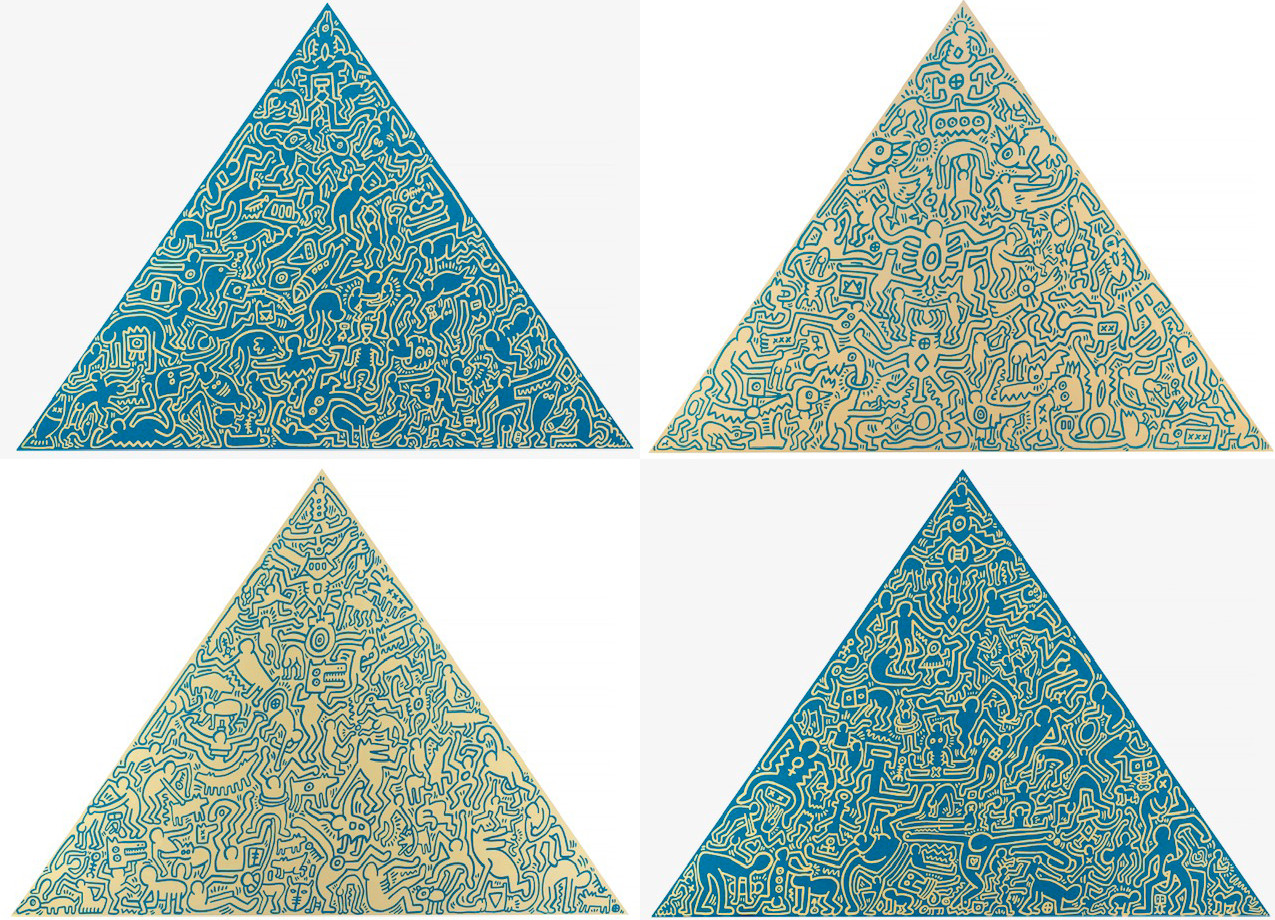
Pyramids — Keith Haring. Available at Guy Hepner, New York.
The sustained interest in Keith Haring's work stems from multiple factors that distinguish him within the contemporary art canon. His commitment to social justice and humanitarian causes established a model for artist-activism that remains relevant today. The Keith Haring Foundation, established by the artist before his death, continues to support AIDS research and children's programs worldwide, ensuring that his legacy extends beyond the purely aesthetic realm.
From an art historical perspective, Keith Haring represents a crucial bridge between street art and institutional acceptance. His early work in New York subway stations, where he drew chalk figures on empty advertising panels, demonstrated that meaningful art could exist outside traditional venues. This democratization of art - making it accessible to subway commuters rather than only gallery visitors - anticipated many developments in contemporary practice. Today, as street art has achieved mainstream acceptance and commands significant prices at auction, Keith Haring is rightfully recognized as a pioneer who helped legitimize the movement.
The visual immediacy of Haring's work also contributes to its lasting appeal. In an era of increasingly complex and conceptual art, his direct and joyful imagery offers viewers an accessible point of entry while rewarding deeper investigation. The dancing figures that initially appear simply celebratory reveal, upon closer examination, complex networks of human interdependence and emotional nuance.
Guy Hepner is proud to offer exceptional works from Keith Haring's celebrated Pyramids series, providing collectors with the opportunity to acquire museum-quality pieces from this pivotal body of work. Our gallery maintains strong relationships with estates, foundations and private collections worldwide, enabling us to source authenticated works of the highest caliber. Whether you are an established collector seeking to enhance your holdings or are acquiring your first significant work by Keith Haring, our expert team offers personalized guidance throughout the acquisition process. We invite you to contact Guy Hepner to discuss available works from the Pyramids series and explore how these remarkable sculptures might complement your collection.
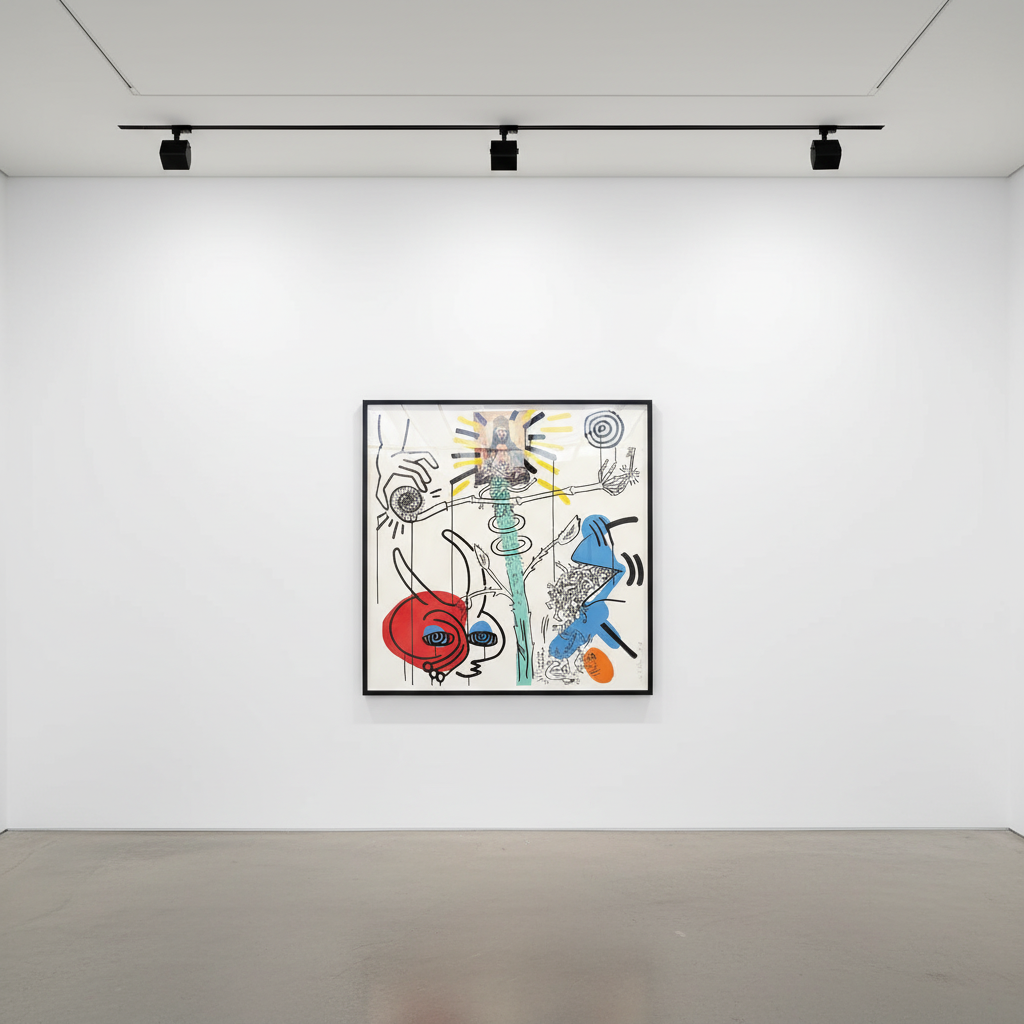
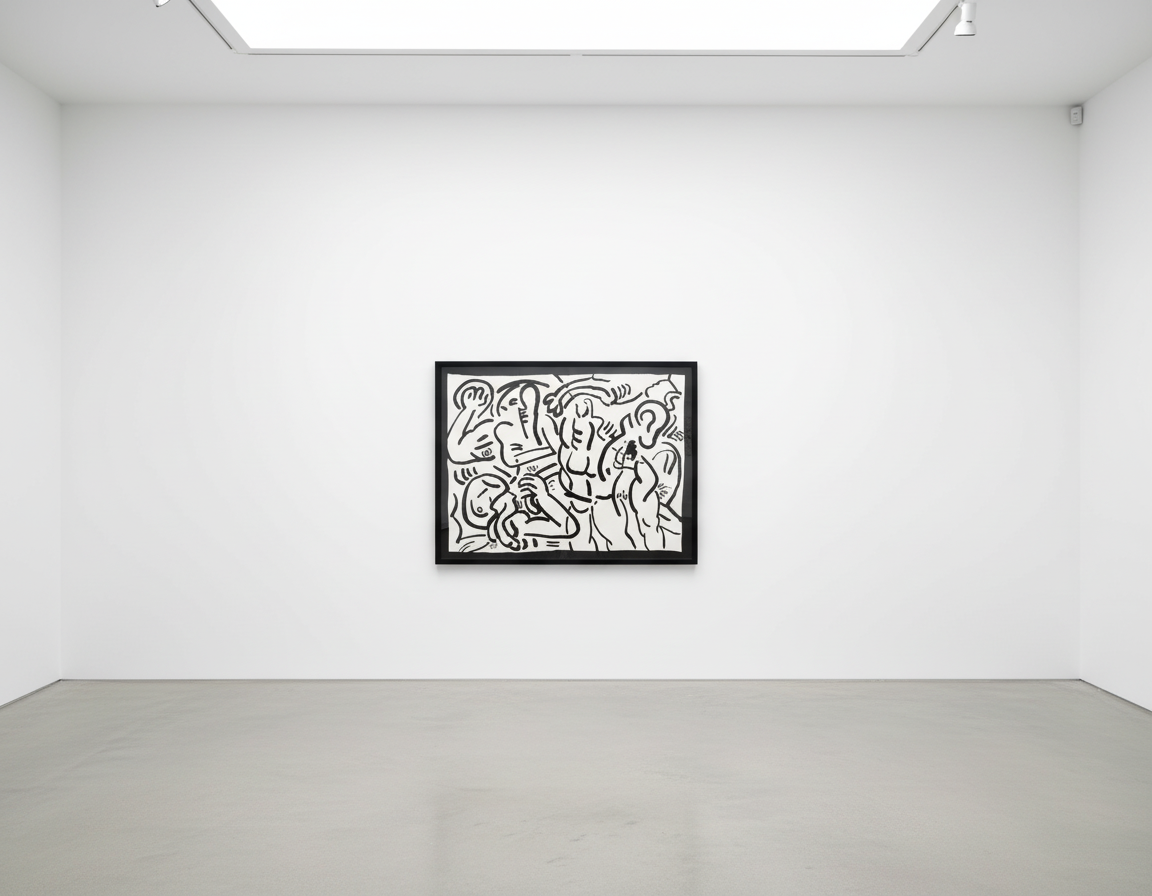
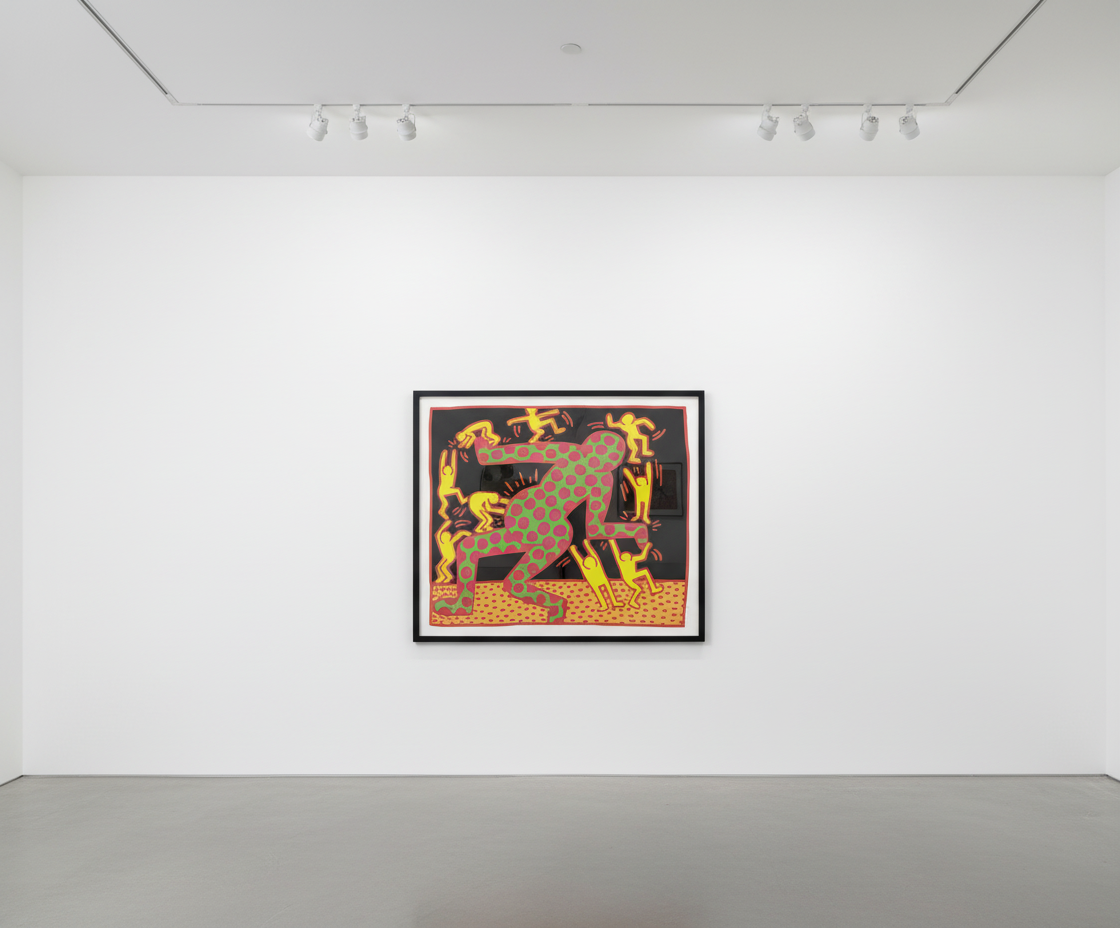
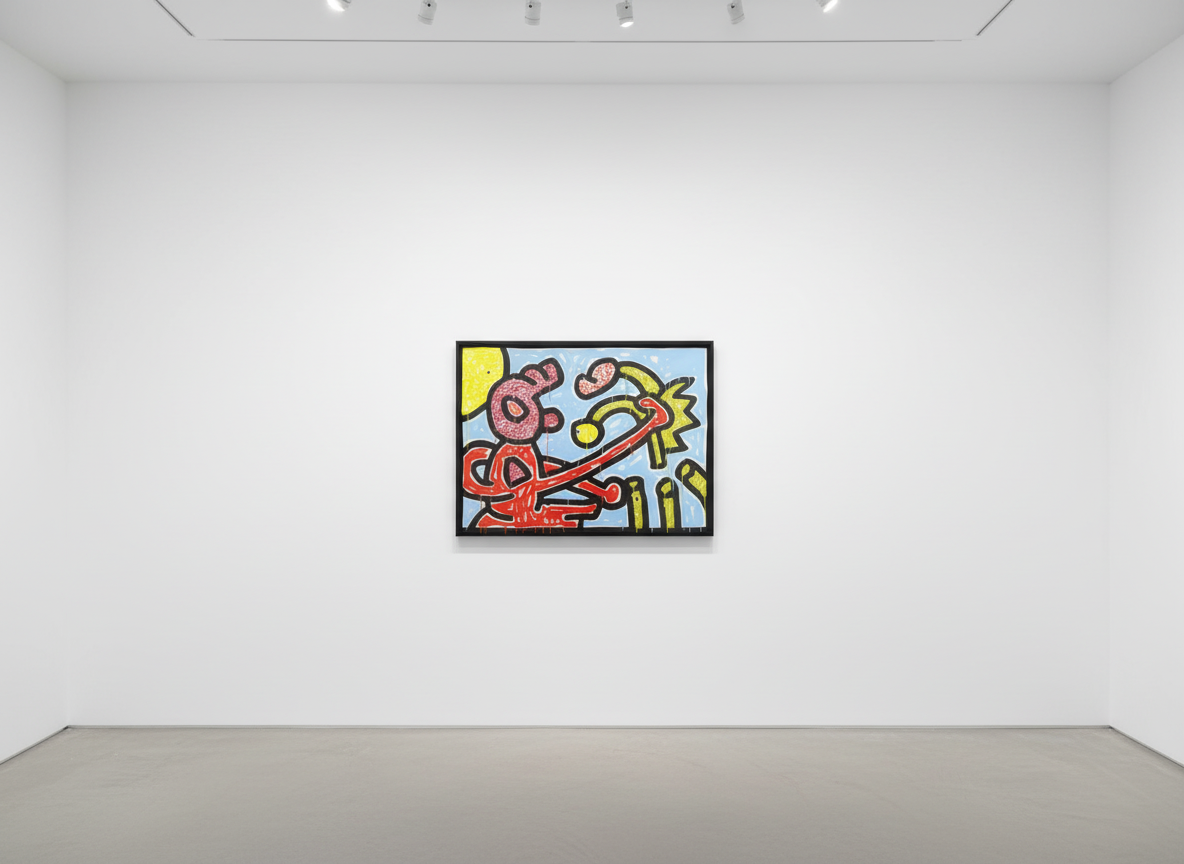
Explore Keith Haring prints for sale at Guy Hepner: Andy Mouse, Apocalypse, Bad Boys, Fertility, Flowers.
Related Series