Amazing
1 work

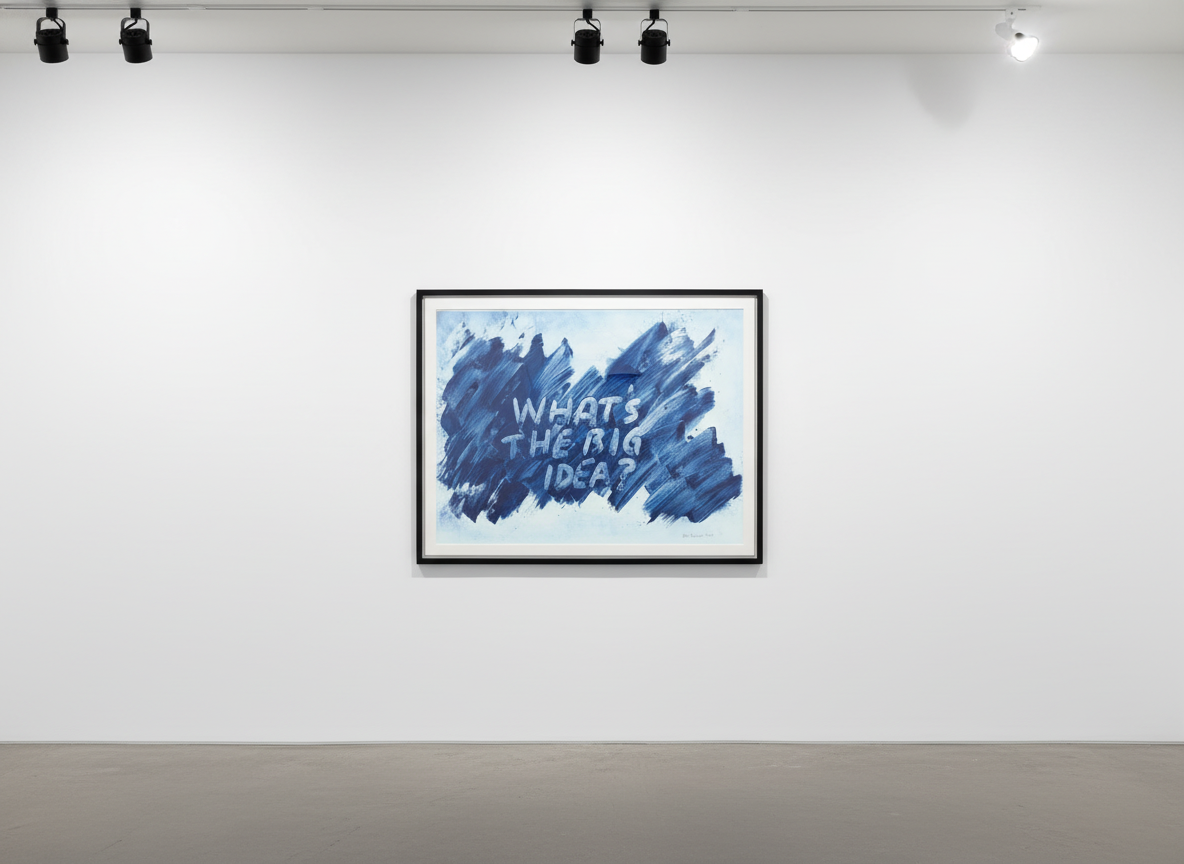
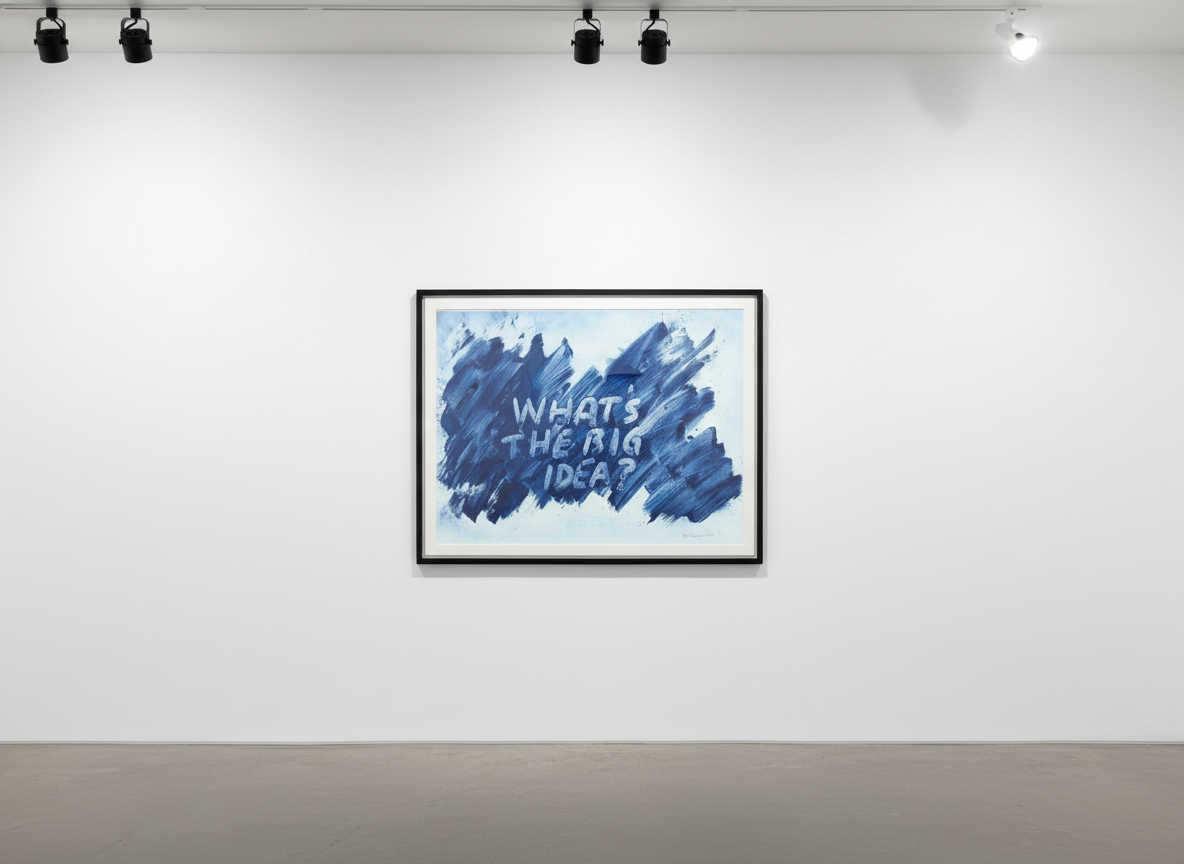
What's The Big Idea, 2023
Etching with aquatint
22 x 30 in 55.9 x 76.2 cm
Edition of 20
What's The Big Idea is a 2023 etching with aquatint (22 x 30 inches, 55.9 x 76.2 cm), produced in an edition of 20 as part of Mel Bochner's Exasperations series. The phrase is one of mock-indignation and sceptical inquiry — a question that simultaneously demands explanation and expresses doubt that any satisfactory explanation exists. Bochner, whose entire practice has been concerned with ideas — their structure, their expression, their limitations — brings particular self-awareness to this choice of phrase. As Bochner has articulated, his chosen expressions for the Exasperations series reflect the rage and the disingenuousness of public speech in these dire times, and demonstrate his gift for identifying platitudes that, in being isolated, become transformed — ambiguous or strange. What's The Big Idea operates in exactly this register: as a phrase, it is so familiar as to be nearly invisible; isolated on the print's surface, it becomes genuinely strange — an invitation to ask whether the concept of the 'big idea' still functions and still carries meaning. The etching with aquatint process is perfectly chosen: the laborious, physical process of print production stands as its own answer to the question of what the big idea might be. The idea — and the work — is the sustained, careful making of art in response to language. Bochner has been doing this for over half a century, and What's The Big Idea shows why his practice remains as vital and sharp as ever.
Price on Application
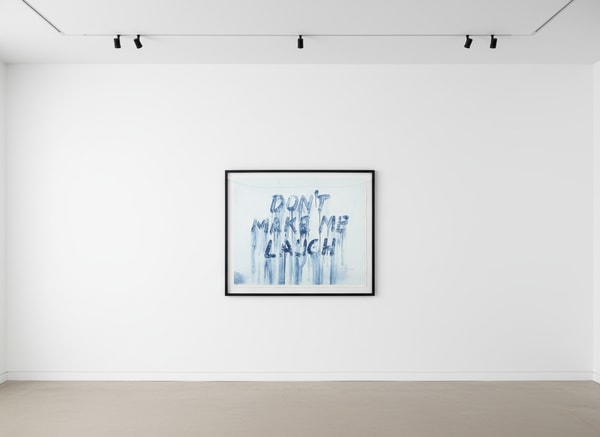
Mel Bochner
Don't Make Me Laugh
2023
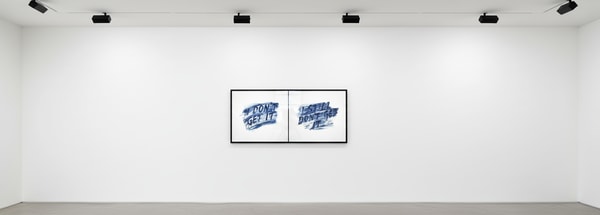
Mel Bochner
I Don't Get It / I Still Don't Get It
2014
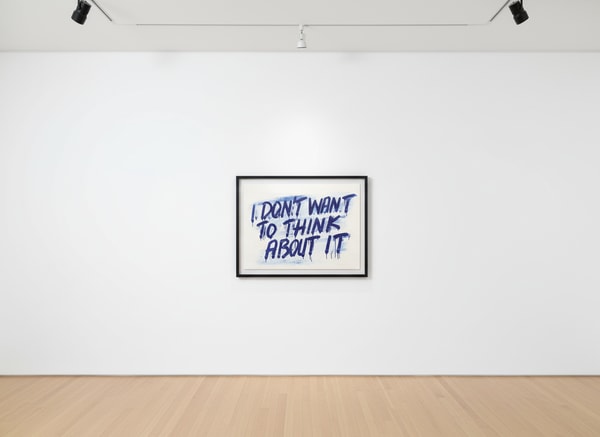
Mel Bochner
I Don't Want To Think About It
2023
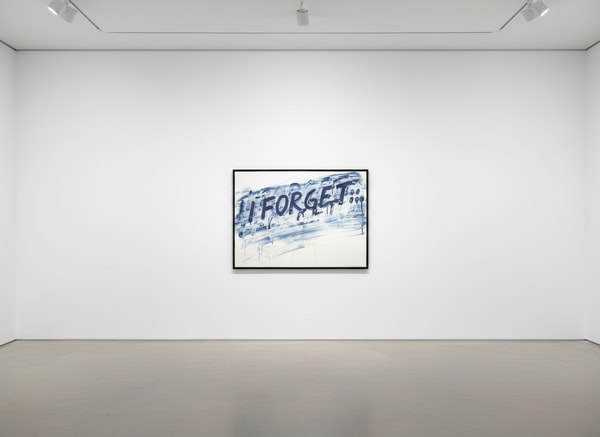
Mel Bochner
I Forget
2014
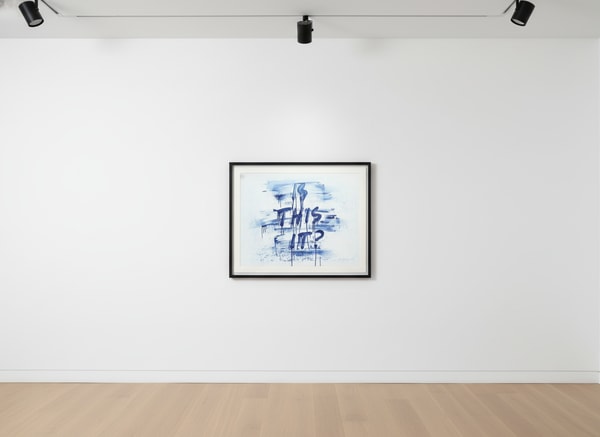
Mel Bochner
Is This It?
2023
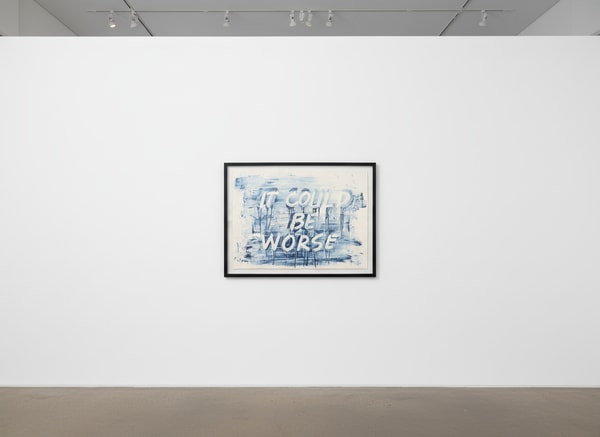
Mel Bochner
It Could Be Worse
2023
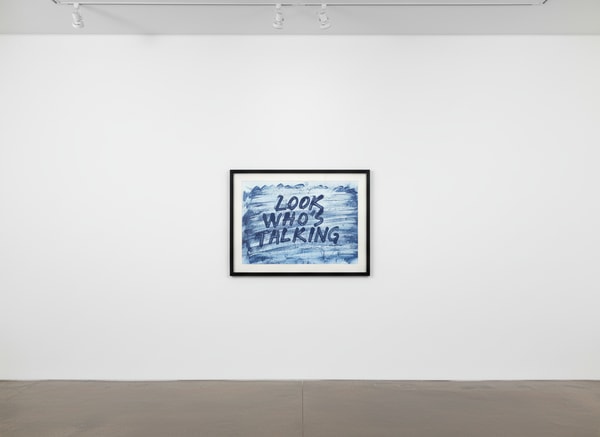
Mel Bochner
Look Who's Talking
2023
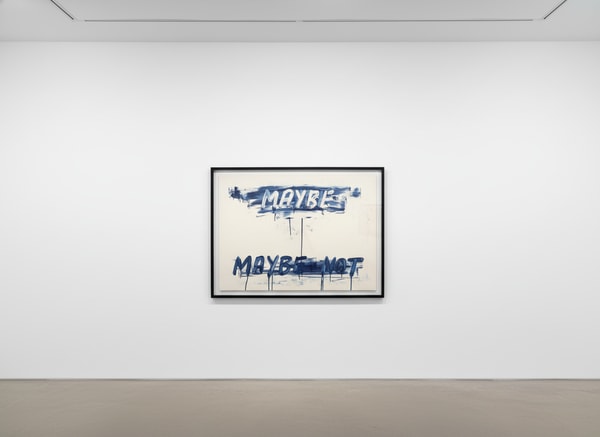
Mel Bochner
Maybe
2023
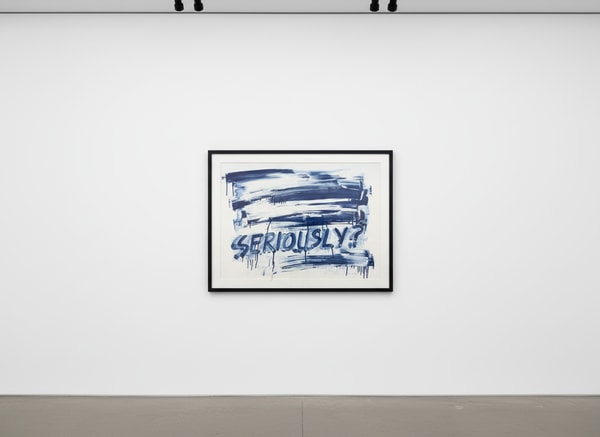
Mel Bochner
Seriously
2023
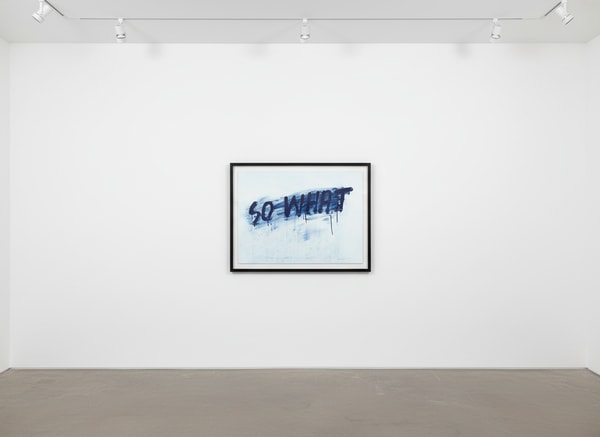
Mel Bochner
So What
2023
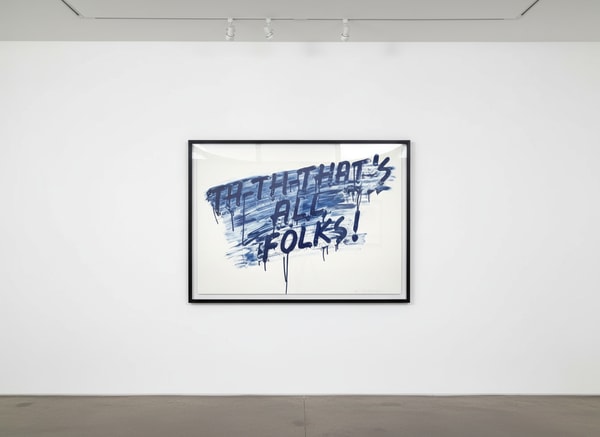
Mel Bochner
That's All Folks
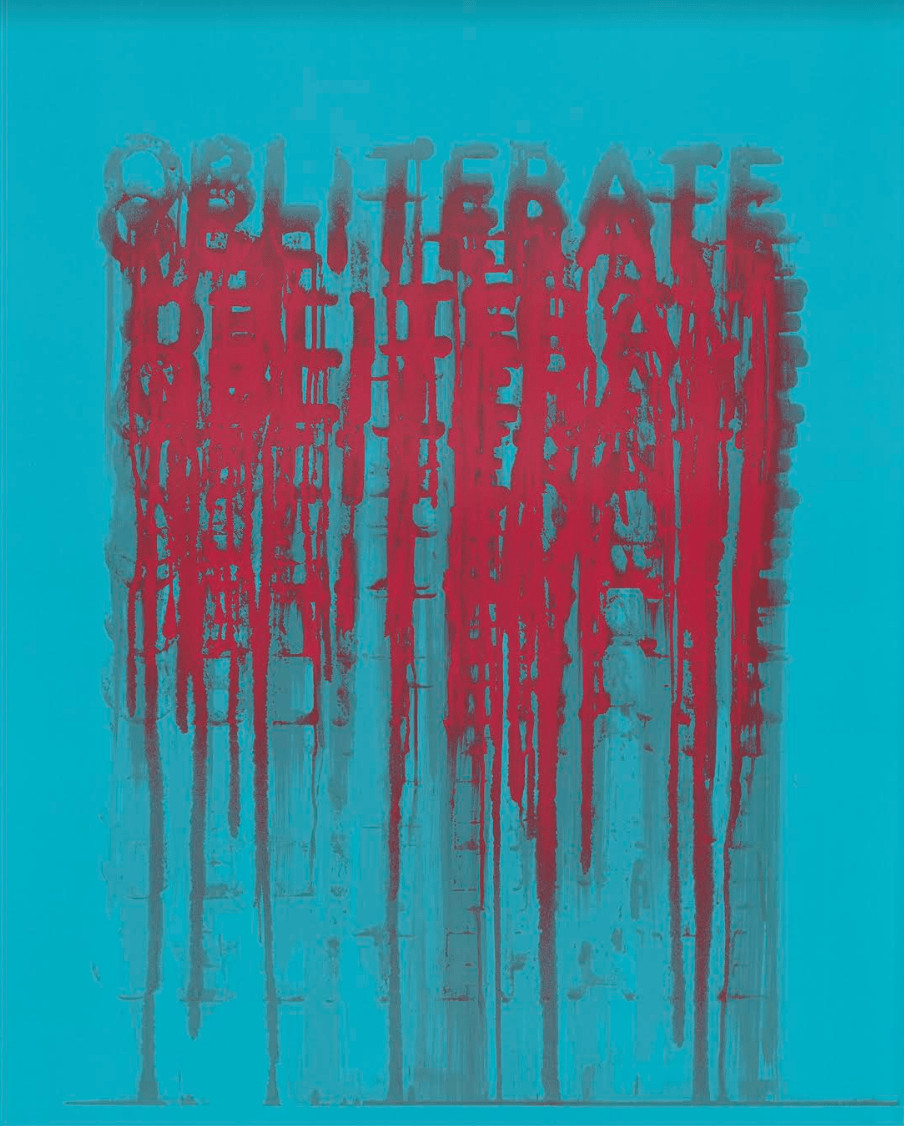
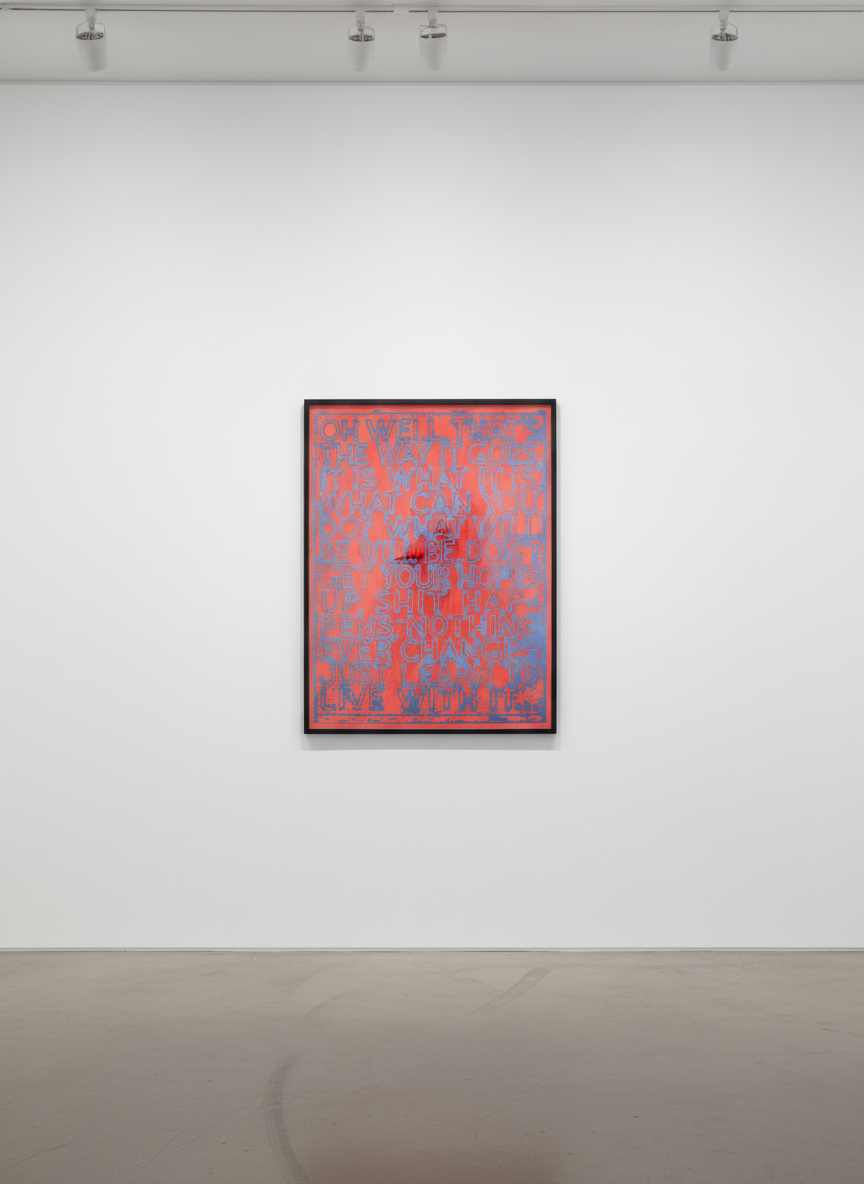
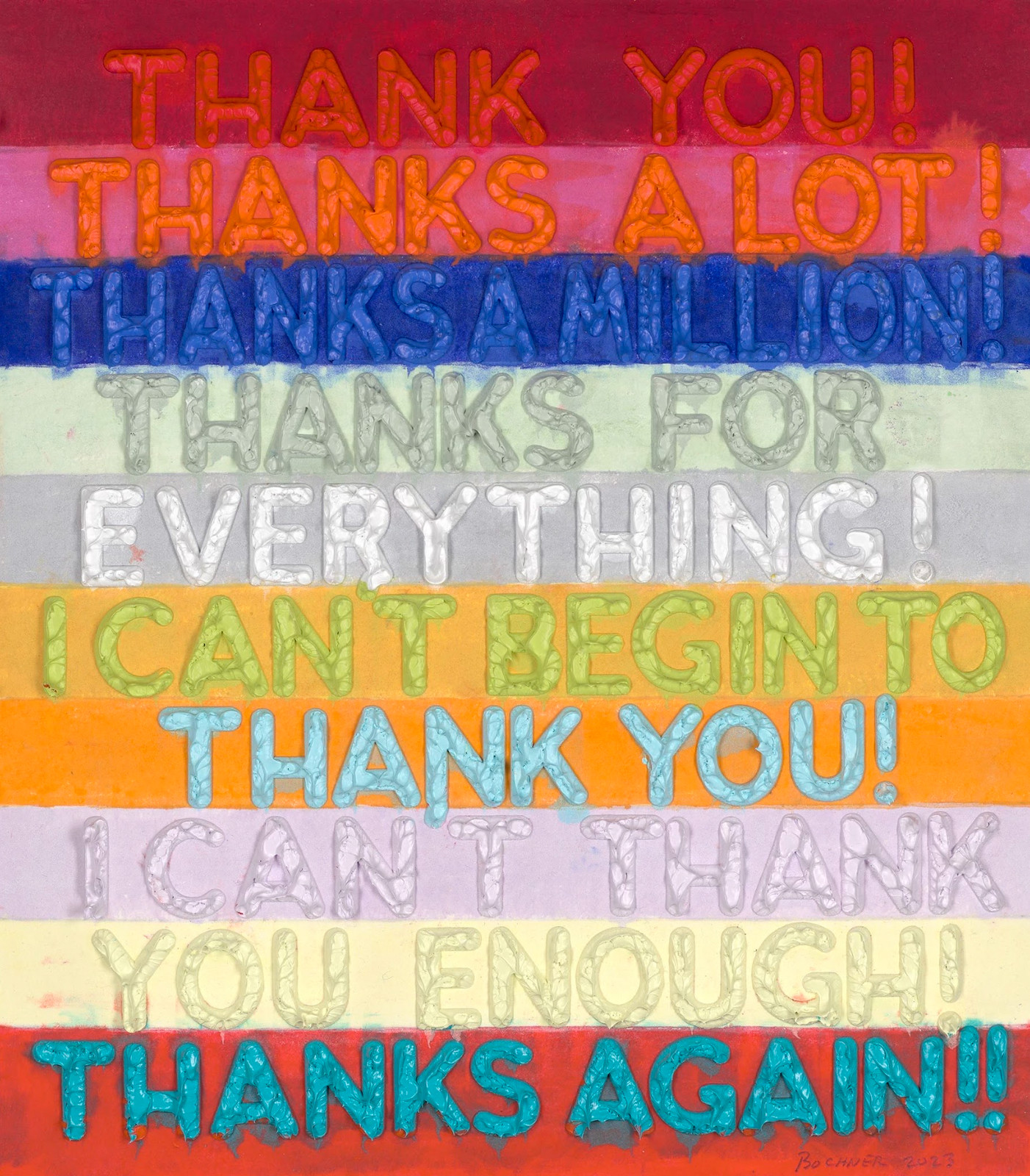
The Exasperations series represents a pivotal body of work by Mel Bochner, showcasing the conceptual artist's characteristic wit and intellectual rigor. Created during a period of significant artistic experimentation, these works employ text-based compositions and linguistic play to explore themes of frustration, ambiguity, and the limits of understanding.
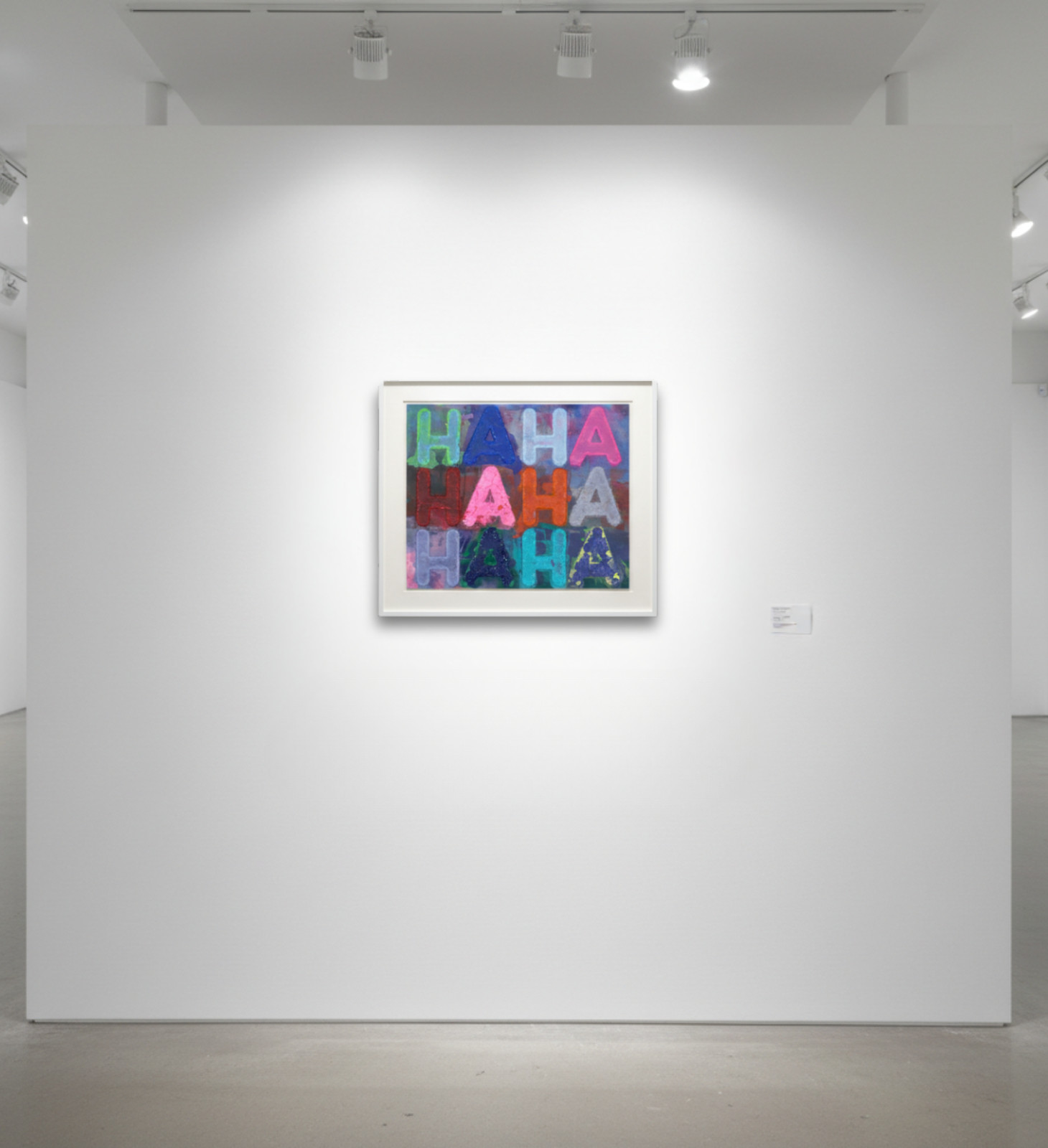
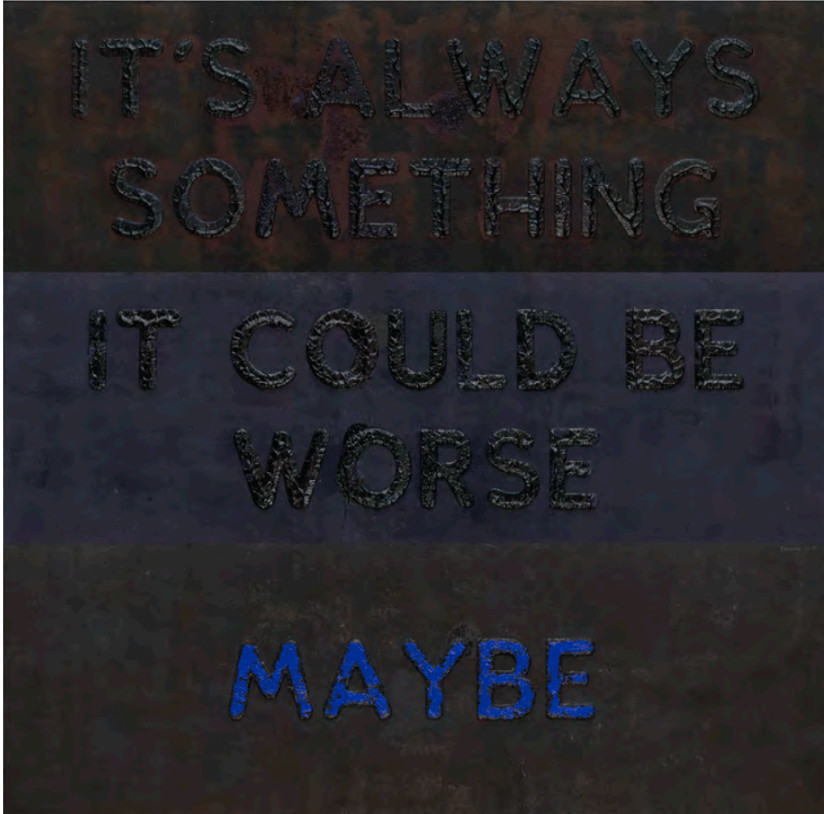
Titles such as Maybe, It Could Be Worse, I Don't Want To Think About It, and I Don't Get It / I Still Don't Get It demonstrate Bochner's distinctive approach to language as a primary artistic medium. The series reflects his engagement with institutional critique and phenomenological inquiry, positioning language itself as both subject and material.
The Exasperations series holds notable significance within Bochner's oeuvre and the broader conceptual art movement. These works continue to resonate with collectors seeking substantive, intellectually rigorous contemporary art that challenges conventional aesthetic frameworks.
Select works from this series remain available for purchase. Contact us to enquire about availability, provenance, and pricing for specific pieces.
Mel Bochner (b. 1940, Pittsburgh, Pennsylvania) is a foundational figure of Conceptual Art whose career bridges the rigorous intellectual demands of the 1960s New York avant-garde and a vigorous ongoing practice in language-based painting that has only grown richer and more expansive over the past two decades. Bochner studied philosophy at Northwestern University before arriving in New York, where his proximity to Sol LeWitt, Donald Judd, Robert Smithson, and the emerging Minimalist and Conceptualist milieu of the mid-1960s shaped what would become one of the most consistently challenging and philosophically serious bodies of work in contemporary American art.
His 1966 exhibition Working Drawings and Other Visible Things on Paper Not Necessarily Meant to Be Viewed as Art — mounted at the School of Visual Arts — is widely regarded as a watershed moment in the history of Conceptual Art. By placing photocopied pages of artists' working drawings and mathematical notations in looseleaf binders displayed on sculpture pedestals, Bochner challenged the most basic assumptions about what art is, what it looks like, and what institutional context it requires. From this beginning he developed a practice organised around number, measurement, and language. His Measurement series, begun in 1969, used tape and adhesive labels to inscribe actual dimensions onto walls and floors — making the space of display itself the subject of the work. These pieces, executed in museums and galleries over decades, remain among the most intellectually rigorous interventions in the relationship between art, architecture, and quantification.
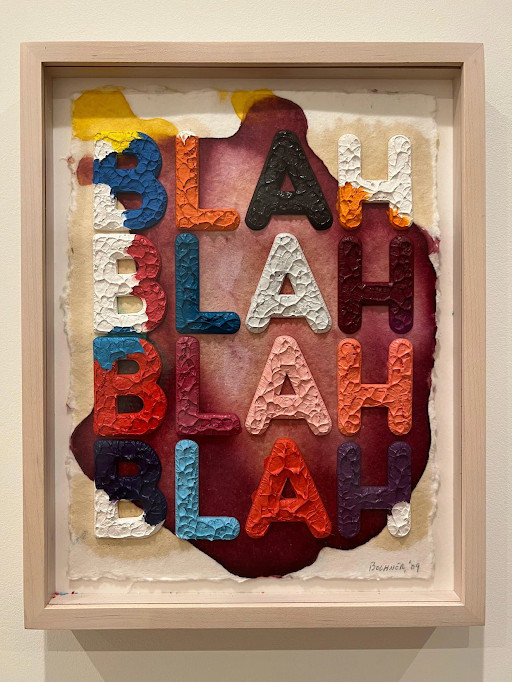
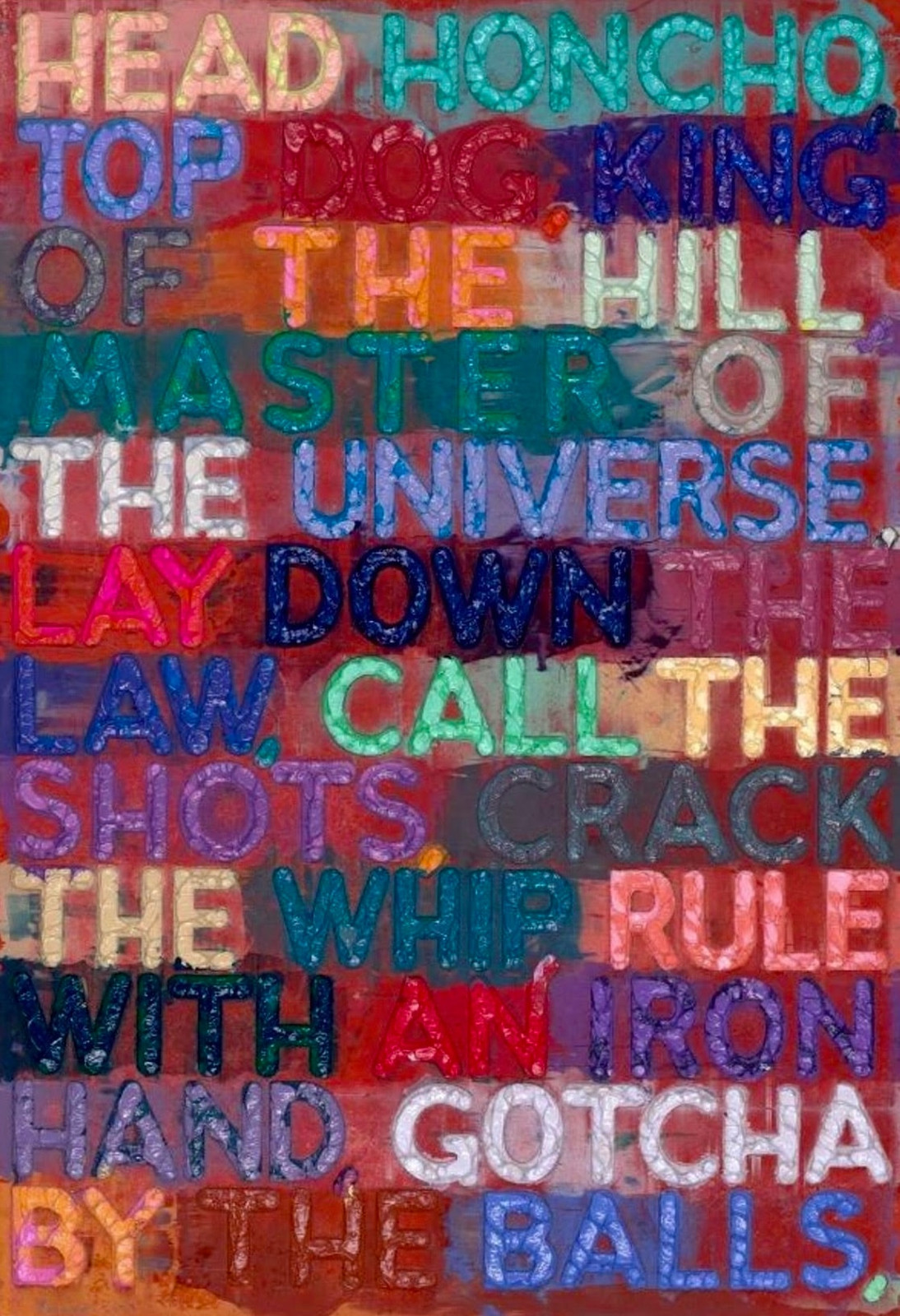
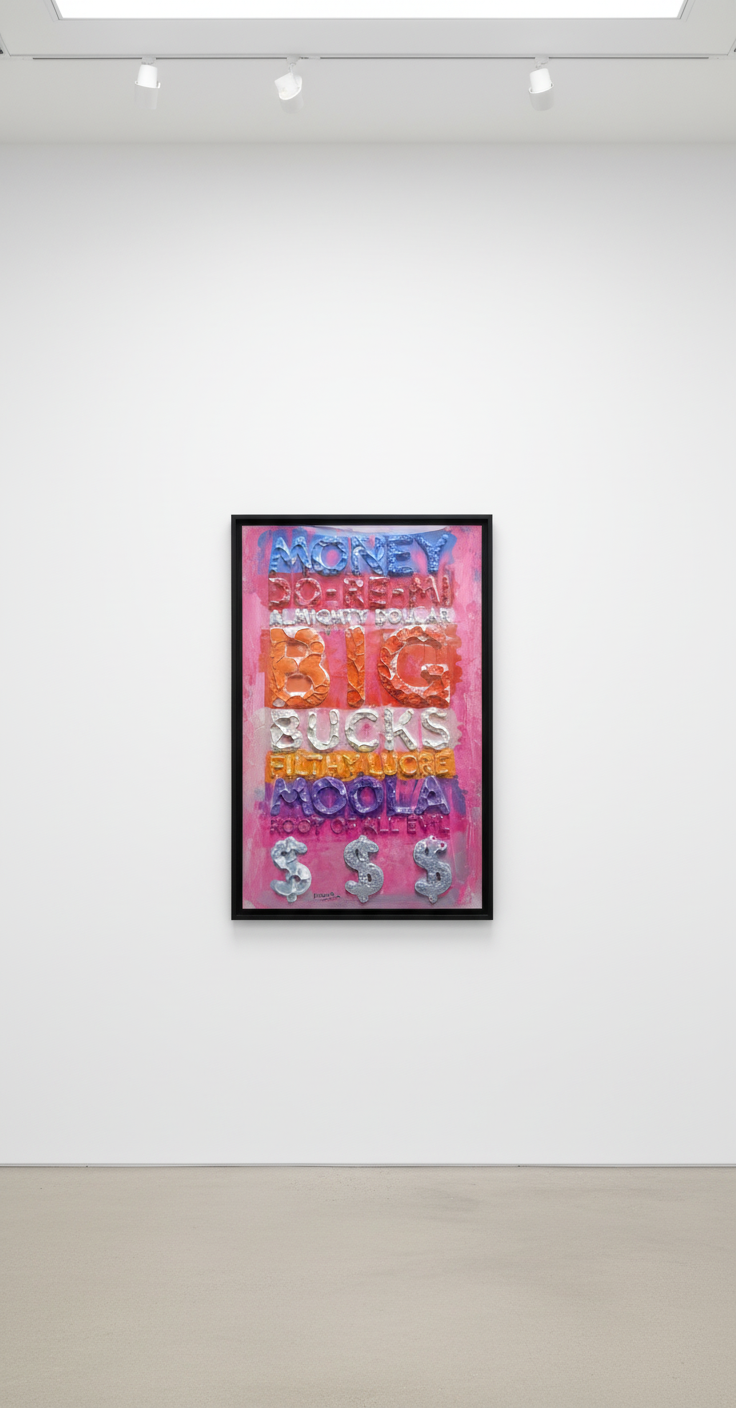
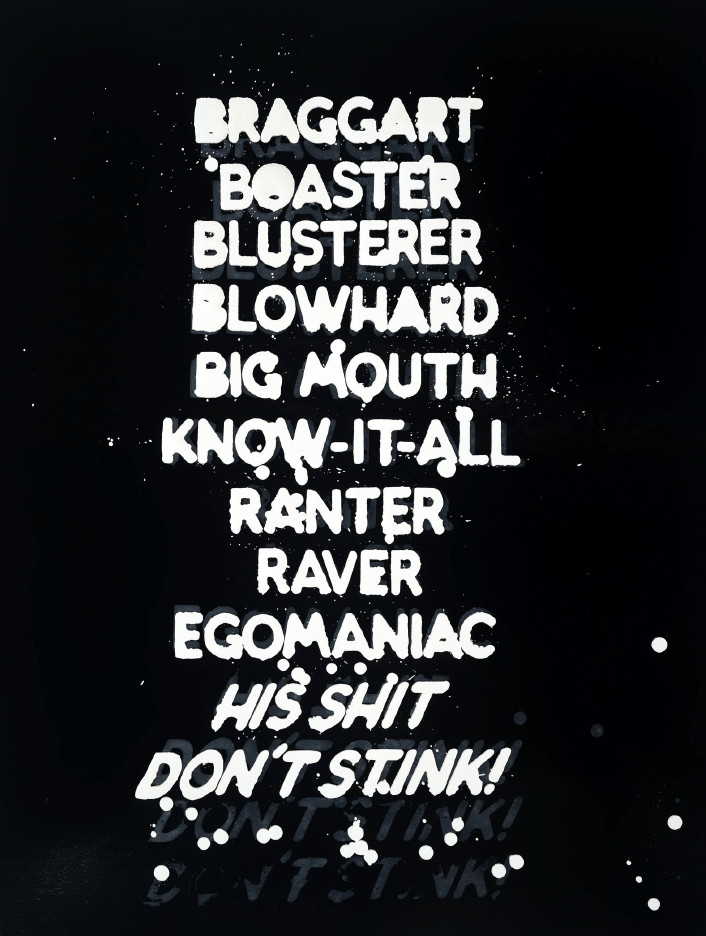
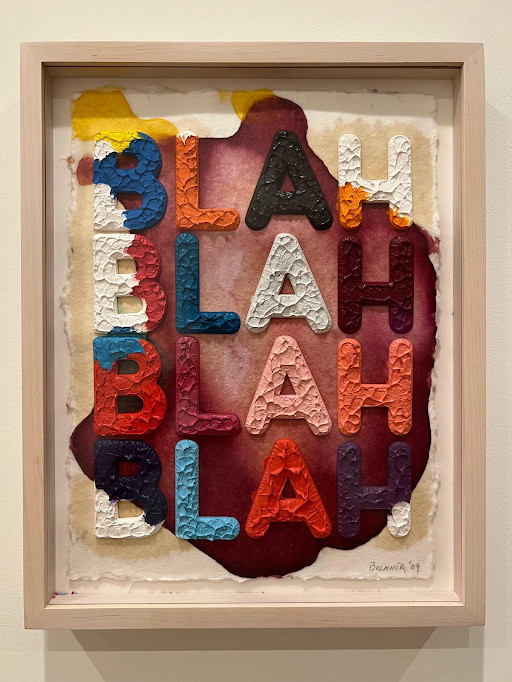
In parallel with this conceptual rigour, Bochner developed the Thesaurus paintings — large-scale works in which synonyms for a single word (Blah, Crazy, Boring, Money, Failure) are painted in bold, gestural typography, often in competing or clashing colours. These works, begun in the early 2000s, have become among his most recognised and commercially successful: they carry the intellectual freight of his Conceptualist formation while operating with the visual directness and wit of the best text-based art. Works at the major auction houses have achieved high six-figure and occasionally seven-figure results. His print editions, including Thesaurus-based screenprints and related works, have attracted serious collector attention.
Bochner's work is held in permanent collections at the Museum of Modern Art, Tate Modern, the Whitney Museum of American Art, the Metropolitan Museum of Art, the Centre Pompidou, the Art Institute of Chicago, and the National Gallery of Art, Washington, among many others. Retrospectives and major survey exhibitions have confirmed his place as one of the essential figures of postwar American art.
Guy Hepner brings deep expertise to the Mel Bochner print and edition market. Our gallery at 177 Tenth Avenue, New York works with collectors seeking to acquire or sell his work, and we offer free, confidential valuations for works in private hands. We are well positioned to advise on the full range of his output, from early conceptual works to the major Thesaurus paintings and editions.