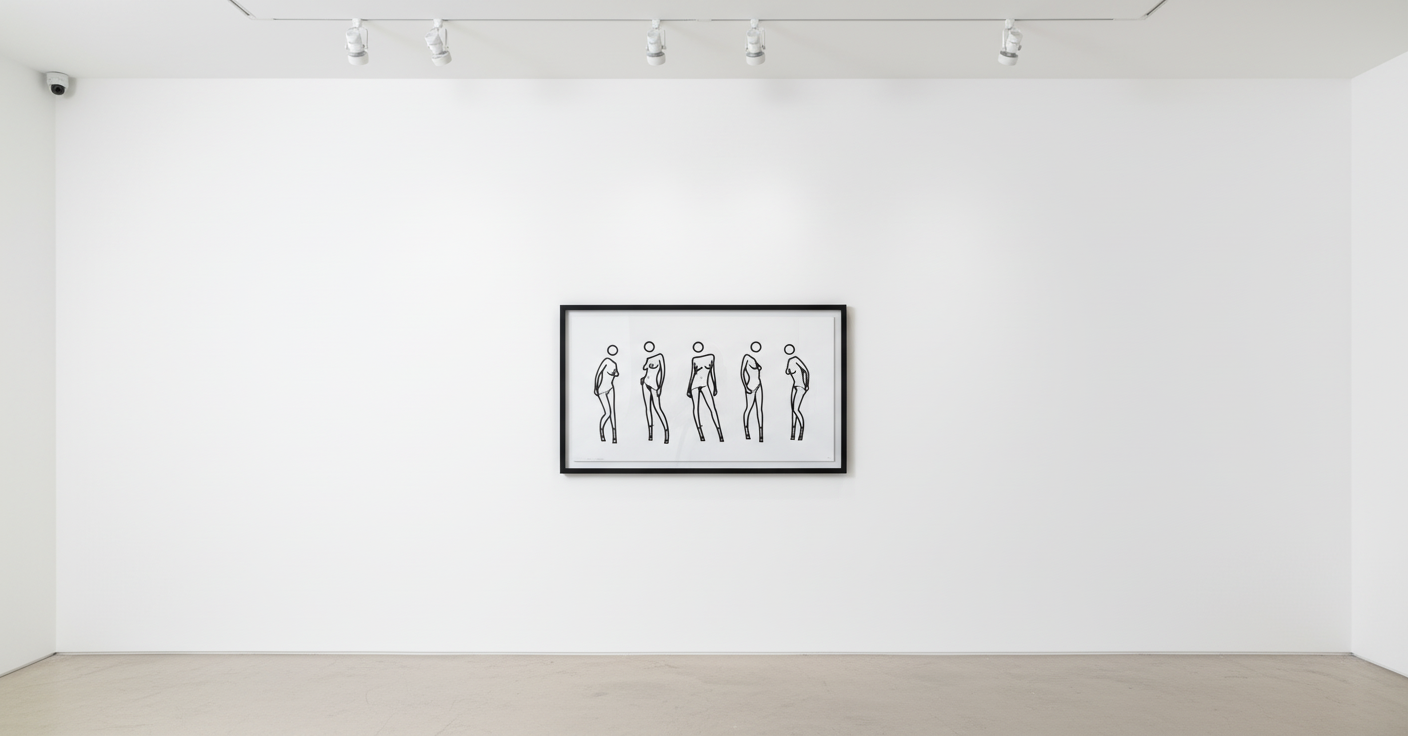
Bijou Gets Undressed
6 works

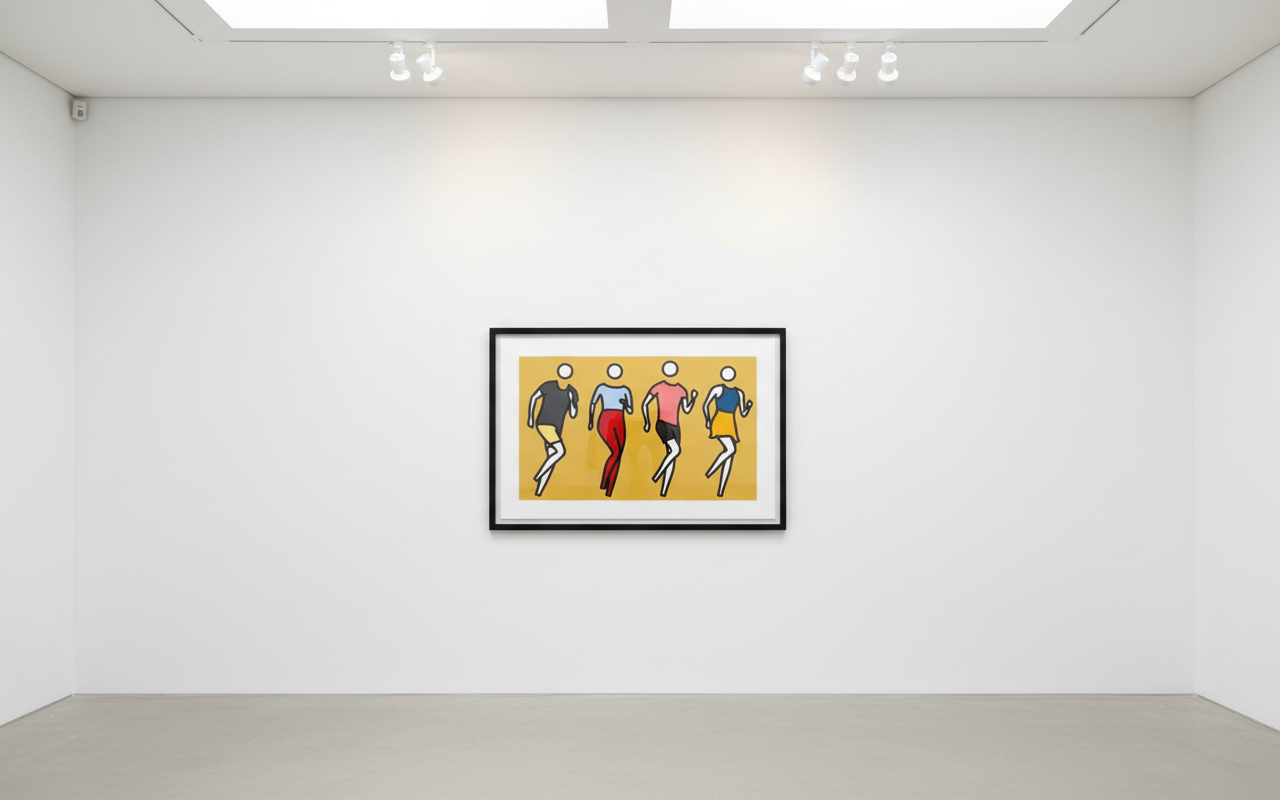
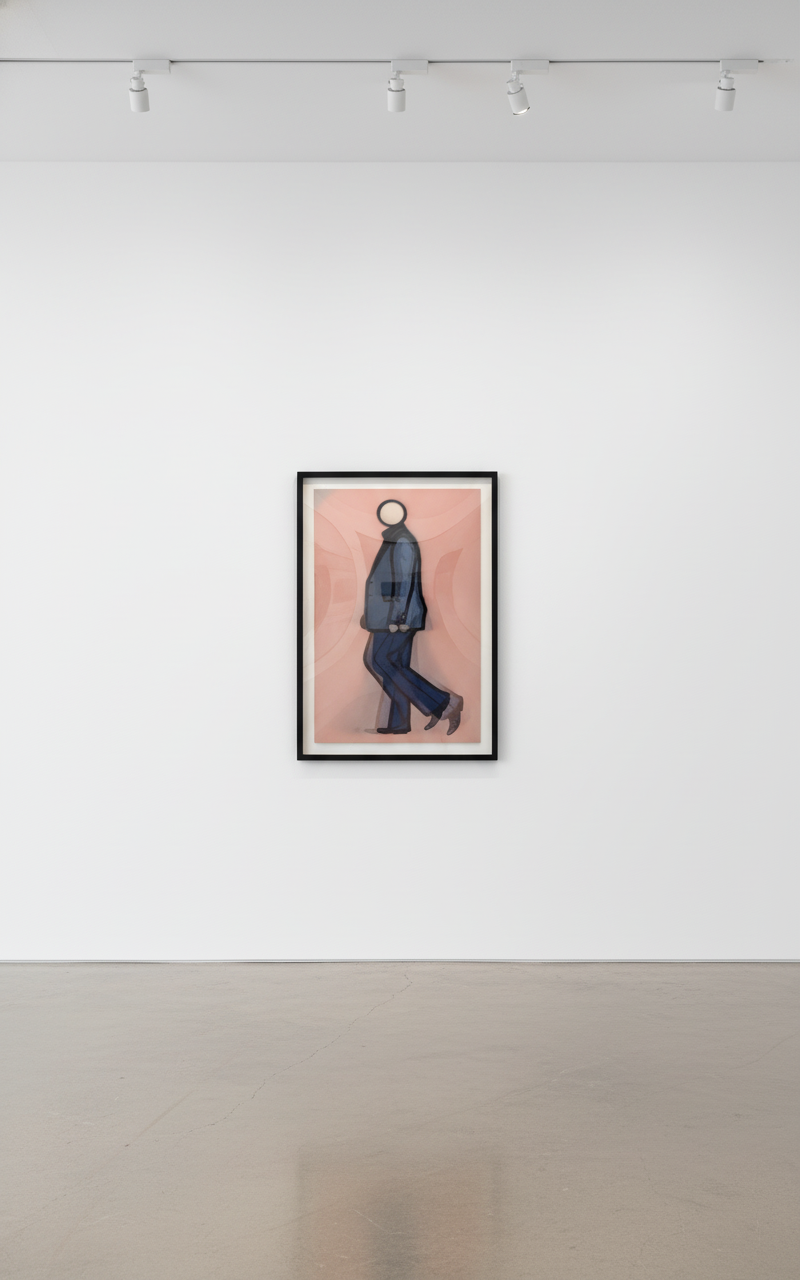
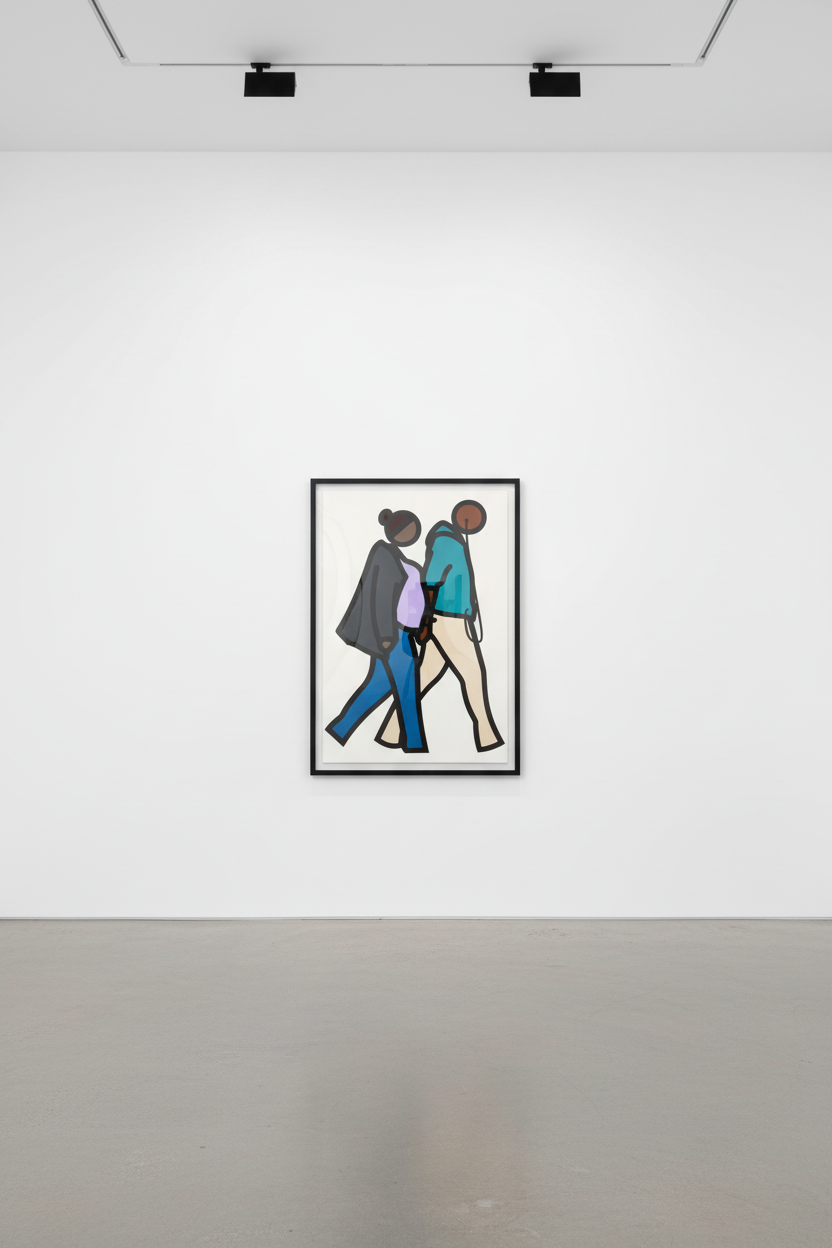
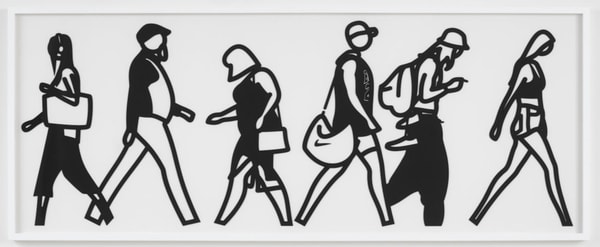
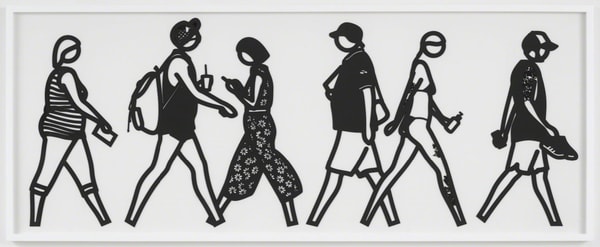
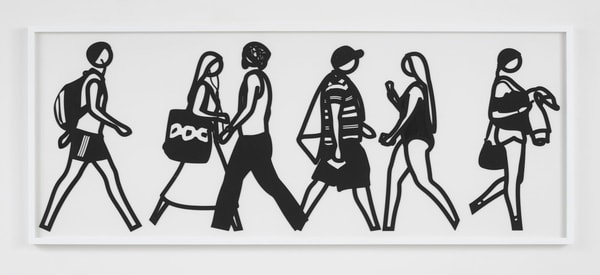
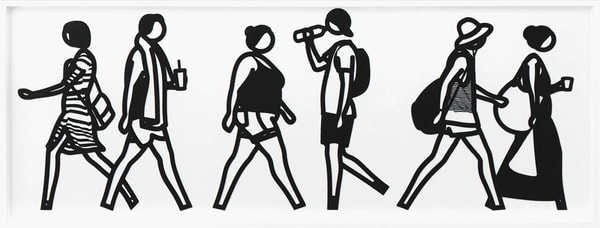
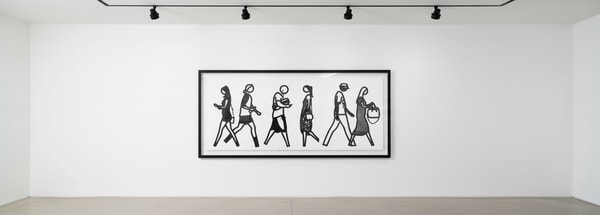
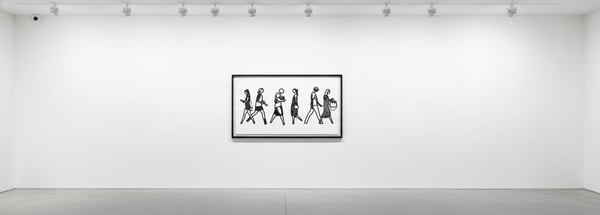
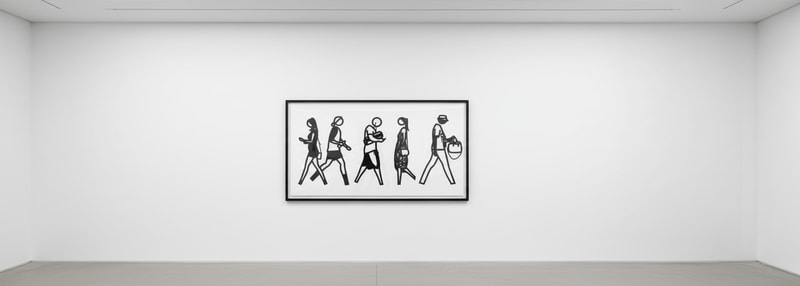
Julian Opie's "Walking in Melbourne" series represents a compelling chapter in the artist's ongoing exploration of human movement and urban identity, capturing the distinctive rhythm and character of pedestrian life in one of Australia's most vibrant cities. Comprising six individual works, this series demonstrates Opie's refined visual language at its most assured, translating the fleeting moments of anonymous walkers into timeless portraits that speak to both the universal experience of city life and the particular energy of Melbourne's streets.
Born in London in 1958 and now recognized as one of the most influential British artists of his generation, Julian Opie has spent decades developing a visual vocabulary that is immediately recognizable yet endlessly nuanced. Represented by Lisson Gallery, his practice encompasses prints, paintings, sculptures, and LED installations, all unified by his commitment to bold minimalist lines, flat expanses of color, and an unwavering focus on the poetry of everyday existence. The "Walking in Melbourne" series exemplifies these defining characteristics while revealing the artist's sensitivity to place and his ability to find profound meaning in the simple act of moving through urban space.
What distinguishes the "Walking in Melbourne" series within Opie's broader practice is its engagement with a specific geographic and cultural context. While the artist has created walking figures inspired by cities across the globe, each location brings its own atmosphere, pace, and character to the work. Melbourne, with its reputation for art, fashion, and a cosmopolitan street culture, provides Opie with subjects who carry themselves with a distinct sense of purpose and style. The figures in Walking In Melbourne 1 through Walking In Melbourne 6 are not generic representations of humanity in motion but rather distillations of a particular urban sensibility, captured through the artist's reductive yet deeply observant eye.
Opie's process for creating these works involves careful observation and documentation, often beginning with photographs or video footage of real pedestrians going about their daily lives. From this raw material, he extracts the essential elements of posture, gesture, and movement, stripping away extraneous detail to reveal the underlying structure of human locomotion. The result is a form of portraiture that operates on multiple levels simultaneously. Each figure is both an individual, frozen in a specific moment of their journey, and a universal symbol of the human experience of navigating shared public spaces. This tension between the particular and the general gives the "Walking in Melbourne" series its remarkable emotional resonance.
The technical execution of these works demonstrates Opie's mastery of his chosen medium. His use of flat, unmodulated color creates a sense of graphic immediacy that recalls everything from ancient Egyptian art to contemporary signage and digital interfaces. Yet within this apparently simple approach lies considerable sophistication. The precise placement of each line, the careful selection of colors for clothing and accessories, and the subtle articulation of movement all contribute to figures that feel alive despite their stylized presentation. In the "Walking in Melbourne" series, this visual language achieves a particular clarity, with each of the six works offering a distinct personality while maintaining the cohesive aesthetic that unifies the collection.
The series also reflects Opie's longstanding interest in the relationship between art and public space. His figures, whether rendered as prints, sculptures, or illuminated installations, possess a democratic quality that invites engagement from viewers regardless of their art historical knowledge. There is something deeply accessible about watching a figure walk, an action so fundamental to human experience that it transcends cultural and linguistic boundaries. The "Walking in Melbourne" series harnesses this accessibility while rewarding sustained attention, revealing new subtleties with each viewing. The way a figure holds their bag, the angle of their stride, the suggestion of wind in their clothing—these details accumulate to create portraits of surprising depth and humanity.
Within the contemporary art landscape, Opie occupies a unique position, bridging the worlds of fine art, design, and popular culture. His work has appeared on album covers, public installations, and museum walls with equal success, demonstrating a versatility that speaks to the fundamental appeal of his visual language. The "Walking in Melbourne" series participates in this broader cultural conversation while maintaining its identity as a focused artistic investigation. Collectors are drawn to these works not only for their aesthetic impact but also for the way they capture something essential about contemporary urban existence, preserving the ephemeral moment of a stranger passing by in a form that will endure.
For those seeking to add a significant work by Julian Opie to their collection, the "Walking in Melbourne" series offers an exceptional opportunity to acquire a distinctive example of the artist's celebrated approach to depicting human movement and metropolitan life. Guy Hepner in New York welcomes inquiries regarding the acquisition of works from this compelling series.
8 works available
Five Facts About Julian Opie Walking in Melbourne
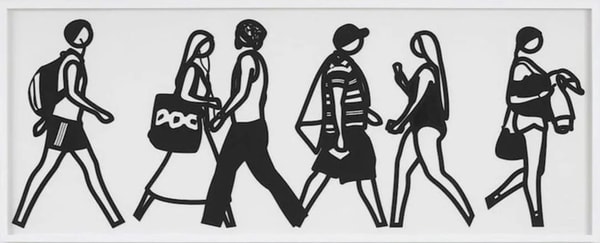
Walking in Melbourne is a 2018 series of six laser-cut Museum board relief prints by Julian Opie.
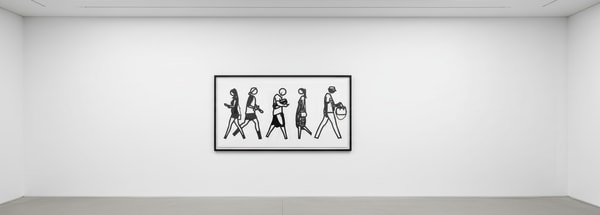
Each print is presented in a sprayed white frame specified by the artist.
The prints were released in an edition of 45 plus 5 artist's proofs.
Each work measures approximately 61.3 x 157 cm.
Market Data
See real auction history, estimate ranges and price benchmarks for individual Walking in Melbourne prints, sourced from Christie's, Sotheby's and other major auction houses.
Frequently Asked Questions
Julian Opie Walking in Melbourne prints for sale are available at Guy Hepner Gallery, 177 Tenth Avenue, New York. We offer authenticated editions with full provenance documentation sourced from the secondary market and directly from publishers.
Julian Opie Walking in Melbourne works — 8 available — are typically produced as limited editions, individually signed and numbered by the artist. Contact Guy Hepner Gallery for edition details on specific works.
Pricing for Julian Opie Walking in Melbourne prints varies by edition size, date, and condition. Contact Guy Hepner Gallery for current market pricing and availability.
More Julian Opie Series
View all Julian Opie works →