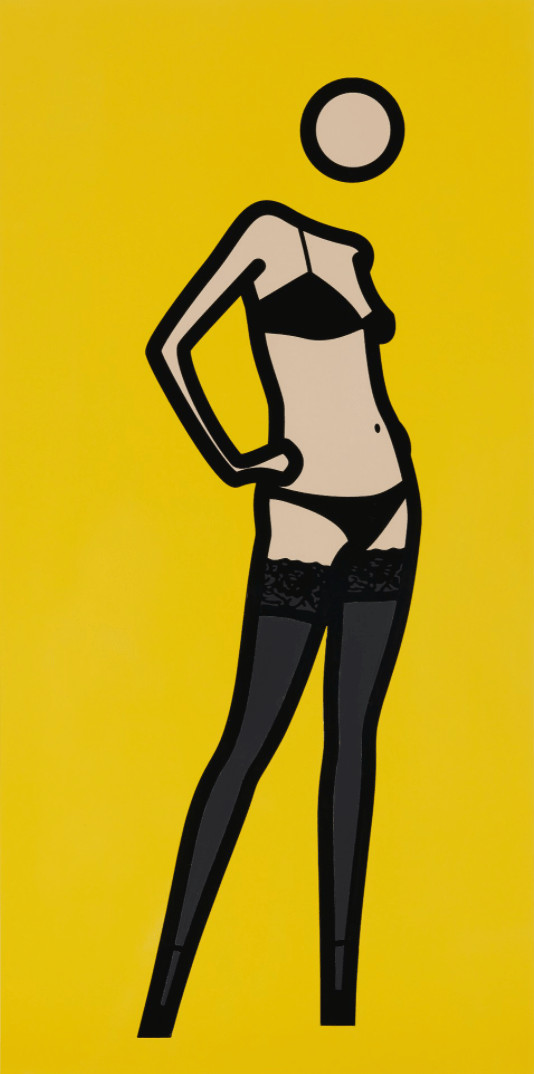

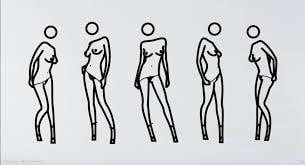
Bijou Gets Undressed
6 works

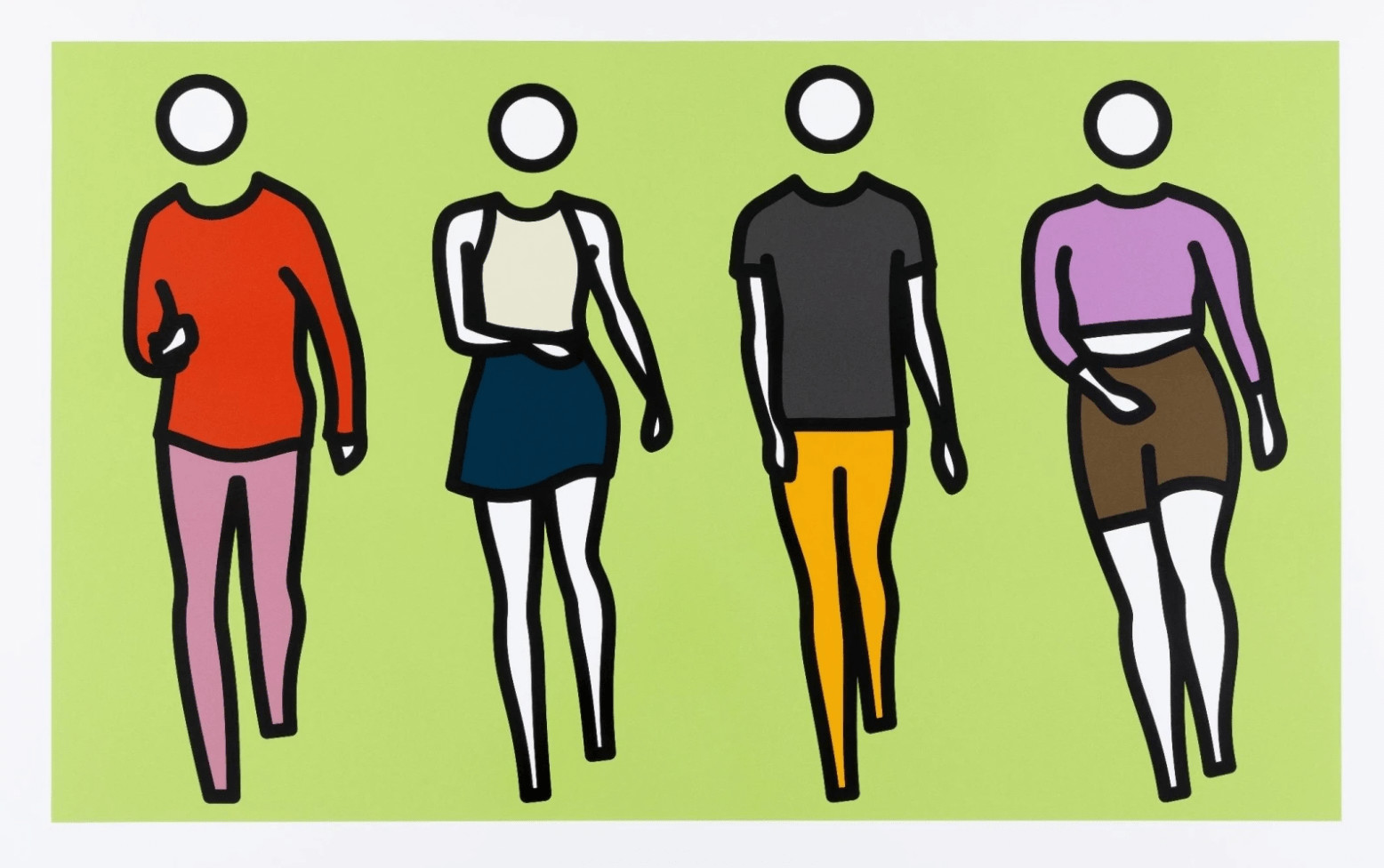
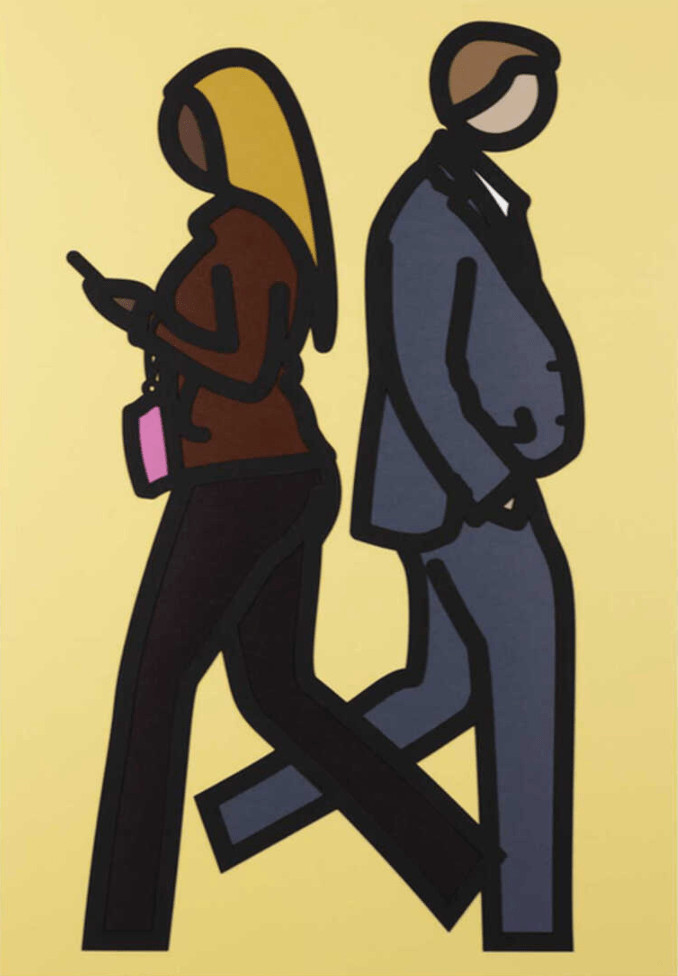
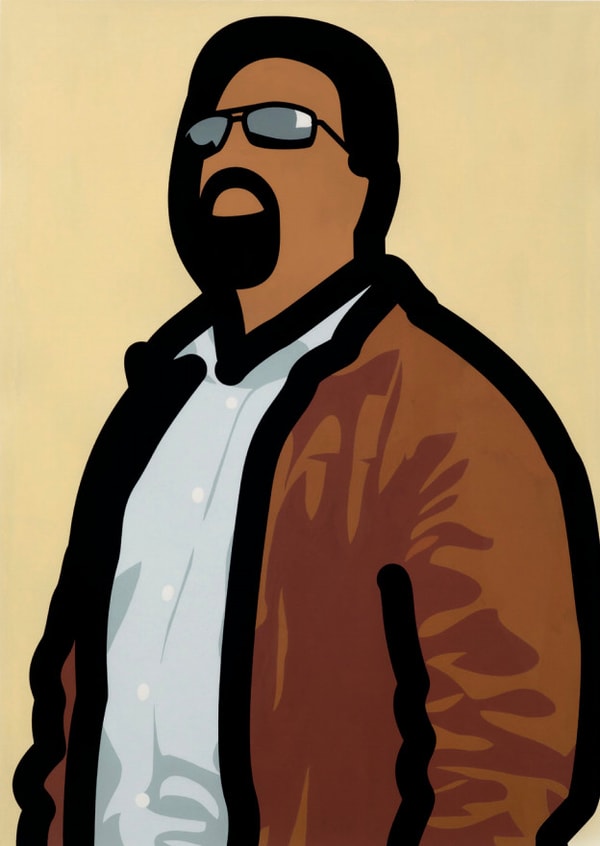
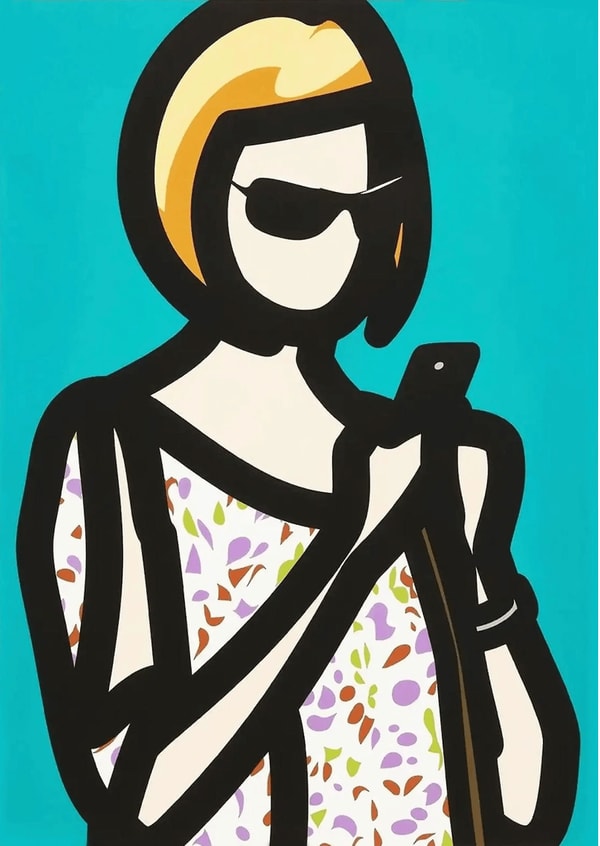
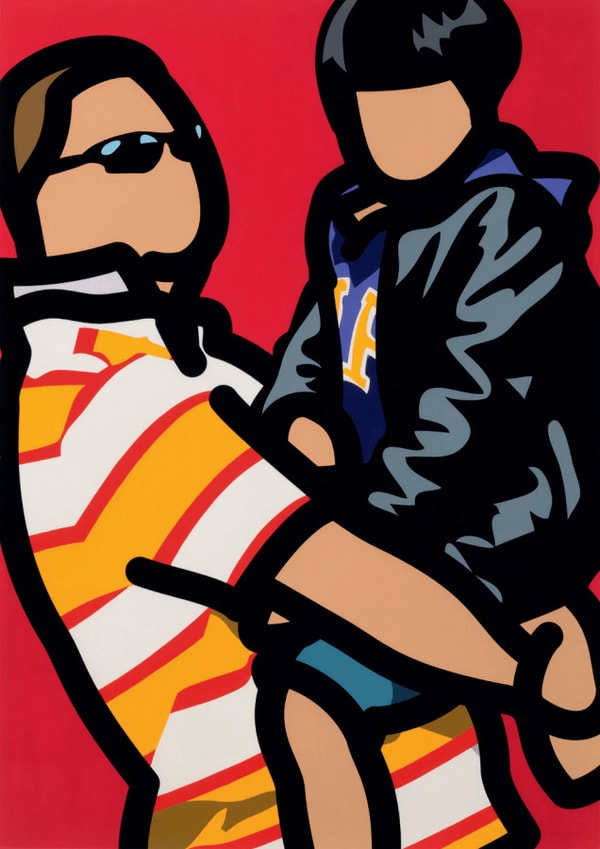
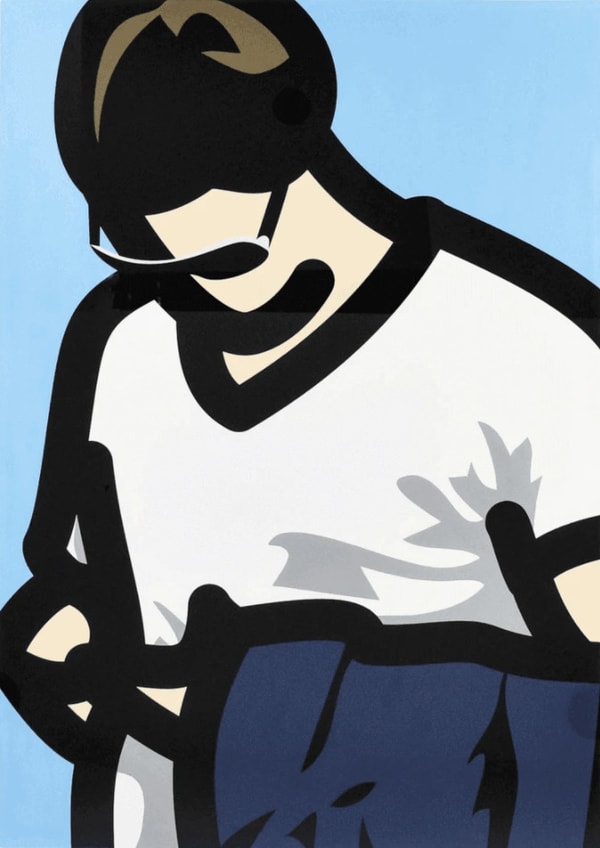
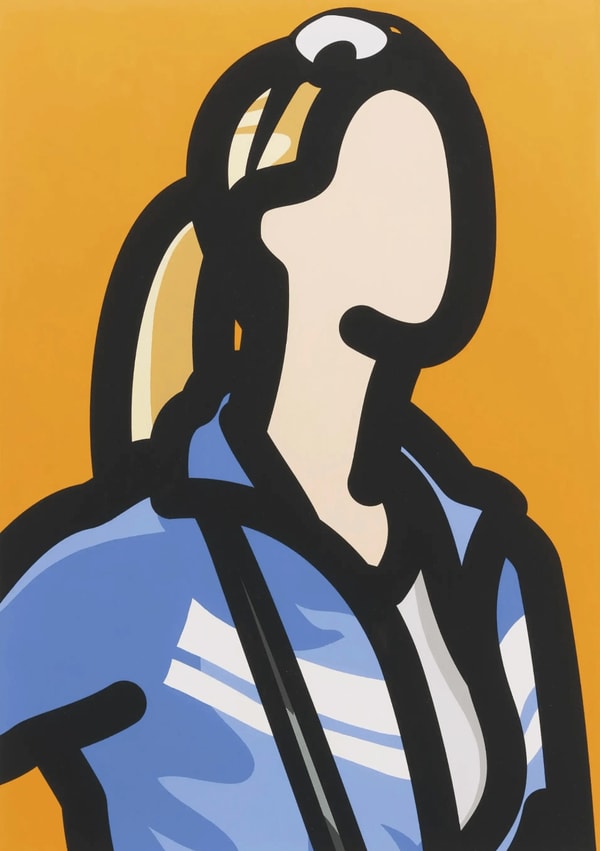
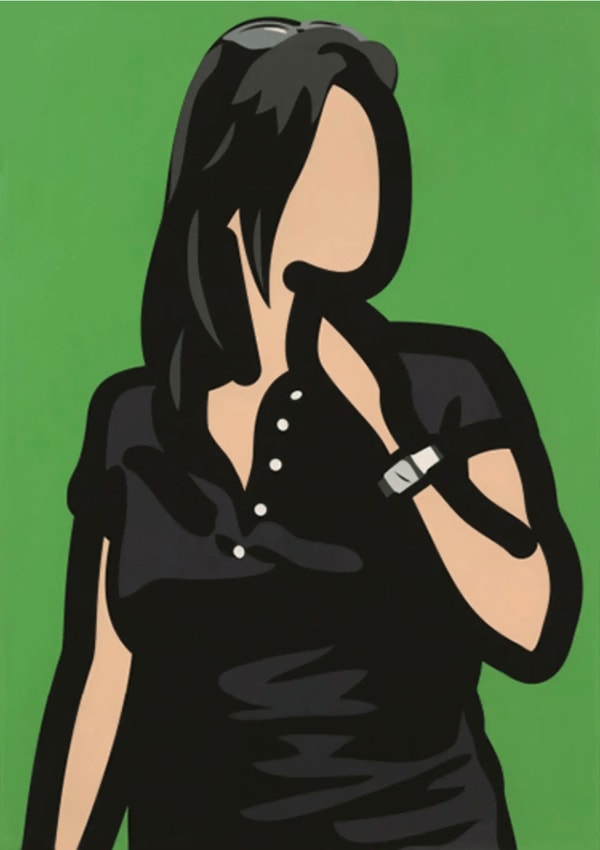
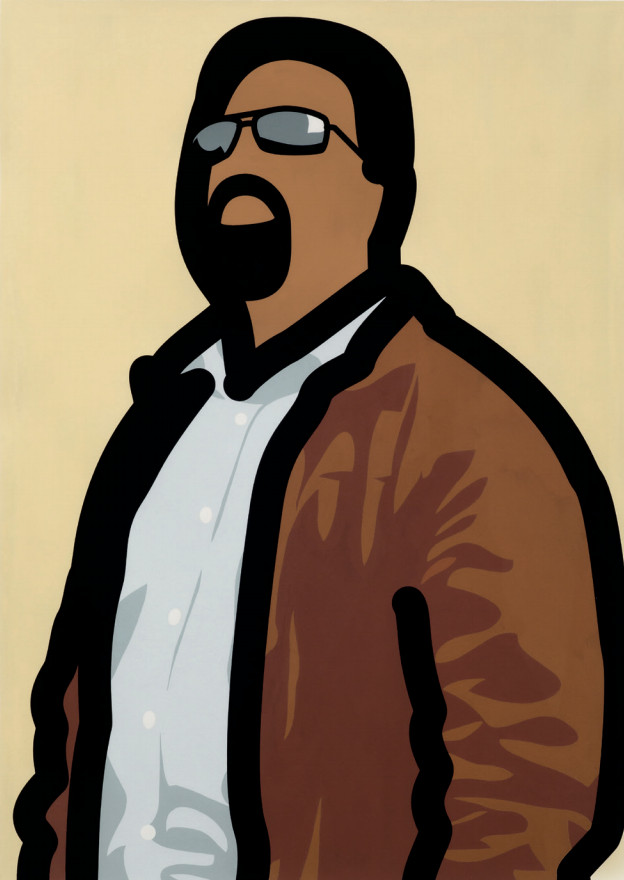
Julian Opie's "Tourists" series represents one of the artist's most incisive investigations into the nature of contemporary identity and the anonymous choreography of modern life. Created with the bold minimalist aesthetic that has become synonymous with Opie's practice, this collection of works examines the universal figure of the tourist—that quintessential character of our globalized age who exists simultaneously as individual and archetype, as specific person and cultural phenomenon. Through works including Tourist With Child, Tourist With Blouse, Tourist With Watch, Tourist With Beard, Tourist With Pony Tail, Tourists, and Tourist With Phone, Opie transforms fleeting observations of people in transit into enduring meditations on how we see and are seen in public space.
What distinguishes the "Tourists" series within Opie's broader practice is its precise focus on a particular social category rather than the generalized walking figures or portraits that characterize much of his other work. While Opie has long been celebrated for his iconic depictions of people in motion, the tourist represents a uniquely loaded subject—someone who is by definition out of place, observing rather than belonging, marked by subtle signifiers of their transient status. Opie captures these telling details with remarkable economy: a phone held aloft to capture a photograph, a watch consulted to track an itinerary, a child in tow, the casual informality of a blouse chosen for comfort over style. Each accessory and gesture becomes a form of identification, a visual shorthand that allows viewers to recognize not just a person but an entire mode of being in the world.
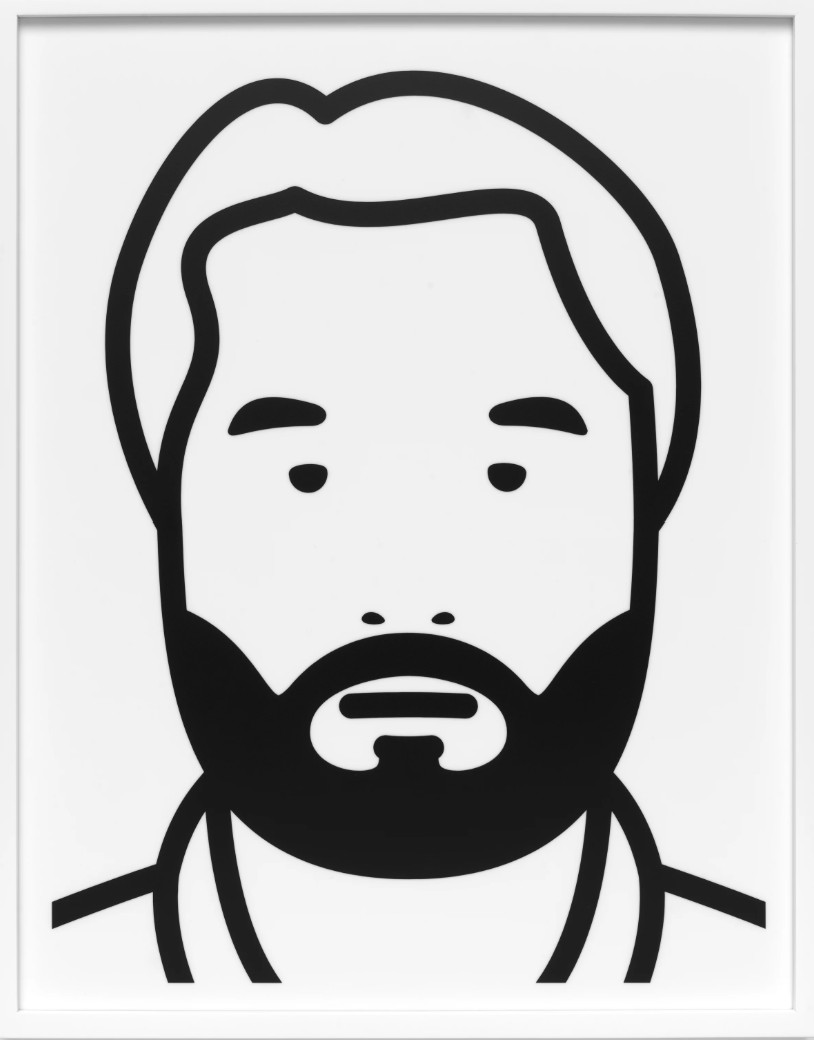
The formal language Opie employs in this series demonstrates his mastery of reduction without loss of meaning. His signature approach—bold black outlines containing flat, unmodulated planes of color—strips away the incidental to reveal the essential. Faces are rendered with minimal features, yet each figure possesses an unmistakable individuality. The tourist with a beard is not merely any bearded figure; through Opie's careful calibration of line and form, he becomes a specific type, recognizable from any city square or museum queue around the world. This tension between the generic and the particular lies at the heart of the series, inviting viewers to consider how identity is constructed through external signs and how we categorize the strangers who populate our shared spaces.
Opie's engagement with the figure of the tourist also reflects his longstanding interest in the relationship between art and everyday life. Unlike the heroic subjects of classical art or the tortured individuals of expressionism, tourists are radically ordinary. They are us, or they are the people we observe while going about our own business. By elevating these unremarkable figures to the status of art, Opie continues a tradition that stretches back through pop art to the democratic impulses of modern art itself. Yet his treatment avoids irony or condescension; there is a genuine affection in these portraits, a recognition that the tourist's desire to see and experience and document is a fundamentally human impulse deserving of attention and respect.
The compositional choices throughout the "Tourists" series reveal Opie's sophisticated understanding of how images function in contemporary visual culture. His figures exist without backgrounds, floating in undefined space much like the icons and avatars that populate our digital interfaces. This decontextualization serves multiple purposes: it universalizes the subjects, making them applicable to any tourist destination; it focuses attention entirely on the figure and their defining attributes; and it acknowledges the way we increasingly encounter images of people as isolated, extractable units of information. The tourist photographing with a phone becomes doubly resonant in this context, a figure engaged in the same act of visual capture and reduction that Opie himself performs.
The series also showcases Opie's remarkable ability to convey movement and presence through static images. Despite the economy of means, these figures possess a convincing physicality. We sense the weight of a child being carried, the gesture of consulting a watch, the particular posture of someone absorbed in their phone. This achievement reflects decades of careful observation and refinement on Opie's part, a commitment to understanding how the human form communicates through its simplest gestures and positions. The "Tourists" series benefits from this accumulated wisdom, presenting figures that feel both immediately legible and endlessly rewarding of sustained attention.
For collectors, the "Tourists" series offers an opportunity to acquire works that encapsulate the central preoccupations of one of Britain's most significant contemporary artists while addressing themes of particular relevance to our current moment. As global mobility continues to shape culture and identity, Opie's tourists stand as monuments to this condition—affectionate, clear-eyed, and possessed of the quiet authority that only genuine artistic vision can provide.
To inquire about acquiring works from Julian Opie's "Tourists" series, please contact Guy Hepner in New York.
7 works available
Five Facts About Julian Opie Tourists
Tourists is a 2014 series of screenprints with hand painting by Julian Opie depicting anonymous pedestrians rendered without facial features.
Opie based the compositions on photographs he took during a family day out on London's South Bank.
Individual prints in the series, such as Tourist With Beard and Tourist With Ponytail, were released in an edition of 20.
Each print measures 40 x 30 inches and presents its figure as a three-quarter length portrait, a format that recalls traditional portrait painting.
Market Data
See real auction history, estimate ranges and price benchmarks for individual Tourists prints, sourced from Christie's, Sotheby's and other major auction houses.
Frequently Asked Questions
Julian Opie Tourists prints for sale are available at Guy Hepner Gallery, 529 West 20th Street, New York (by appointment). We offer authenticated editions with full provenance documentation sourced from the secondary market and directly from publishers.
Julian Opie Tourists works — 7 available — are typically produced as limited editions, individually signed and numbered by the artist. Contact Guy Hepner Gallery for edition details on specific works.
Pricing for Julian Opie Tourists prints varies by edition size, date, and condition. Contact Guy Hepner Gallery for current market pricing and availability.
More Julian Opie Series
View all Julian Opie works →