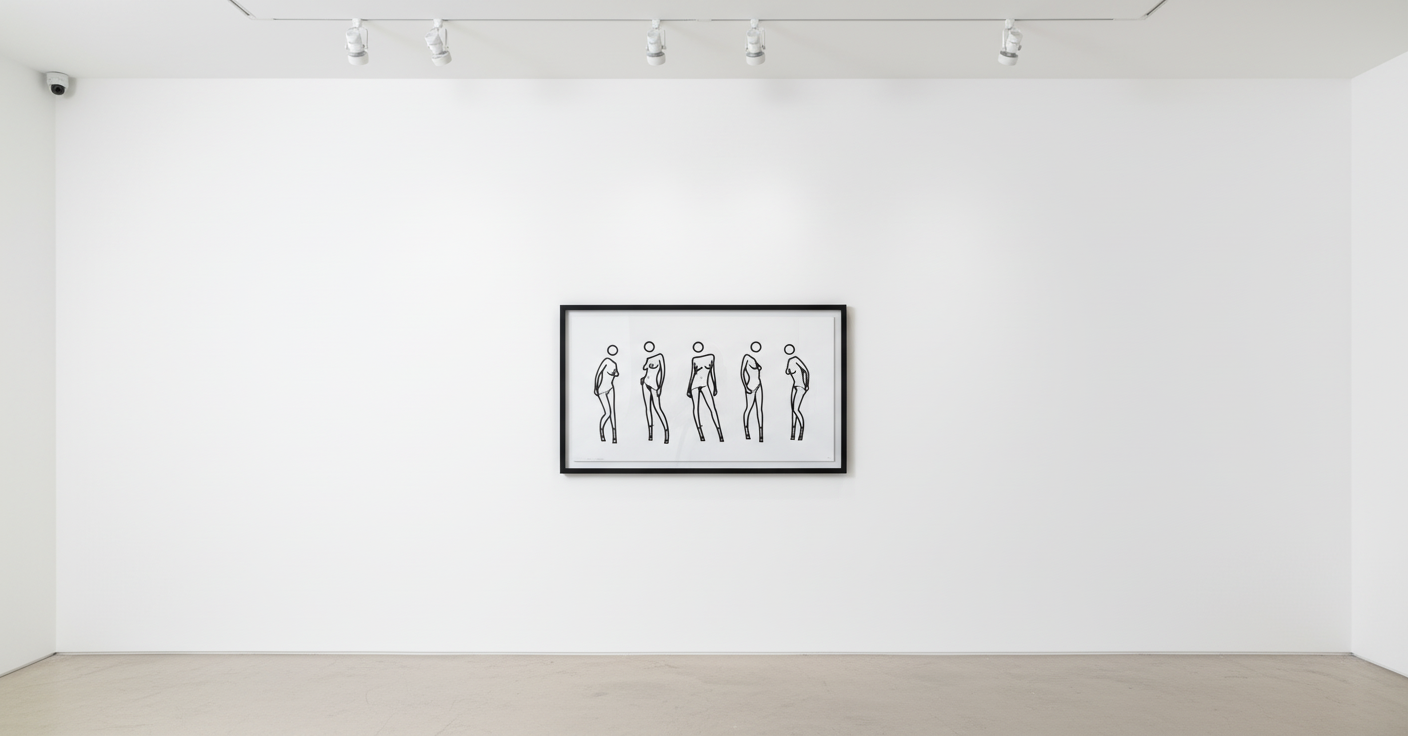
Bijou Gets Undressed
6 works

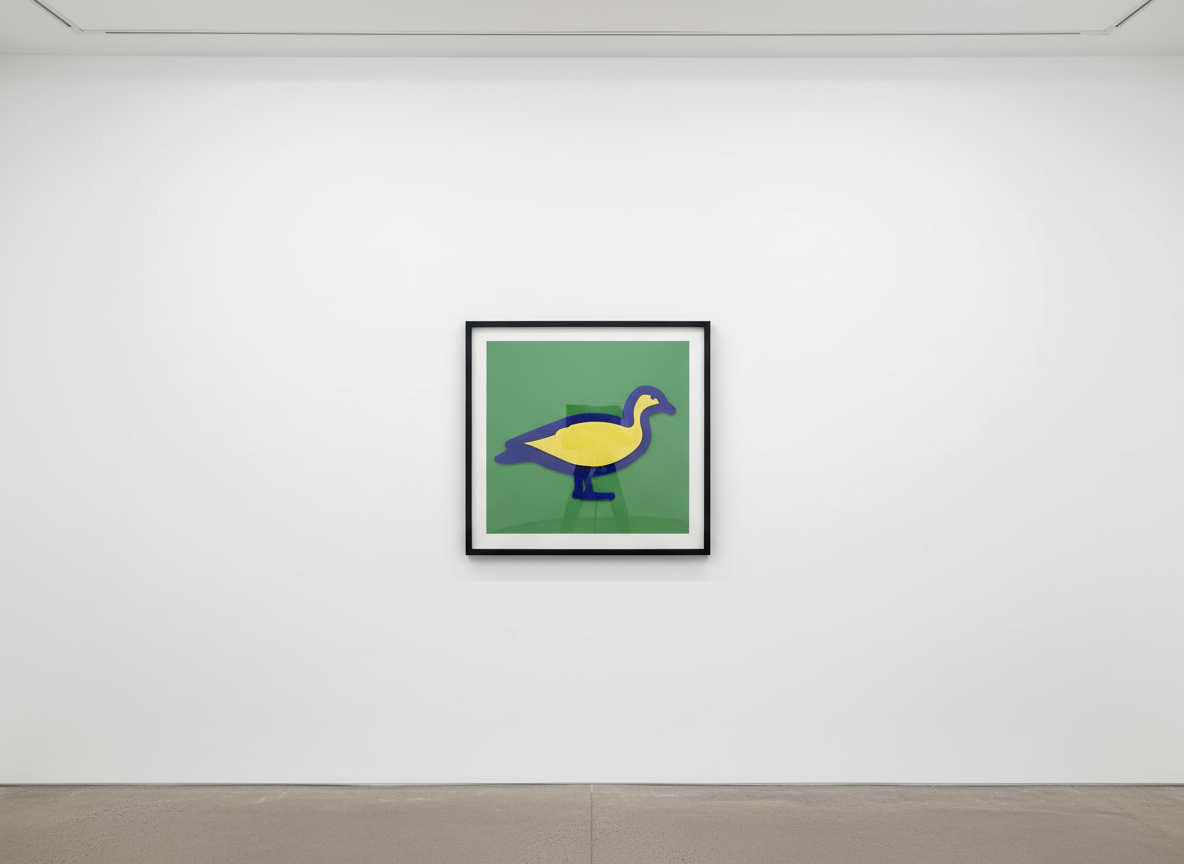
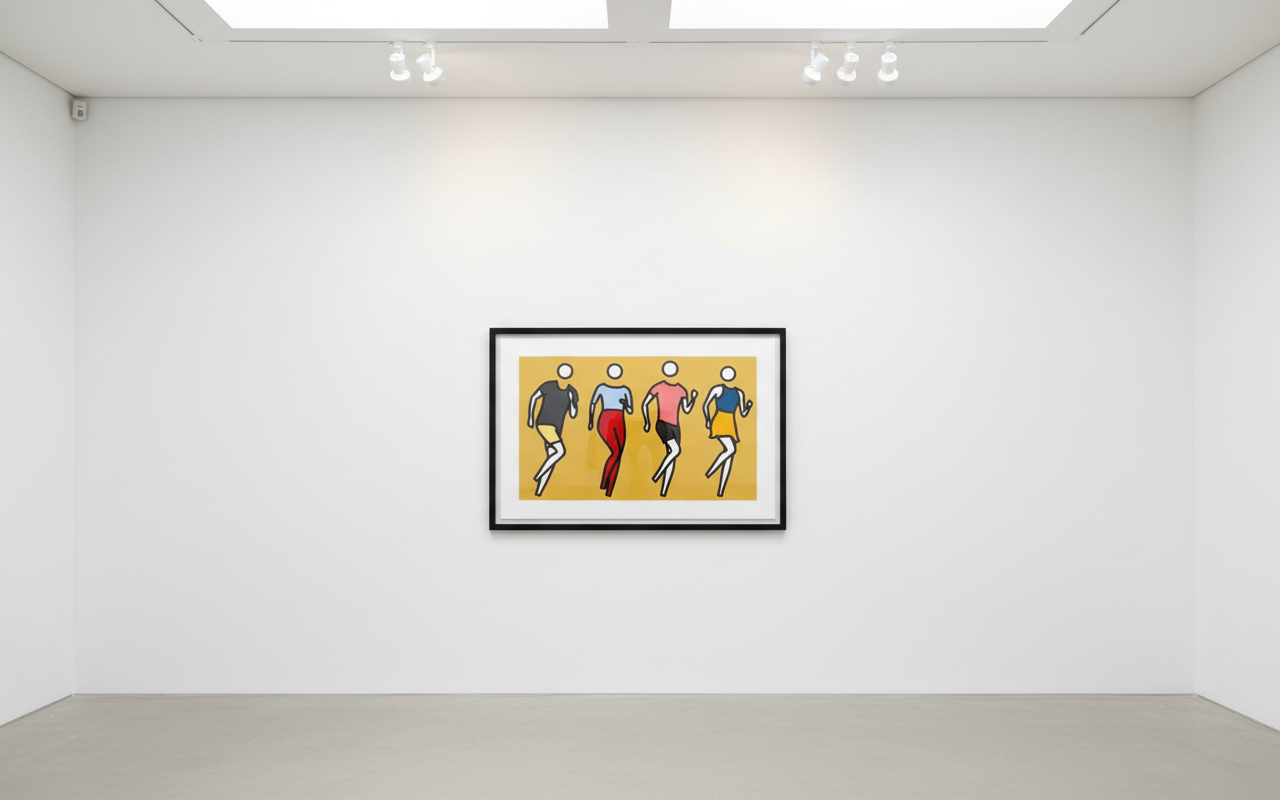
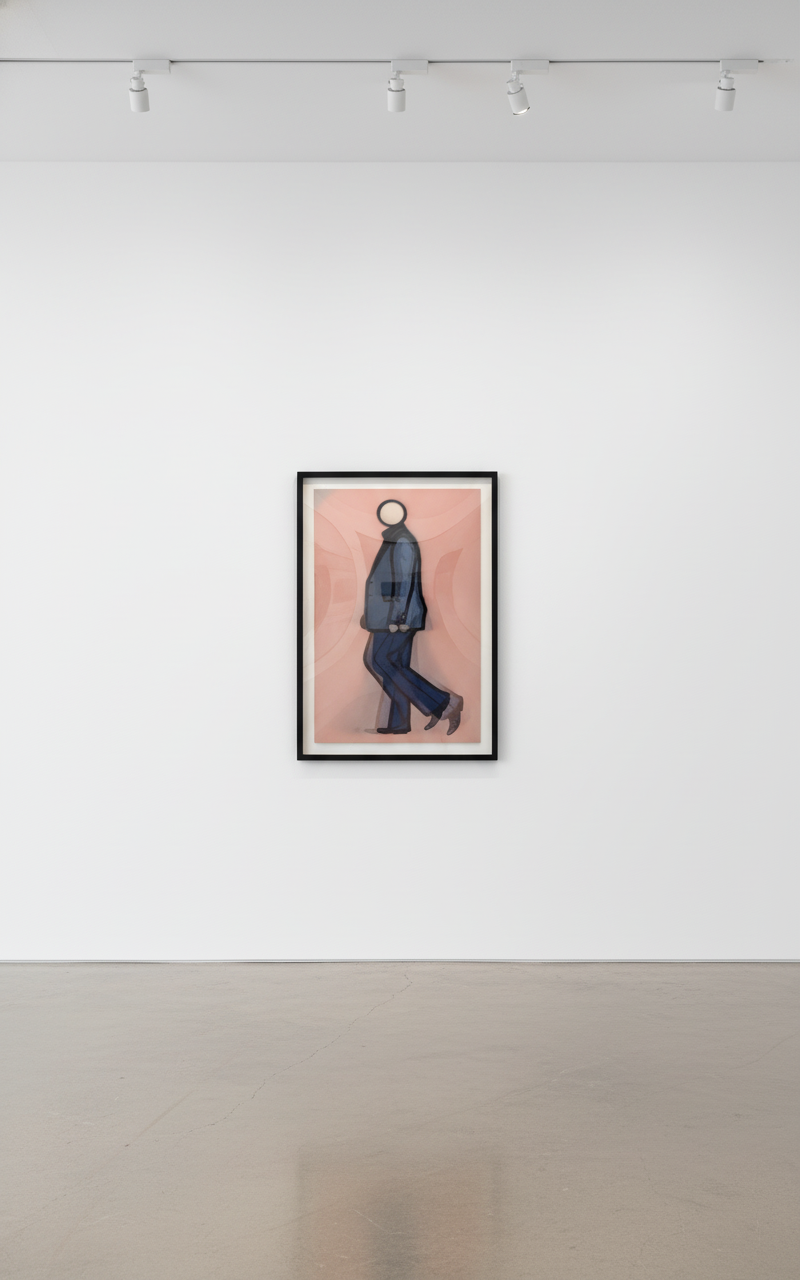
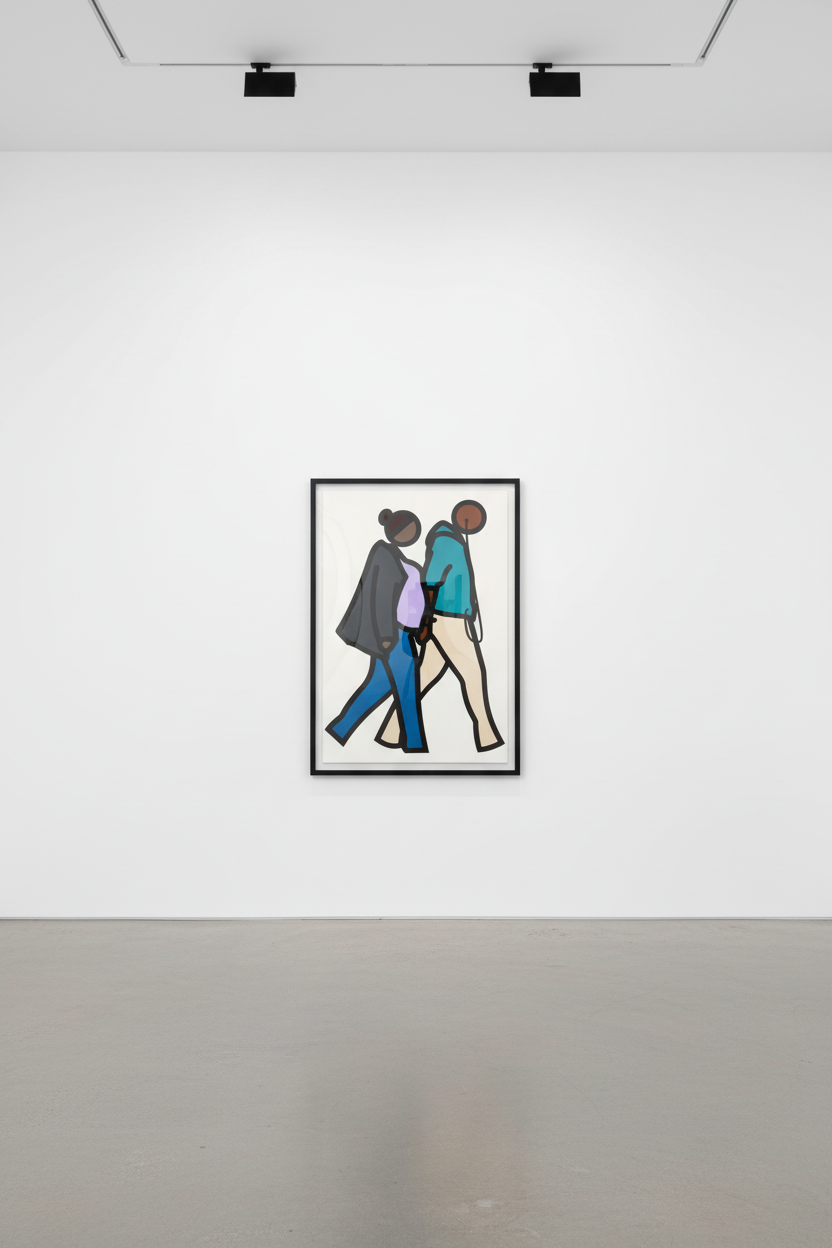
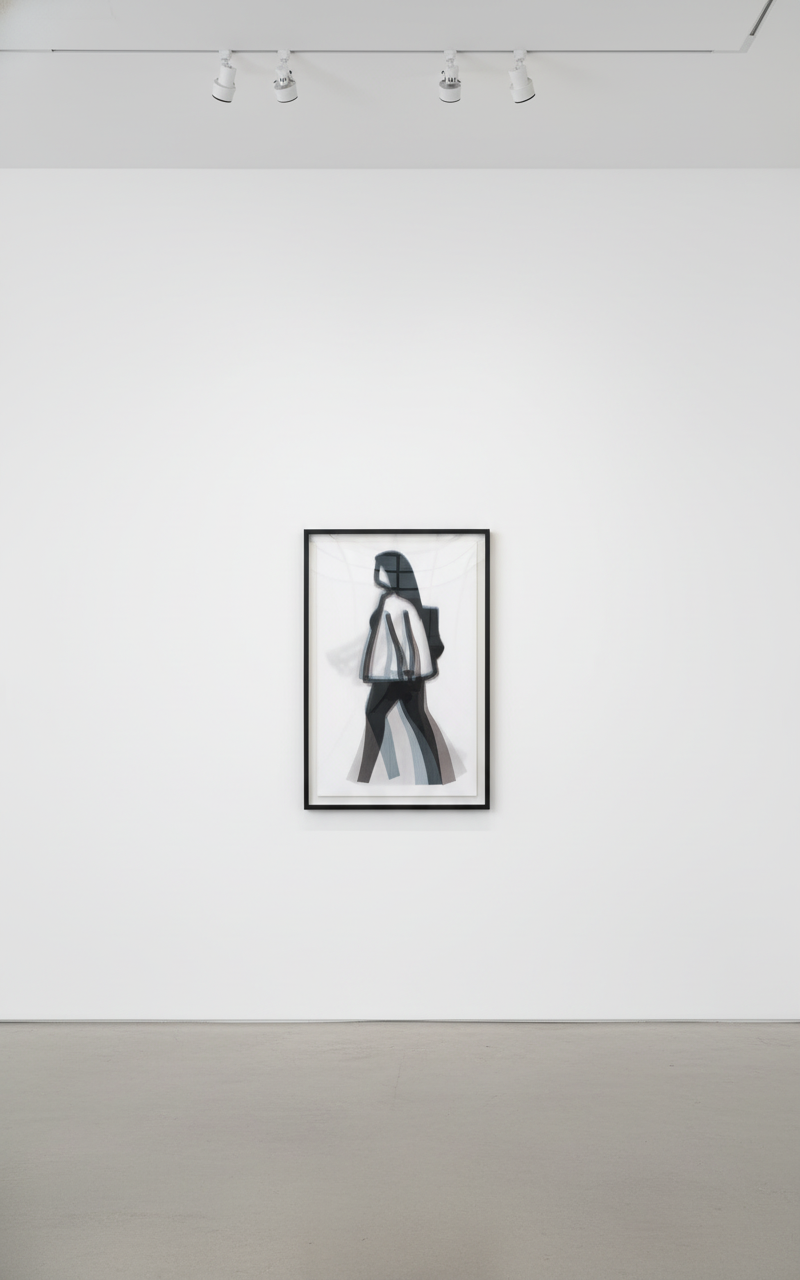
Julian Opie's "Sidewalk" series stands as one of the artist's most compelling explorations of urban movement and the anonymous poetry of city life. Within this body of work, Opie turns his distinctive visual language toward the simple yet endlessly fascinating act of walking, capturing figures mid-stride as they traverse the concrete pathways that define modern metropolitan existence. The series distills the experience of navigating crowded city streets into its most essential visual elements, transforming the overlooked choreography of pedestrian traffic into something worthy of sustained contemplation.
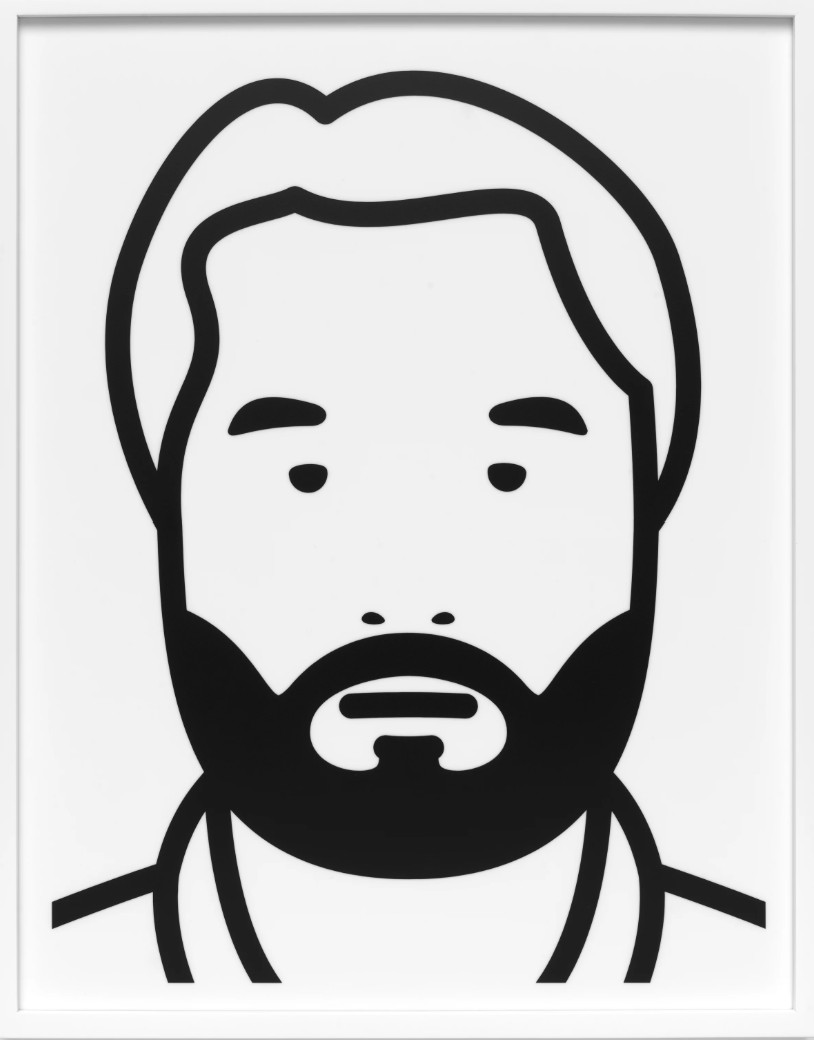
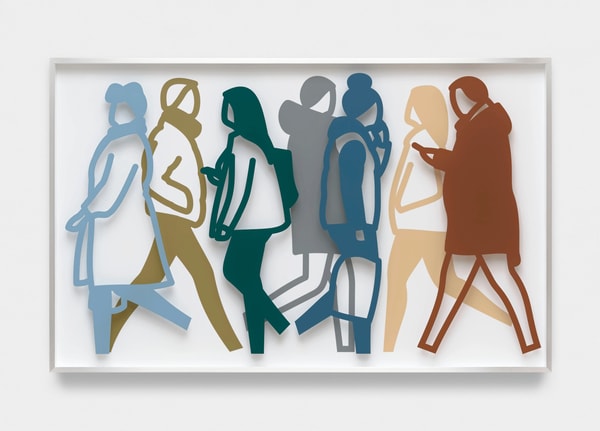
Throughout his career, Opie has demonstrated an extraordinary ability to reduce complex visual information to its most fundamental components without sacrificing the essence of his subjects. In the "Sidewalk" series, this reductive approach reaches a particularly refined expression. Each figure is rendered with the artist's signature bold outlines and flat planes of color, stripped of extraneous detail yet immediately recognizable as a specific individual caught in a specific moment. The tension between anonymity and individuality lies at the heart of these works, as Opie presents us with people who could be anyone walking anywhere, yet who possess enough distinctive characteristics in their posture, clothing, and gait to suggest complete, complex human beings with lives extending far beyond the frame.
What distinguishes the "Sidewalk" series within Opie's broader practice is its concentrated focus on the horizontal plane of movement and the particular rhythm of urban walking. While the artist has explored figures in motion across numerous bodies of work, from his celebrated walking portraits to his studies of runners and crowds, the "Sidewalk" series hones in on a specific spatial and temporal experience. These are not figures moving through abstract space but individuals navigating a particular kind of urban environment, their movement shaped by the implicit presence of pavement beneath their feet and the invisible currents of fellow pedestrians around them. The title itself anchors these works in a distinctly American urban context, evoking the bustling sidewalks of cities like New York where the simple act of walking becomes a form of negotiation, performance, and survival.
Opie's visual vocabulary draws from a rich lineage of influences, from ancient Egyptian hieroglyphics to Japanese woodblock prints, from public signage to digital interfaces. In the "Sidewalk" series, these influences coalesce into images that feel simultaneously timeless and utterly contemporary. The flat areas of color and crisp outlines recall the clarity of traffic signs and the simplified aesthetics of digital avatars, yet the subjects themselves are grounded in observable reality, their poses captured from life and translated through the artist's meticulous process of photography, computer rendering, and careful refinement. This marriage of the analog and digital, the observed and the constructed, gives the works their peculiar resonance, making them function as both documents of contemporary life and icons that transcend their specific moment.
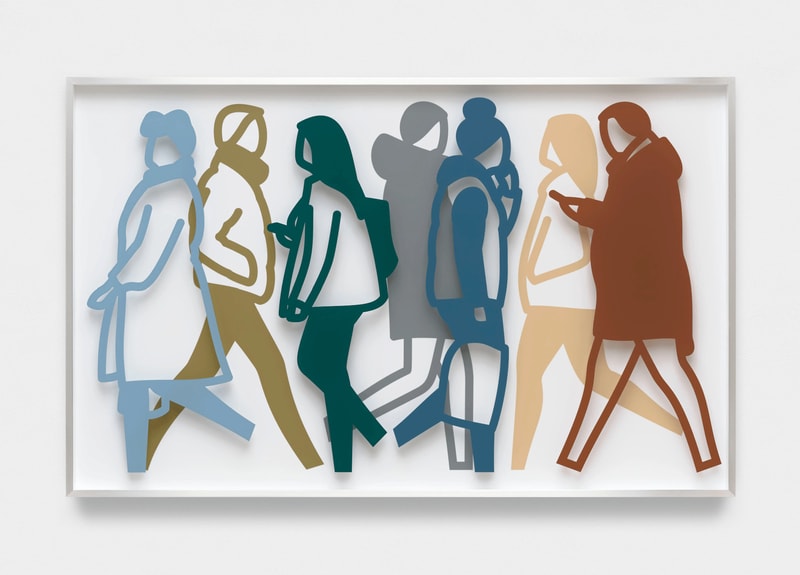
The color palette employed in the "Sidewalk" series reflects Opie's sophisticated understanding of how hue and value can convey information efficiently while creating visual pleasure. Clothing becomes a series of bold chromatic statements, each figure distinguished by their particular combination of colors that suggest personality, style, and social context without resorting to descriptive detail. Skin tones are rendered with the same flat consistency as fabric, unifying the human body into a single graphic entity that moves through space with clarity and purpose. Backgrounds, when present, are reduced to their essential character, allowing the figures to exist in a space that suggests environment without depicting it literally.
The arrested motion captured in works like "Sidewalk 2" invites viewers to consider the mechanics of walking itself, an activity so fundamental to human experience that it typically escapes conscious attention. Opie's figures are frozen mid-step, their weight distributed in ways that suggest the continuous flow of movement from which they have been extracted. There is something both celebratory and melancholic in this freezing of motion, as if the artist is asking us to appreciate the beauty of ordinary human locomotion while simultaneously acknowledging that each step carries us forward through time, never to return to the moment just passed.
The "Sidewalk" series also participates in Opie's ongoing investigation of public and private identity in contemporary society. The figures who populate these works exist in public space, visible to all yet wrapped in the protective anonymity that city life affords. They are simultaneously exposed and hidden, their inner lives completely inaccessible despite the clarity with which their external forms are presented. This dynamic speaks to fundamental aspects of urban existence, where we are constantly surrounded by strangers whose stories we will never know, whose paths intersect with ours for brief moments before diverging forever.
Opie's influence on contemporary visual culture extends well beyond the gallery context, with his distinctive style informing album artwork, public installations, and digital media. The "Sidewalk" series exemplifies why his approach has achieved such broad resonance, offering images that are immediately accessible yet reward extended viewing, combining the efficiency of graphic design with the contemplative depth of fine art.
For inquiries regarding the acquisition of works from Julian Opie's "Sidewalk" series, Guy Hepner in New York welcomes collectors to connect with our team for detailed information on available pieces, pricing, and provenance.
1 work available
Five Facts About Julian Opie Sidewalk
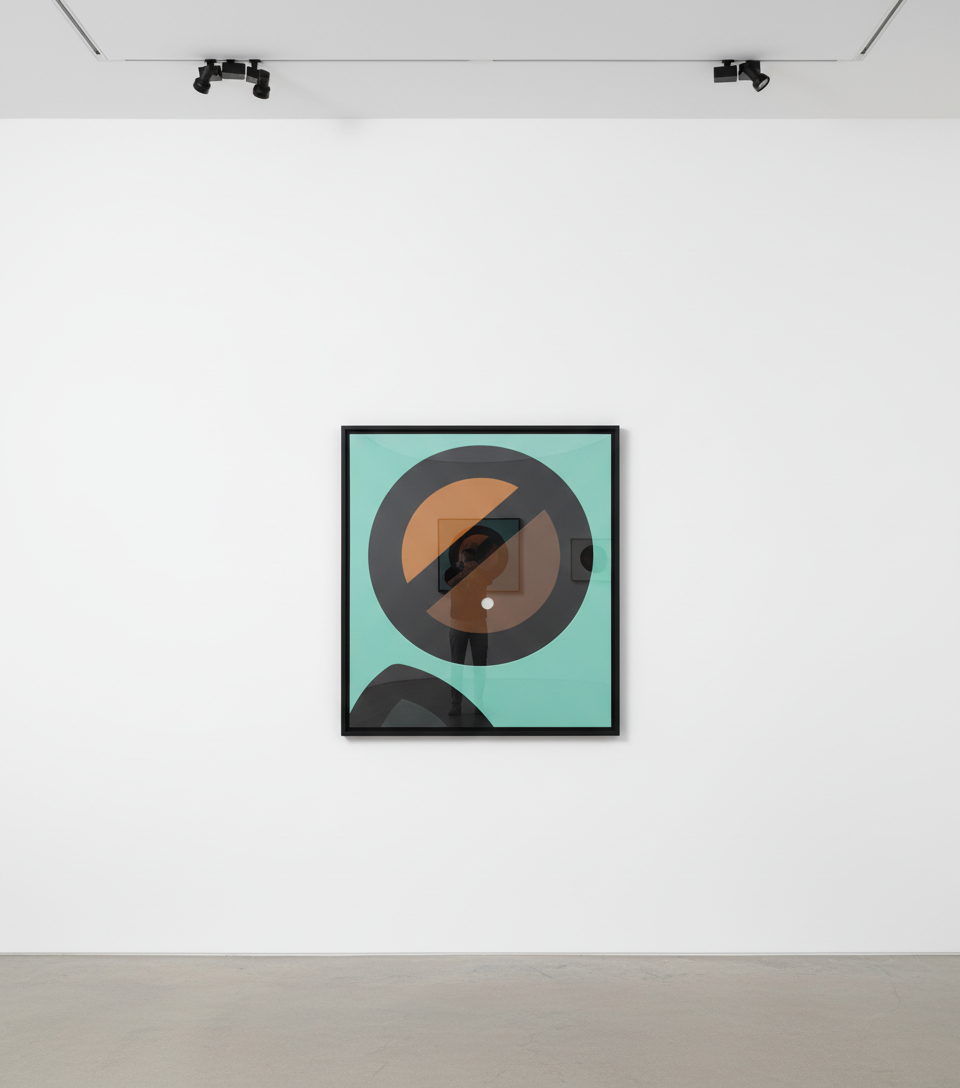
Sidewalk is a 2022 series of screenprints by Julian Opie printed on two sheets of acrylic - one clear and one white - mounted one in front of the other.
The works are presented in a brushed aluminium frame specified by the artist.
Sidewalk 2 was published by Cristea Roberts Gallery, London, in an edition of 40 plus 6 artist's proofs.
Each panel measures approximately 102 x 163 cm.
Market Data
See real auction history, estimate ranges and price benchmarks for individual Sidewalk prints, sourced from Christie's, Sotheby's and other major auction houses.
Frequently Asked Questions
Julian Opie Sidewalk prints for sale are available at Guy Hepner Gallery, 177 Tenth Avenue, New York. We offer authenticated editions with full provenance documentation sourced from the secondary market and directly from publishers.
Julian Opie Sidewalk works — 1 available — are typically produced as limited editions, individually signed and numbered by the artist. Contact Guy Hepner Gallery for edition details on specific works.
Pricing for Julian Opie Sidewalk prints varies by edition size, date, and condition. Contact Guy Hepner Gallery for current market pricing and availability.
More Julian Opie Series
View all Julian Opie works →