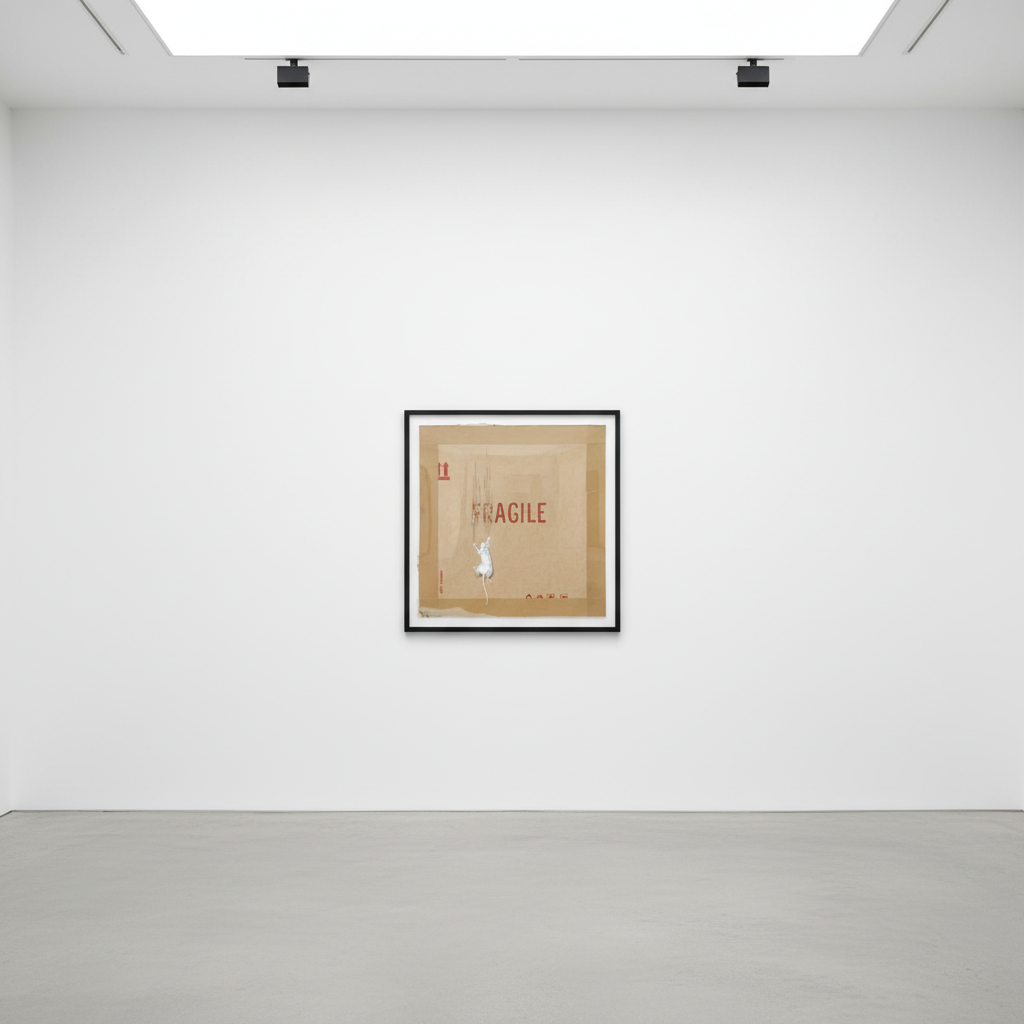
(Fr)agile
1 work

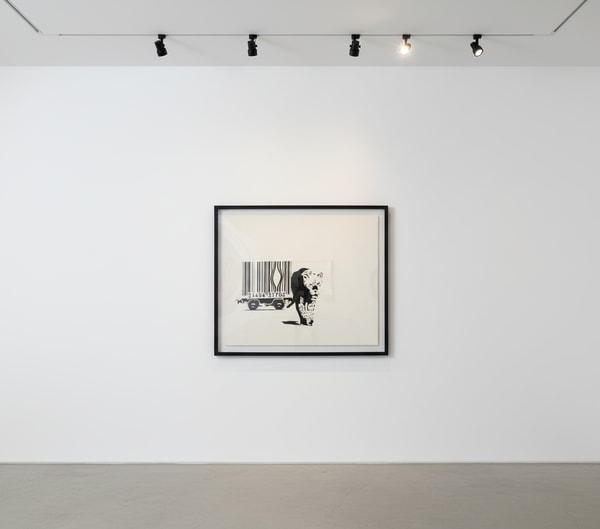
Banksy's Barcode series stands as one of the artist's most penetrating critiques of consumer capitalism, merging his signature stencil technique with powerful anti-establishment messaging. Created during his formative period between 2002 and 2004, these works exemplify Banksy's ability to transform commercial symbols into provocative political statements. The series juxtaposes the cold mechanization of retail barcodes with images of endangered species and wildlife, suggesting humanity's commodification of nature itself. This visual metaphor resonates with particular urgency in today's climate-conscious era, cementing the series' relevance for contemporary collectors.
The technical execution of the Barcode series demonstrates Banksy's mastery of the stencil medium during a pivotal moment in his career. Works like Barcode Leopard (2002) feature his characteristic layered approach, where precise cuts create sophisticated tonal gradations within the animal imagery while the barcode's linear severity provides stark contrast. The existence of both signed and unsigned variants—exemplified by the 2004 signed edition and 2003 unsigned version—reflects the artist's evolving relationship with the commercial art market during this period. Signed examples command significant premiums and are particularly sought after by serious collectors establishing museum-quality holdings.
From a market perspective, the Barcode series occupies a crucial position within Banksy's oeuvre as representative of his early 2000s conceptual development. These works bridge his transition from pure street art to gallery-recognized fine art, making them essential acquisitions for collectors building comprehensive Banksy portfolios. The series' scarcity, combined with its prescient environmental messaging, has driven consistent appreciation at auction. Works from this period demonstrate Banksy's fully realized artistic voice before his explosive mainstream recognition, offering collectors both historical significance and strong investment fundamentals.
The Barcode series continues to attract institutional interest and appears regularly in museum exhibitions examining contemporary political art, further solidifying its cultural importance and supporting long-term value retention in the secondary market.
Available works and authentication details provided by Guy Hepner.
3 works available
Five Facts About Banksy Barcode
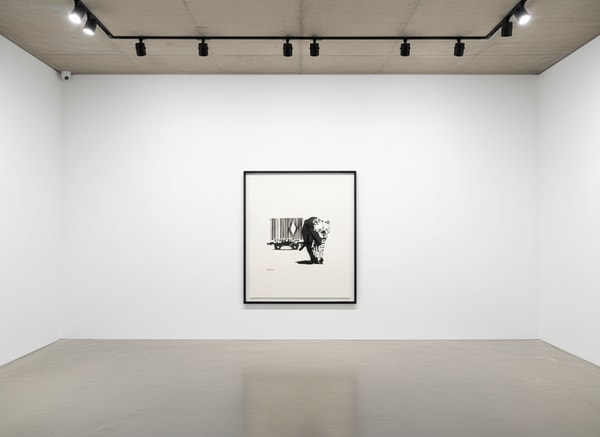
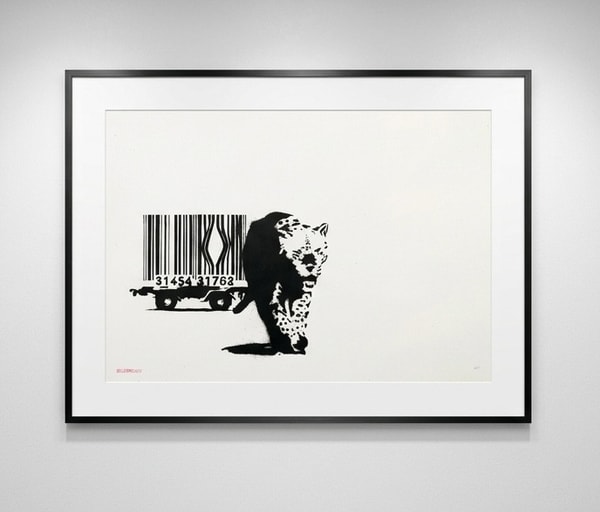
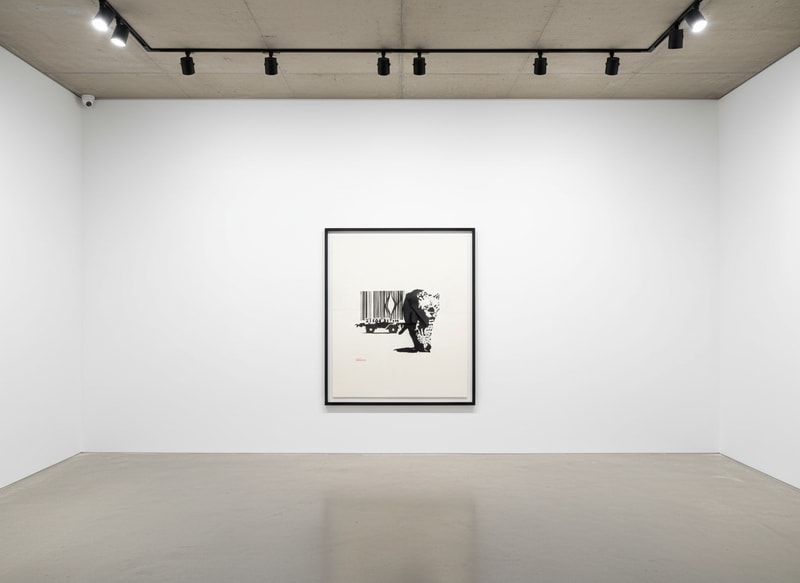
Barcode is a screenprint created in 2004 and published by Pictures on Walls, London.
It was released in a signed edition of 150 and an unsigned edition of 600, on wove paper.
The sheet measures 50 x 70cm (19 3/4 x 27 1/2 inches).
The image depicts a leopard breaking free from a barcode that has been rendered to resemble a cage on wheels.
Signed impressions are numbered in pencil and some are stamped with the Banksy tag in red ink.
Market Data
See real auction history, estimate ranges and price benchmarks for individual Barcode prints, sourced from Christie's, Sotheby's and other major auction houses.
Frequently Asked Questions
Banksy Barcode prints for sale are available at Guy Hepner Gallery, 177 Tenth Avenue, New York. We offer authenticated editions with full provenance documentation sourced from the secondary market and directly from publishers.
Banksy Barcode works — 3 available — are typically produced as limited editions, individually signed and numbered by the artist. Contact Guy Hepner Gallery for edition details on specific works.
Pricing for Banksy Barcode prints varies by edition size, date, and condition. Contact Guy Hepner Gallery for current market pricing and availability.
More Banksy Series
View all Banksy works →