Early Works
11 works

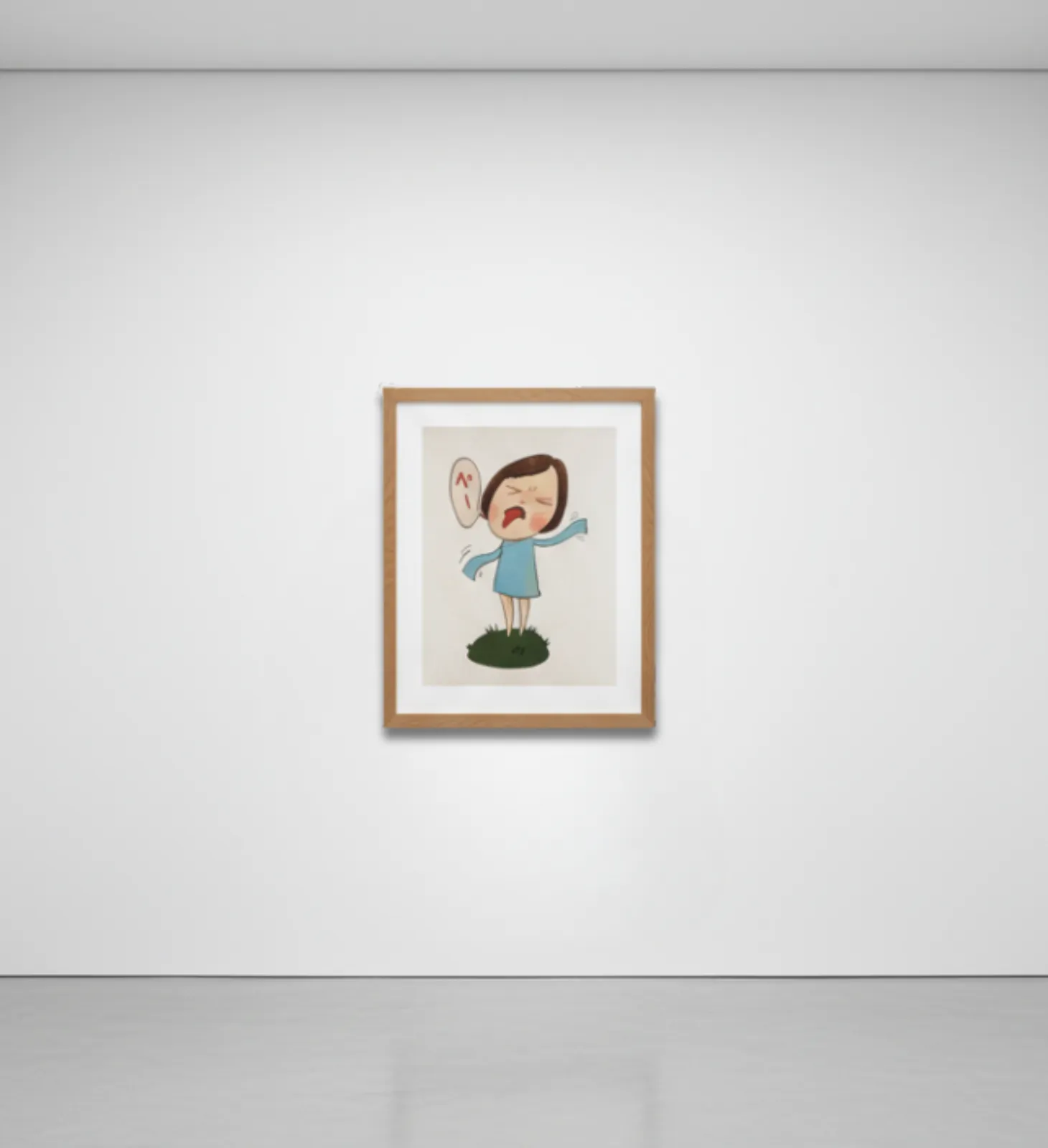
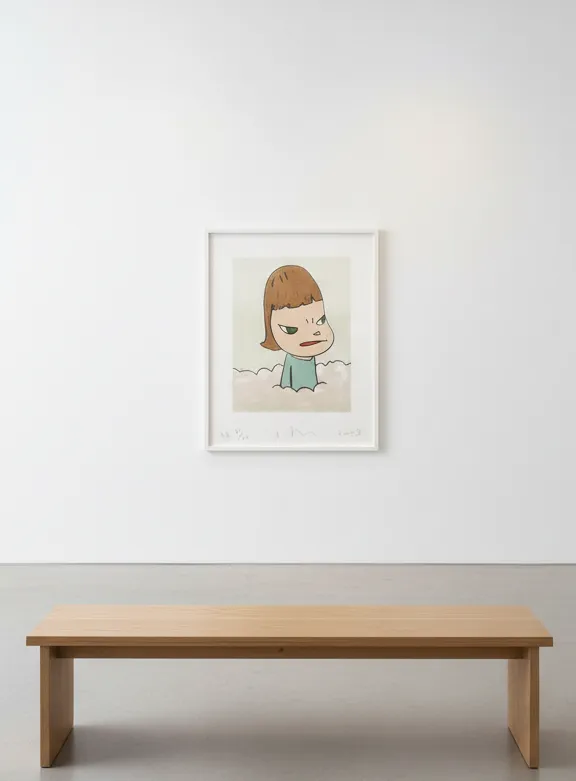
Beh, 2003
Yoshitomo Nara's *Beh* (2003) exemplifies the Japanese artist's distinctive visual language, presenting one of his characteristic wide-eyed children in an attitude of playful defiance. The work's title references the Japanese onomatopoeia for sticking out one's tongue—a gesture of irreverence that perfectly encapsulates Nara's ability to channel childhood rebellion through deceptively simple imagery. Created during a particularly prolific period in Nara's career, *Beh* demonstrates the artist's masterful balance between vulnerability and aggression. The figure's oversized head and luminous eyes recall both traditional Japanese illustration and the aesthetics of 1970s punk rock, influences that Nara has consistently cited as foundational to his practice. There is an emotional directness here that transcends cultural boundaries, speaking to universal experiences of alienation, independence, and the quiet ferocity of youth. Nara emerged from Japan's Neo-Pop movement alongside Takashi Murakami, yet his work maintains a distinctly introspective quality that has resonated deeply with collectors worldwide. His pieces consistently achieve significant results at auction, and works from the early 2000s remain particularly sought after as they represent the artist at the height of his creative powers. *Beh* offers collectors an opportunity to acquire a quintessential example of Nara's practice from this important period. For inquiries regarding the acquisition of this work, please contact Guy Hepner.
Yoshitomo Nara
Yoshitomo Nara (b. 1959, Hirosaki, Japan) stands as one of the most influential figures in contemporary Japanese art, whose deceptively simple portraits of wide-eyed children—at once innocent and subversively defiant—have become icons of the Neo-Pop movement. Trained in Düsseldorf and deeply influenced by punk rock and anime culture, Nara creates works that resonate across cultural boundaries, commanding an international collector base and record-breaking auction results. His paintings, drawings, and sculptures are held in major museum collections worldwide, cementing his position as a defining voice in 21st-century art.