Damien Hirst's Butterfly Works: A Complete Collector's Guide
The Butterfly in Hirst's Practice
The butterfly has been central to Damien Hirst's practice since his earliest YBA works. Few symbols in contemporary art carry as much weight while remaining so visually immediate. Life, death, beauty, transience — these themes run through every butterfly series Hirst has made, from a first-year student's installation to works now commanding seven-figure sums at auction. The transformation of the caterpillar into something impossibly beautiful, and the brevity of that beauty, maps directly onto Hirst's central obsession: the fact of mortality and the inadequacy of almost everything humans do to manage it.
Collecting Hirst's butterfly works means engaging with this logic. Each format — the Kaleidoscope paintings, the spin-based Beautiful paintings, the print editions — offers a different entry point into the same set of questions. What follows is a comprehensive guide to the series, how they were made, what drives their value, and how to care for them.
In and Out of Love (1991)
The foundational butterfly work. Hirst's debut solo show at Woodstock Street, London, created the template for everything that followed. Live tropical butterflies hatched from white canvases coated in household gloss paint in one room; in the other, dead butterflies — hundreds of them — were embedded into canvas after canvas of wet gloss, their wings fixed at the moment of alighting, preserved.
The dialectic was literal: enter, and you were surrounded by living insects completing their metamorphosis in real time. Leave, and you confronted their deaths rendered as pure pattern. The work that established Damien Hirst as the defining figure of Young British Art did so not through shock for shock's sake but through rigorous conceptual structure. Life and death were not described — they were staged, simultaneously, in adjacent rooms.
Collectors who understand why In and Out of Love mattered understand every subsequent butterfly work. The later Kaleidoscope paintings and Beautiful paintings are, in essence, meditations on what was first worked out in that Woodstock Street space.
The Kaleidoscope Paintings
The Kaleidoscope series represents Hirst's most technically exacting butterfly works and among his most consistently valuable on the secondary market.
Real butterfly wings — sourced from butterfly farms and licensed suppliers — are set into household gloss paint on canvas, their symmetrical arrangements creating mandala-like compositions of extraordinary optical richness. The symmetry is the key formal operation: wings are mirrored across vertical and horizontal axes, producing compositions that reference both the decorative traditions of Islamic geometry and the clinical symmetry of a scientific specimen tray. The works sit, deliberately, between those two registers.
What Drives Value in Kaleidoscope Works
Scale is the primary value driver. Hirst's monumental Kaleidoscopes — works exceeding two metres — are museum-grade acquisitions. They have achieved seven-figure results at the major auction houses and appear in institutional collections internationally. Smaller cabinet-scale works occupy a different market tier but follow the same formal logic.
Symmetry quality matters significantly. Works where the mirroring is executed with particular precision — where the grid is tight and the wing placement exact — command premiums over works where the arrangement reads as looser.
Species rarity affects value. Kaleidoscopes built around rare or visually exceptional butterfly species attract specialist interest from collectors who understand the entomological dimension of the work.
Condition is paramount and carries specific conservation considerations (see below).
Provenance in the sense of first-sale documentation — ideally direct from Other Criteria or Science Ltd — provides the cleanest authentication trail.
The Beautiful Paintings
Where the Kaleidoscopes are architecturally controlled, the Beautiful paintings are gestural and centrifugal. Hirst uses a spin painting technique: paint is poured onto a rotating canvas, the centrifugal force throwing it outward in arcs. Butterfly imagery enters these works through direct embedding of wings into the spinning surface or through the formal echo between a spinning canvas's radial symmetry and a butterfly's bilateral symmetry.
The Beautiful paintings occupy a distinct market position. They are generally more accessible than the major Kaleidoscopes in price terms, and the gestural quality of the surfaces makes them easier to live with in domestic settings. The logic they share with the Kaleidoscopes — pattern, symmetry, the butterfly as memento mori — means they read coherently alongside other Hirst works in a collection.
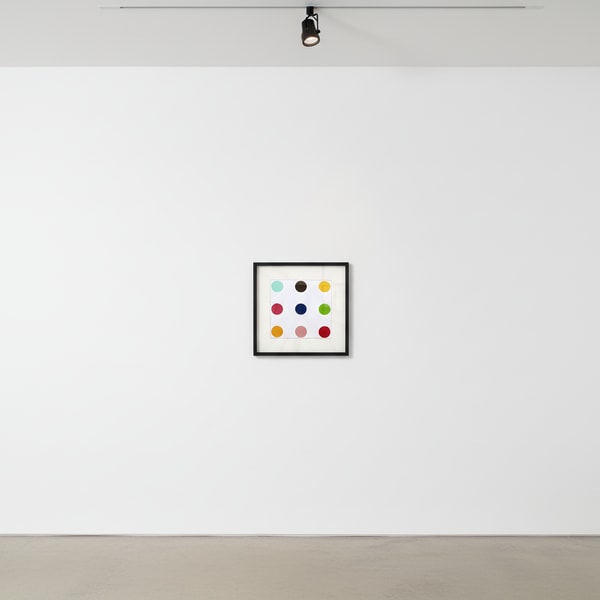
Collectors building across Hirst's output often find the Beautiful paintings a natural complement to Spot Paintings acquired earlier: both series use repetition and accumulation, both operate at a range of scales, and both have large edition groups that allow systematic collection building.
I Am Become Death (2006)
The large-format butterfly works referencing J. Robert Oppenheimer's invocation of the Bhagavad Gita — "Now I am become Death, the destroyer of worlds" — after the Trinity test represent some of the most conceptually charged works in the butterfly series.
Hirst had always used the butterfly to triangulate between beauty and mortality. The I Am Become Death works make that operation explicit in their titles, drawing a line from the butterfly's brief life to the capacity for mass annihilation that defined the twentieth century. These are not decorative works. They are philosophical propositions rendered in gloss paint and wing membrane.
The major works from this period command significant secondary market interest. For collectors focused on the conceptual depth of Hirst's practice rather than purely the decorative appeal of the butterfly format, these works represent the series at its most intellectually ambitious.
The Mantra Series and Print Editions
Hirst's print publishing operation, Other Criteria, has produced extensive butterfly-themed print editions across screenprint, etching, and giclée formats. The Mantra series is among the most collected.
Understanding the Print Tiers
Major signed limited editions — typically screenprints in editions of 25 to 75, published through Other Criteria with full COA — sit at the upper end of the print market. Expect four to high-five figures for prime examples at auction or through secondary dealers.
Standard signed editions in larger edition sizes (up to 150–250) represent the mid-market. These are accessible entry points to authentic Hirst butterfly works and have shown consistent price stability.
Open or unsigned editions exist at the entry level. These are appropriate for collectors new to the artist but should not be confused with the limited signed editions when building a collection.
All Other Criteria editions carry documentation from Hirst's own publishing house. The COA from Other Criteria is the primary authentication document for print works.
The 2012 Tate Retrospective: Market Impact
Hirst's 2012 Tate Modern retrospective — the first major survey of his work in a British public institution — reshaped collector awareness of the butterfly series in specific ways.
Before the Tate show, the Spot Paintings and the physical impossibility pieces (sharks, cows, the medicine cabinets) commanded the dominant critical and commercial attention. The Tate retrospective gave the butterfly works — particularly the Kaleidoscopes — a new institutional framing. Seeing them at monumental scale in Turbine Hall context made their ambition legible to collectors who had previously underweighted them.
Post-2012 auction results for major Kaleidoscope works reflected this recalibration. Collectors who had acquired significant butterfly canvases in the years before the retrospective found their holdings revalued considerably. The lesson for current collectors: major institutional moments are meaningful inflection points in the Hirst market.
Spot Paintings and Butterfly Works: A Shared Logic
Collectors who respond to one series typically respond to the other. Both use repetition and accumulation as their central formal operation. Both exist in extensive edition and series groups. Both reward systematic collection — the full set, the complete run — over isolated acquisition.
The Spot Paintings are more immediately legible to a general audience; the butterfly works carry greater emotional and conceptual charge. Together they represent the two poles of Hirst's practice: the cool, pharmaceutical remove of the Spots against the visceral, beautiful mortality of the butterflies. A collection that holds both has the full range.
Conservation for Butterfly Works
Butterfly wing works — particularly the Kaleidoscopes — have specific conservation requirements that collectors must understand before acquisition.
Real Wing Works (Kaleidoscopes, Beautiful Paintings)
Light management is critical. Real butterfly wings are composed of microscopic scales that are highly sensitive to UV radiation. Prolonged exposure to direct sunlight will cause irreversible fading. UV-filtering glass (conservation grade, blocking 98%+ of UV) is essential. Do not display these works opposite windows without appropriate treatment.
Humidity control — maintain 40–50% relative humidity. Too dry and the wings become brittle; too humid and the paint medium can become unstable. Avoid bathrooms, kitchens, or rooms with significant seasonal humidity swings.
Temperature — stable, cool conditions preferred (18–20°C). Avoid radiators and underfloor heating.
Framing — conservation-grade materials throughout. Acid-free backing, archival spacers to prevent contact between glass and surface. Works should be professionally framed by conservators familiar with mixed-media painting.
Print Editions
Standard fine art print conservation applies. Acid-free mounting, UV-filtering glass, stable conditions. Avoid rolled storage for screenprints. Check COA documentation is stored separately from the work itself.
Auction Results and Price Ranges
The following ranges reflect secondary market results and should be treated as indicative rather than definitive. Markets move; condition, provenance, and timing all affect outcomes.
- Major Kaleidoscope canvases (monumental scale): Seven figures at auction, with the most significant works having achieved £1m–£4m+ at the London sale rooms
- Cabinet-scale Kaleidoscopes: High five to low six figures
- Beautiful paintings (large format): Five to seven figures depending on scale, period, and condition
- Major Mantra print editions (signed, small edition): High four to five figures
- Standard signed print editions: Mid three to mid four figures
- Entry-level unsigned editions: Low three figures
Authentication
For unique works (Kaleidoscopes, Beautiful paintings): Provenance documentation — gallery receipts, exhibition history, prior auction records — forms the primary authentication trail. Works with clean first-sale documentation from White Cube or Science Ltd carry the strongest authentication position.
For print editions: Other Criteria COA is the definitive authentication document. Hirst's studio can be consulted for attribution questions on unique works where documentation is incomplete.
Avoid works offered without documentation. The Hirst market has seen forgeries and misattributions. A work without provenance is a work with risk.
Frequently Asked Questions
Are Hirst butterfly prints made with real butterflies? Print editions are not made with real wings — they use photographic reproduction of wing imagery. The unique Kaleidoscope and Beautiful paintings use real butterfly wings set into paint.
What is the Mantra series? A series of screenprint editions published through Other Criteria featuring butterfly imagery in Hirst's characteristic palette and pattern language.
How do I authenticate a Hirst butterfly work? For prints: verify the Other Criteria COA. For unique works: review full provenance documentation including first-sale records. Consult a specialist at a major auction house or Hirst's studio for works where documentation is incomplete.
Are butterfly works a good investment? The major Kaleidoscope paintings have demonstrated strong long-term price appreciation, particularly following the 2012 Tate retrospective. Print editions have shown stable to moderate appreciation in the secondary market. No art purchase is a guaranteed financial investment, and market conditions vary.
What is the difference between a Kaleidoscope painting and a Beautiful painting? Kaleidoscopes use a controlled symmetrical arrangement of real butterfly wings in gloss paint; Beautiful paintings use a centrifugal spin technique producing more gestural, radial compositions. Both may incorporate real wings; the formal logic differs fundamentally.
How should I care for a butterfly canvas? UV-filtering glass is essential. Maintain 40–50% RH, avoid direct sunlight, use conservation-grade framing materials throughout. Consult a conservator before any cleaning or re-framing.
Browse Damien Hirst works at Guy Hepner | Sell your Damien Hirst
Works For Sale
Available through Guy Hepner
Damien Hirst
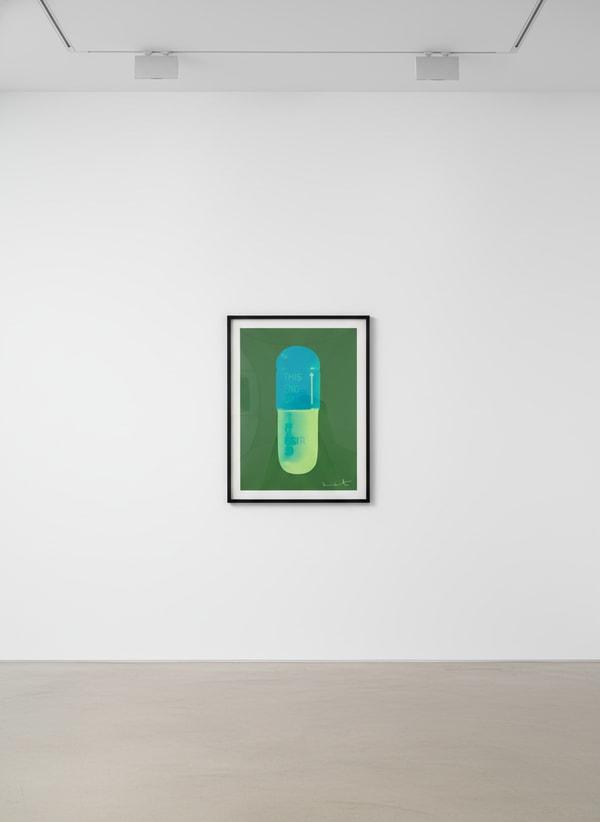
The Cure (Forest Green/ Turquoise/ Acid Green)
2014
Enquire →

Damien Hirst
The Souls IV (Fuchsia Pink - Raven Black)
2010
Enquire →
Damien Hirst
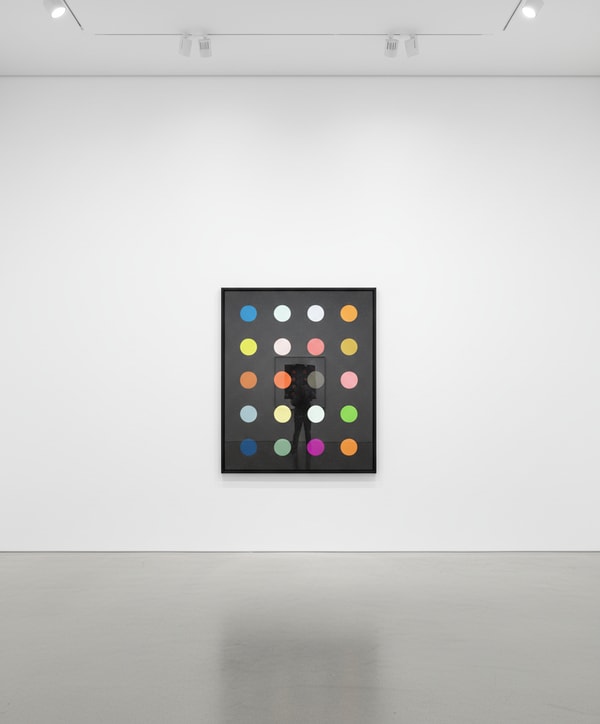
Methylamine 13c
2014
Enquire →

Damien Hirst
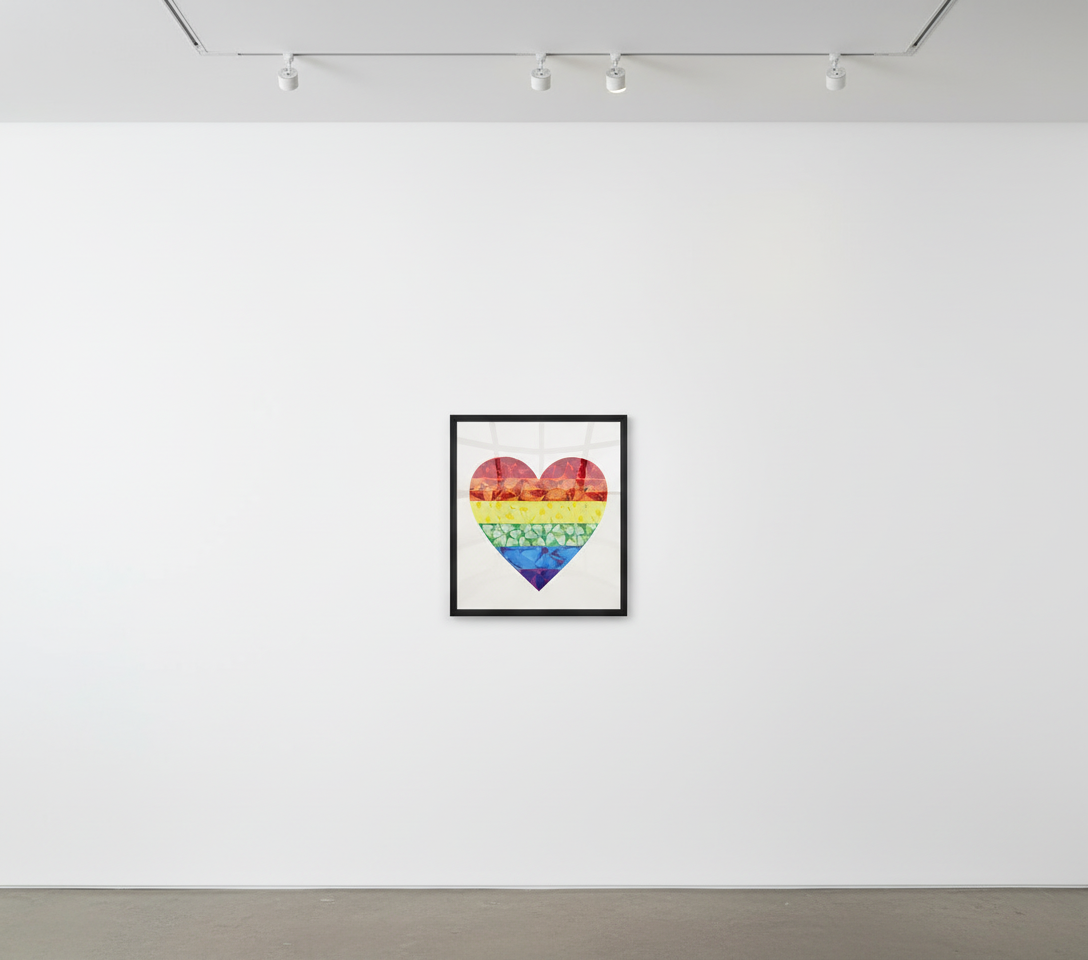
All you need is love, love, love (Diamond Dust)
2009
Enquire →
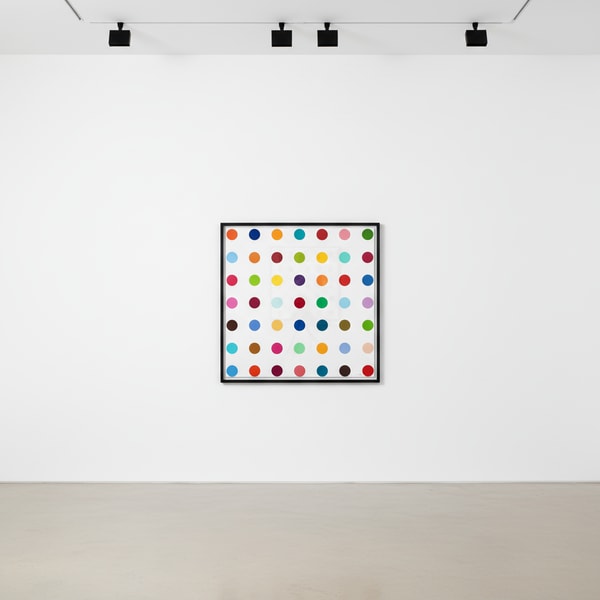
Damien Hirst
Mannitol
2016
Enquire →

Damien Hirst
Memento 4
2008
Enquire →
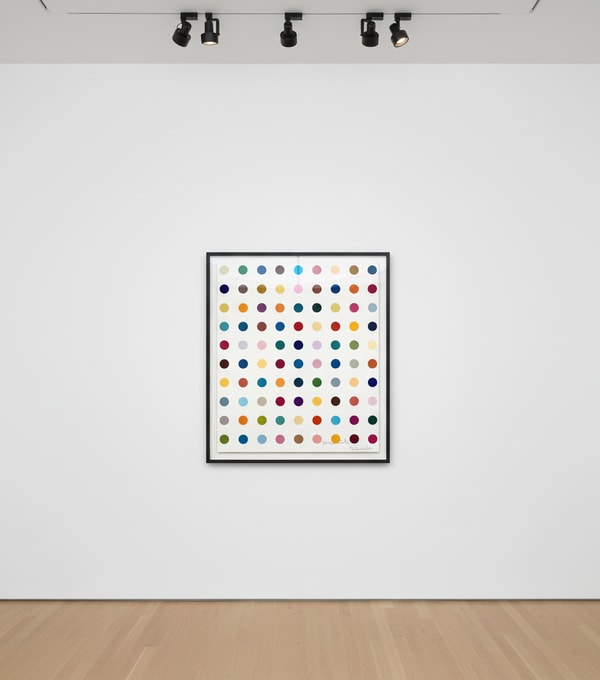
Damien Hirst
Opium
2000
Enquire →

Damien Hirst
For The Love Of God (White)
2011
Enquire →
Thinking of selling?
Get a free Damien Hirst valuation
Guy Hepner Gallery — 25+ years in the market. Same-day offers.
More from Guy Hepner