Andy Warhol’s Most Famous Paintings
May 23, 2026 · Guy Hepner
Andy Warhol produced some of the most recognisable images in the history of Western art. His paintings — Campbell's Soup Cans, the Marilyn series, Flowers, Mao, and Coca-Cola Bottles — defined the Pop Art movement and permanently altered how the art world understood subject matter, authorship, and the relationship between high culture and commerce. Decades after they were made, Andy Warhol's most famous paintings remain cornerstones of every major museum collection and consistently set records at auction.
This guide covers each of Warhol's landmark series: when and why they were made, what makes them significant, and how they perform in today's market. Where the gallery sells related print editions, those are noted clearly and kept separate from the painting market.
Enquire About Available Andy Warhol Works
Browse current Warhol prints and editions available through Guy Hepner, 177 Tenth Avenue, New York.
Campbell's Soup Cans (1962)
In July 1962, Irving Blum showed 32 individual canvases at the Ferus Gallery in Los Angeles — one for each flavour in Campbell's product line at the time. Each canvas measured 20 × 16 inches, was hand-painted and silkscreened, and was hung on a narrow shelf running around the gallery at eye level, deliberately mimicking a supermarket aisle. The show sold poorly on opening, but Blum bought back the canvases he had already sold and acquired the complete set himself for $1,000 paid in monthly instalments of $100.
The Campbell's Soup Cans are now in the permanent collection of MoMA, New York, where they have hung since 1996. As a body of work they are not available on the open market, but individual related works — drawings, unique canvases, and the 1968 screenprint portfolio FS II.44–53 — do appear at auction.
The paintings matter for two reasons. First, they marked Warhol's decisive break from commercial illustration into fine art, and his rejection of the Abstract Expressionism that dominated American painting at the time. Second, they established the conceptual move that would define everything that followed: the elevation of a mass-produced, familiar object into art by the simple act of close, repeated attention. Warhol claimed to have eaten Campbell's soup every day for twenty years. Whether or not that is literally true, the intimacy of that relationship — the idea that the banal, the everyday, and the commercially ubiquitous could carry genuine meaning — was the founding principle of American Pop Art.

For collectors, the 1968 screenprint portfolio Campbell's Soup I (FS II.44–53) is the primary market entry point. The complete set of ten screenprints on paper, each 35 × 23 inches, was published by Factory Additions, New York, in an edition of 250 with 26 artist's proofs. Complete portfolios have consistently achieved $300,000–$600,000 at auction. Individual prints from the series trade in the $30,000–$80,000 range depending on colourway and condition.
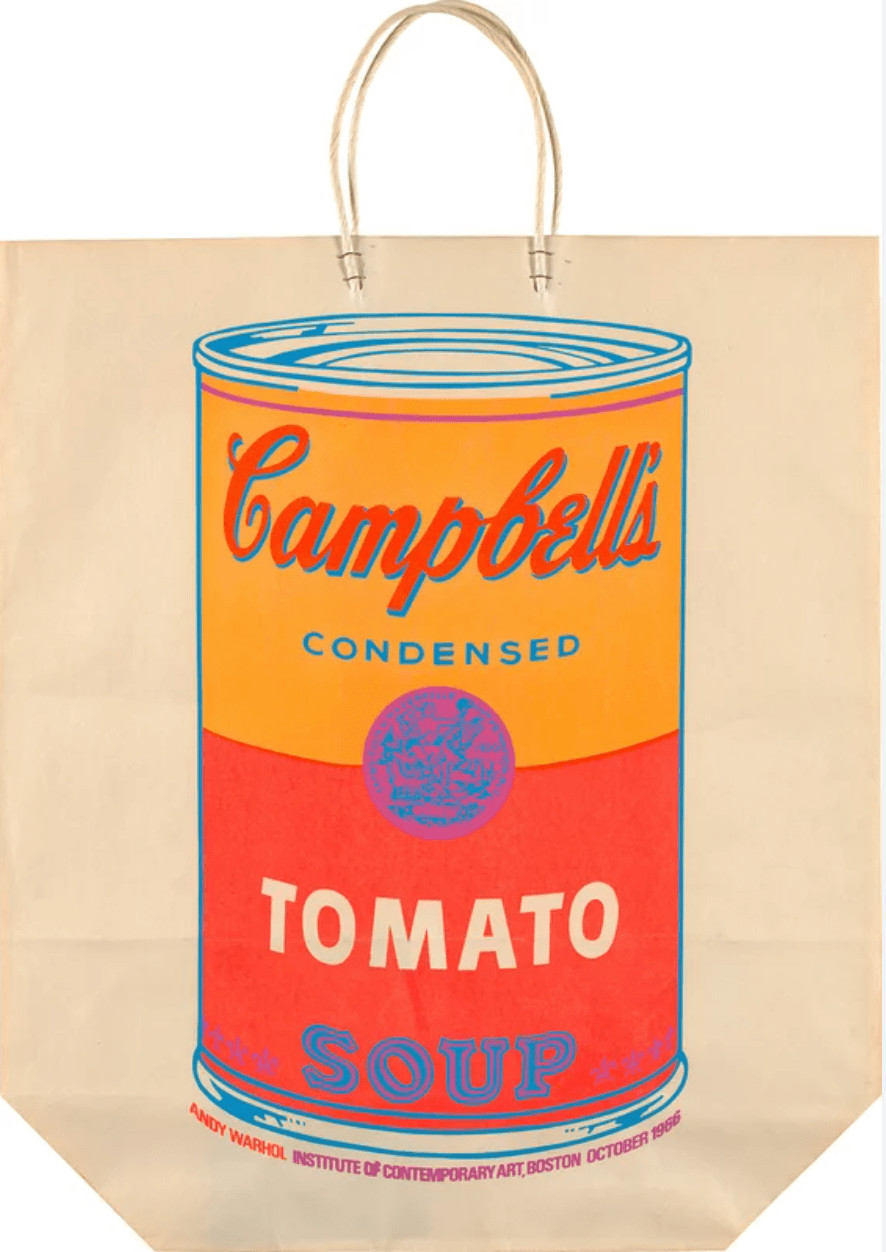
Andy Warhol, Campbell's Soup Can (Tomato), F.S. II 4A, 1968. Screenprint on paper. Available at Guy Hepner, New York.
Marilyn Monroe (1962)
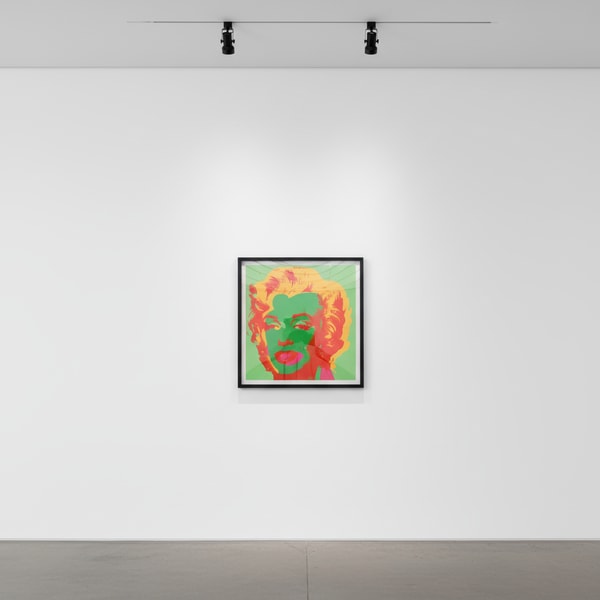
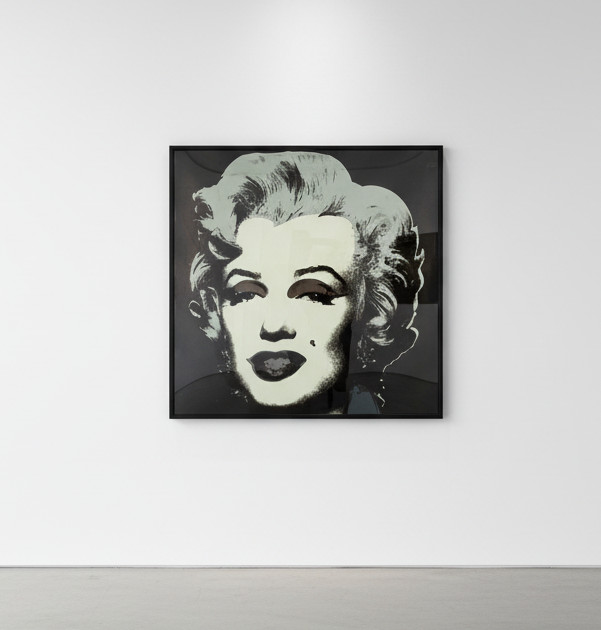
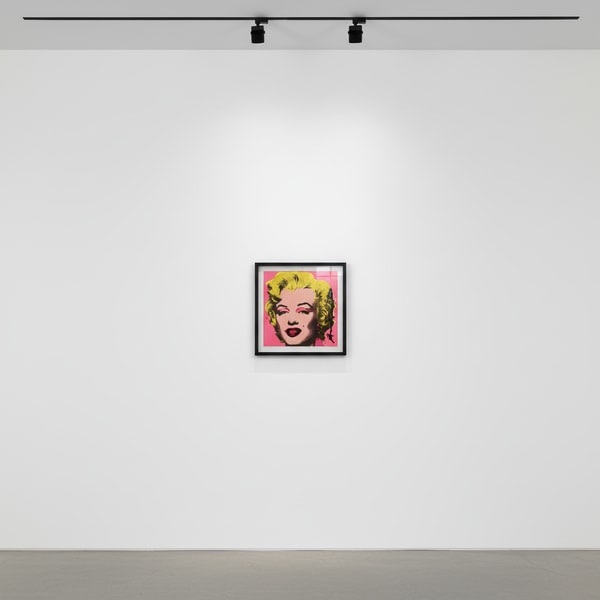
Six weeks after Marilyn Monroe's death on 4 August 1962, Warhol began producing what would become the most recognisable portrait series in contemporary art. Working from a publicity still taken by photographer Gene Korman for the 1953 film Niagara, Warhol used the silkscreen process to transfer Monroe's face onto canvas, then applied synthetic polymer paint in fields of flat, saturated colour. The face — lips, hair, eye shadow — was treated as a graphic element as much as a likeness, each new colour variation subtly shifting the emotional register of the image.
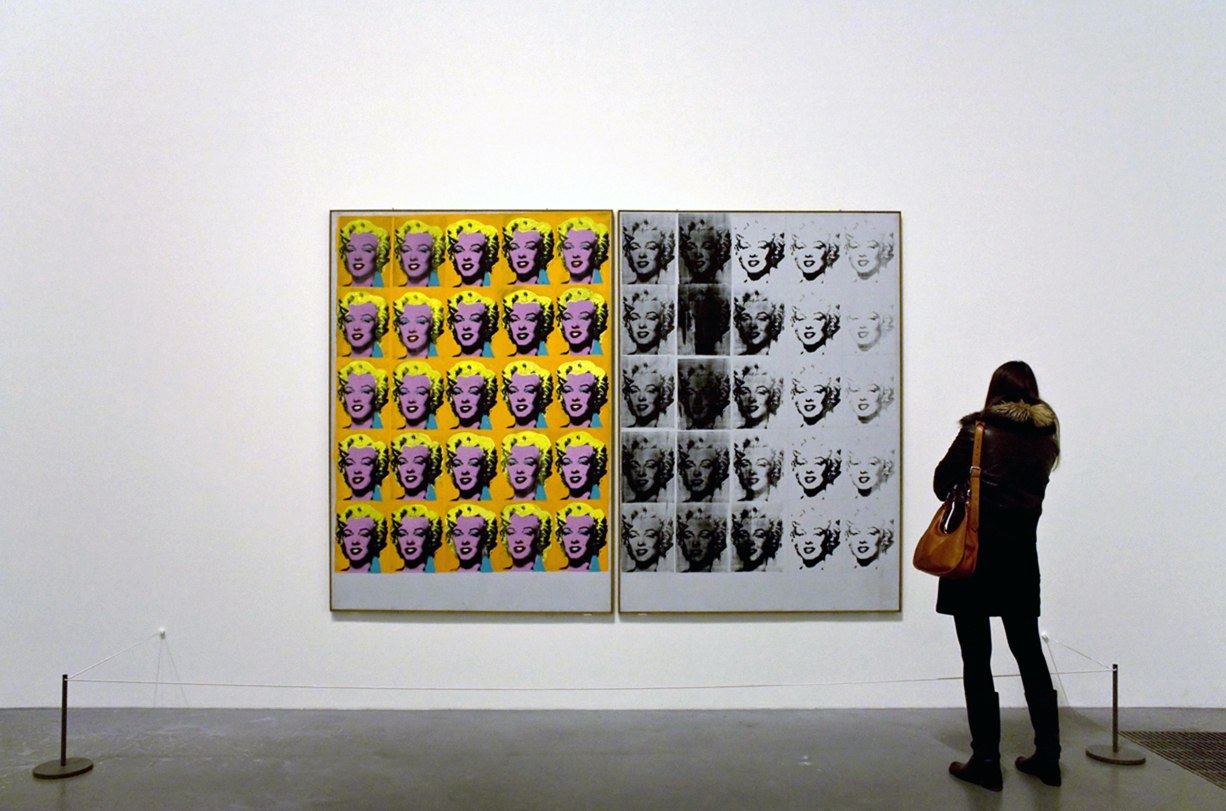
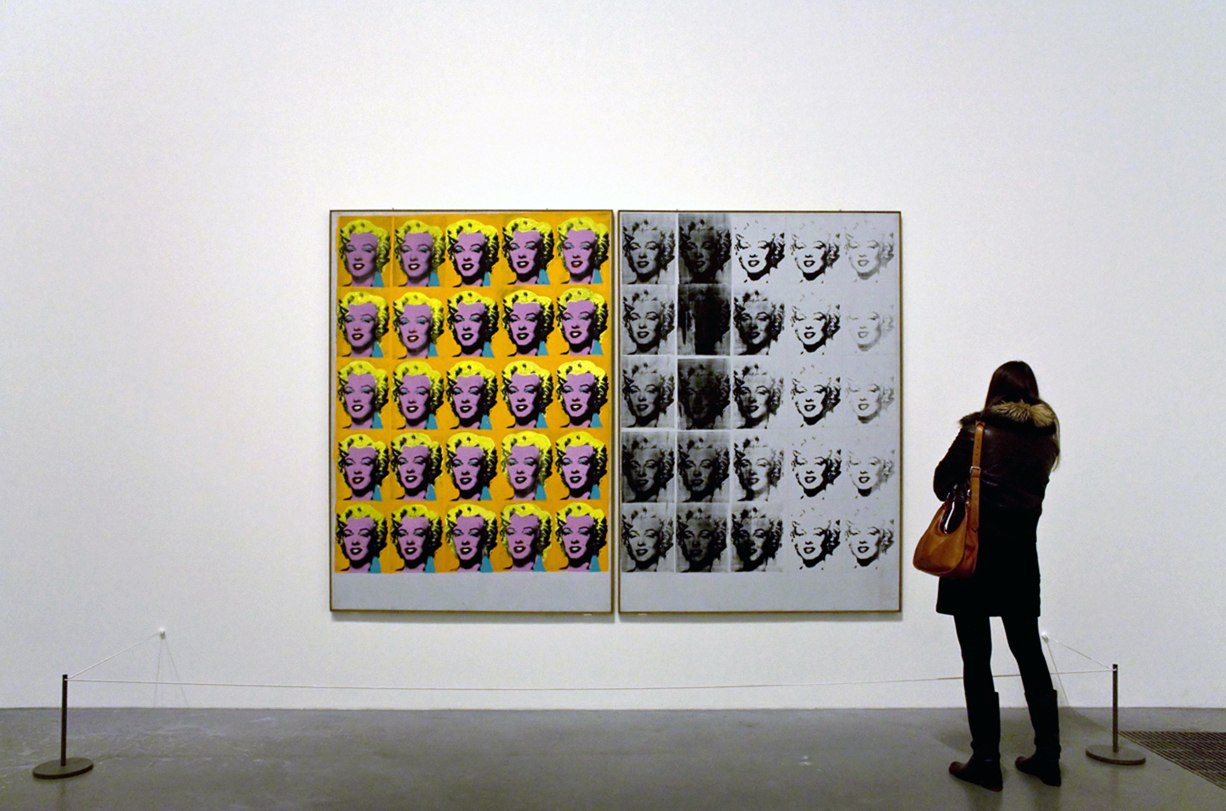
The Marilyn series encompasses several distinct works. Gold Marilyn Monroe (1962, MoMA) isolates a single silkscreened face on a large field of gold paint, evoking Byzantine iconography. Marilyn Diptych (1962, Tate Modern) presents fifty repeated images of Monroe — twenty-five in colour on the left panel, twenty-five in black and white on the right — the image degrading as it moves across the canvas, the colour fading from vivid to ghost. The diptych format, borrowed from religious painting, turned Monroe's image into something between an icon and a memorial.
At auction, the Marilyn paintings occupy a category of their own. In May 2022, Christie's sold Shot Sage Blue Marilyn (1964) for $195 million, making it the most expensive American artwork ever sold at auction. The painting — one of four "Shot Marilyns" made after a woman named Dorothy Podber shot through a stack of Warhol's Marilyn canvases with a pistol in 1964 — had last sold in 1998 for $17.3 million.
For collectors, the primary market entry point is the 1967 portfolio Marilyn Monroe (FS II.22–31), a set of ten screenprints published by Factory Additions in an edition of 250 with 26 artist's proofs. Complete portfolios have sold for $700,000–$1.5 million at major houses. Individual prints from the series — the Hot Pink, the Turquoise, the Orange — trade between $80,000 and $250,000 depending on colourway, condition, and provenance.

Flowers (1964–1970)
Warhol began the Flowers series in 1964 using a photograph of hibiscus blooms taken by Patricia Caulfield and published in the June 1964 issue of Modern Photography. Warhol used the image without permission; Caulfield sued him in 1966, and the suit was settled out of court. The paintings were first exhibited at Leo Castelli Gallery, New York, in November 1964, filling the gallery floor-to-ceiling with canvases in four sizes.
The Flowers represent Warhol at his most formally controlled. Abstracted petals in acidic pinks, yellows, reds, and blues float against a field of flat black-and-white grass — colour applied freely over a mechanically transferred outline. The 1970 screenprint portfolio, Flowers (FS II.64–73), a set of ten prints published by Factory Additions in an edition of 250 with 26 APs, is among the most traded Warhol editions on the secondary market. Documented auction results include:
- Sotheby's, May 2013: $653,000 — complete portfolio FS II.64–73
- Sotheby's, November 2012: $614,500 — complete portfolio FS II.64–73
- Sotheby's, May 2014: $521,000 — complete portfolio FS II.64–73
Individual prints from the portfolio trade between $40,000 and $120,000 depending on colourway and condition. The large-format 1964 paintings — canvases ranging from 9 to 82 inches — sell in the $1 million to $35 million range when they appear.

Mao (1972)
Warhol produced his Mao Zedong series in 1972, working from the official portrait of the Chairman that appeared on the front of Quotations from Chairman Mao Tse-Tung — the Little Red Book distributed to hundreds of millions of people across China and internationally. In total, Warhol executed 199 Mao paintings across five scales between 1972 and 1973, with canvas sizes ranging from small works under 18 inches to monumental canvases exceeding 176 inches. The series was timed, broadly, with President Nixon's February 1972 visit to China, though it was not a commission.
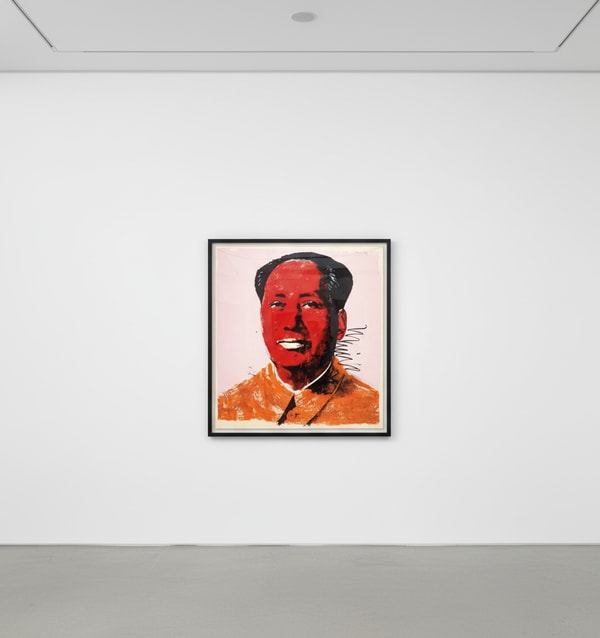
What distinguishes the Mao paintings from Warhol's earlier celebrity series is the painterly handling. Over the silkscreened propaganda portrait, Warhol applied visible gestural brushwork — lipstick-like pinks, loose strokes of colour across the face — treating Mao's image with exactly the same formal vocabulary as Marilyn Monroe's. The effect is simultaneously irreverent and deeply serious: a Communist leader rendered as Pop star, propaganda transformed into portraiture.
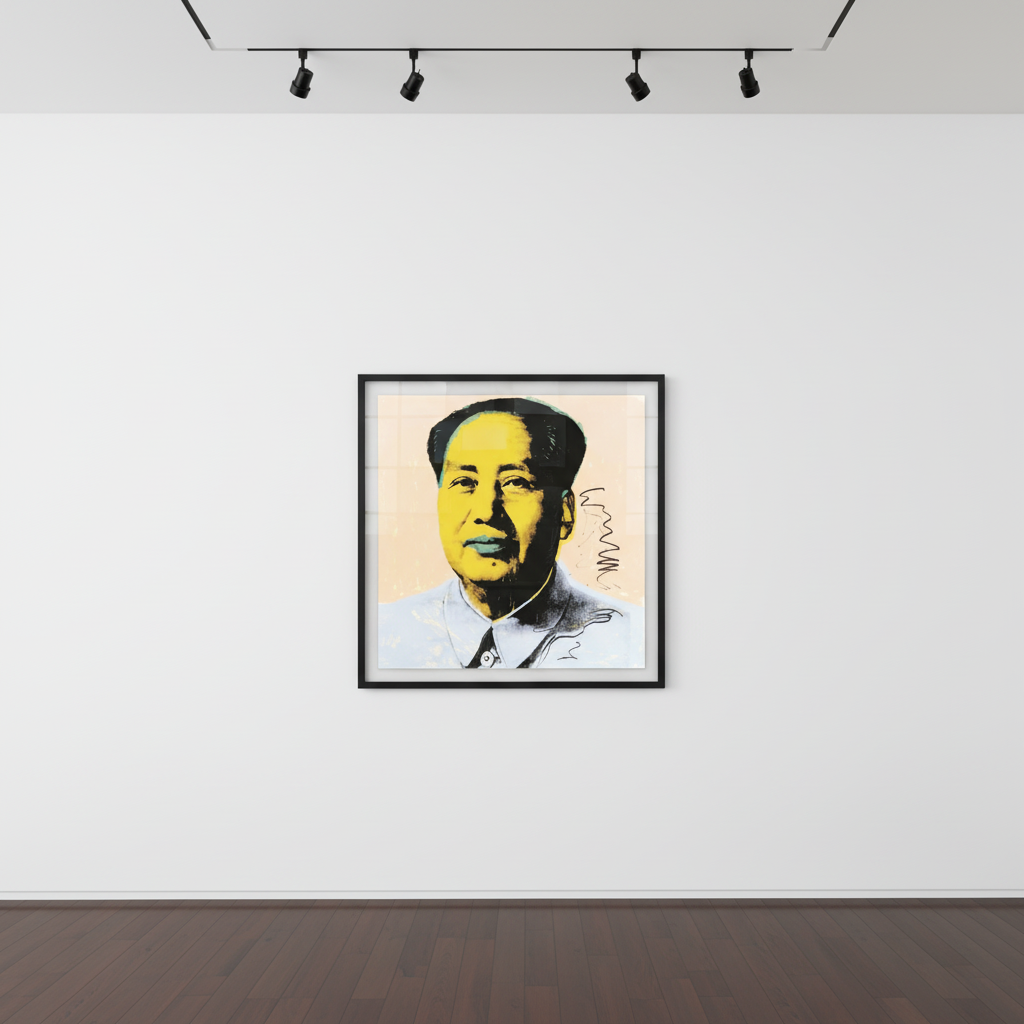
Andy Warhol, Mao F.S. II 97, 1972. Screenprint on Beckett High White paper. Available at Guy Hepner, New York.
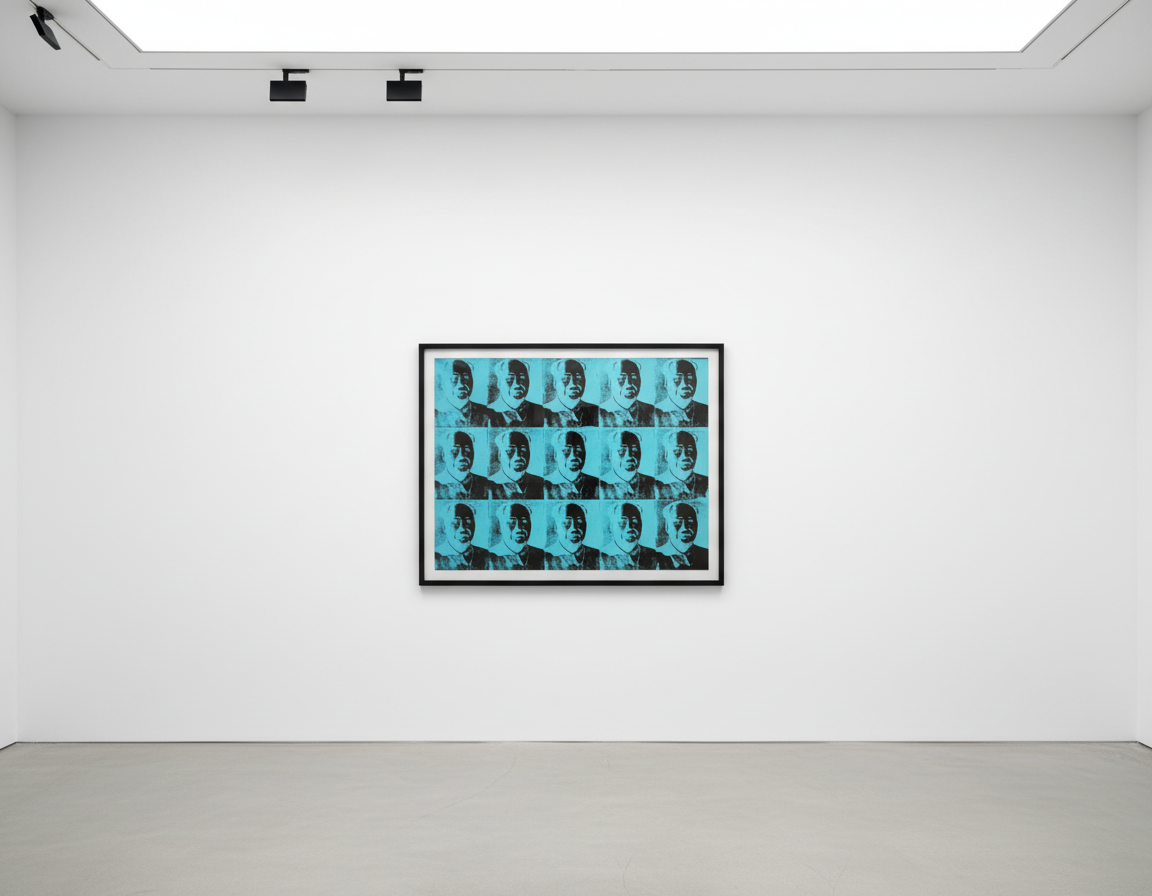
The corresponding screenprint portfolio, Mao (FS II.89–98), consists of ten prints on Beckett High White paper, published in an edition of 250 with 26 APs by Castelli Graphics and Multiples Inc., New York. In April 2017, a major Mao canvas sold at Sotheby's Hong Kong for $12.6 million — a record for Western contemporary art in Asia at that time. At Phillips New York and Sotheby's London, individual prints from the Mao portfolio regularly achieve $30,000–$90,000.

Coca-Cola Bottles (1962)
Warhol made several versions of the Coca-Cola motif in 1962, the most significant being 210 Coca-Cola Bottles — a large canvas (82¼ × 105 inches) presenting the bottles in a grid of 14 rows across 15 columns, silkscreened in flat black on white. The painting is in the collection of the Broad, Los Angeles.
Warhol was explicit about his attraction to the subject: "A Coke is a Coke and no amount of money can get you a better Coke than the one the bum on the corner is drinking. All the Cokes are the same and all the Cokes are good." The democratic quality of the Coca-Cola image — a product consumed identically by every social class — was central to Warhol's project. It was also, formally, a significant step toward the systematic grid-based repetition that would define his screenprint practice from 1962 onward.

The Banana (1967)
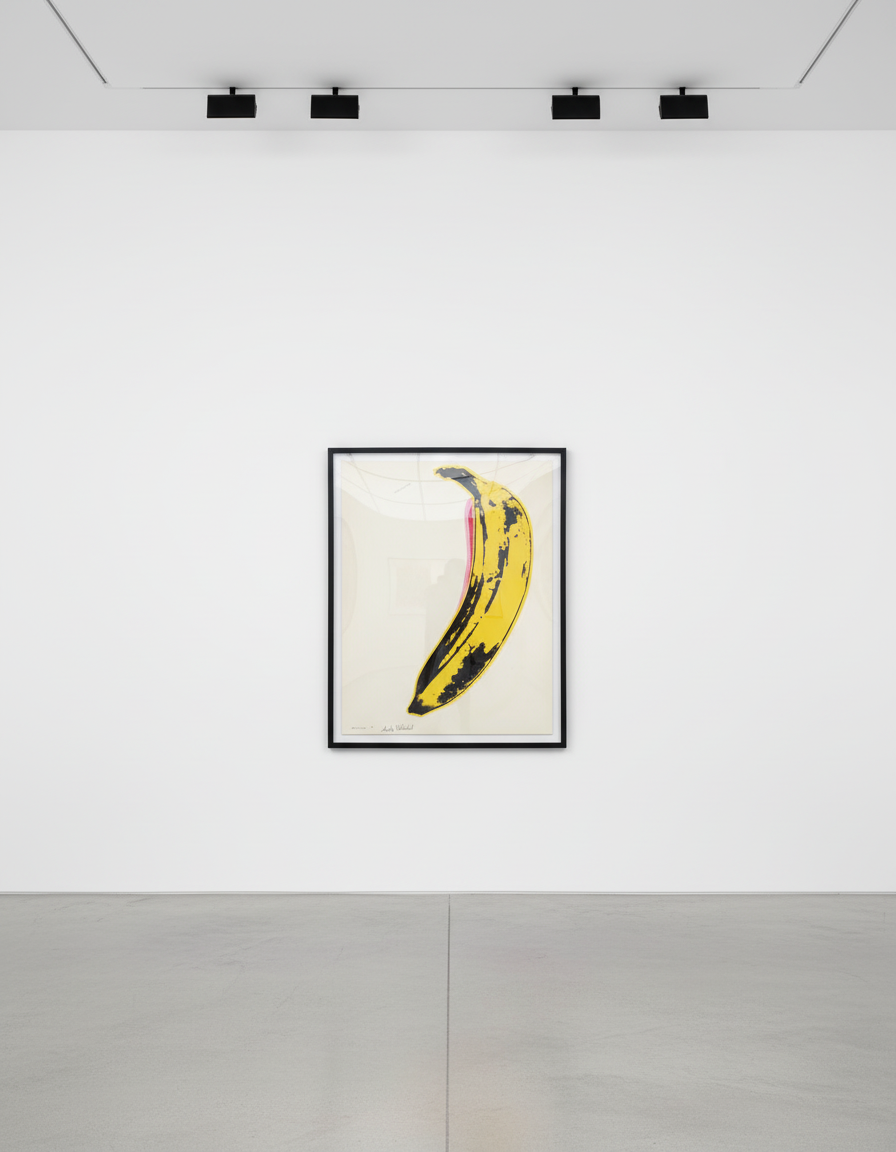
In 1966, Warhol was introduced to Lou Reed and the Velvet Underground through mutual friend Gerard Malanga. He became the band's manager and producer, and designed the cover for their 1967 debut album The Velvet Underground & Nico. The image — a plain yellow banana printed on the album sleeve with the instruction "Peel slowly and see" — concealed a flesh-pink banana underneath. The banana was registered as a trademark by Warhol's estate and remains one of the most reproduced images associated with his name.
The Banana image later appeared as a screenprint — Banana (FS II.A.6, 1966) and in the hand-coloured edition — and has been widely referenced in subsequent popular culture. At auction, works incorporating the banana motif achieve a wide range depending on medium, edition, and association with the Velvet Underground. The image's crossover appeal into music culture makes it one of Warhol's most widely recognised works among younger and non-specialist collectors.

Authentication: What Collectors Need to Know
The Andy Warhol Authentication Board (AWAB) closed in 2012 after more than a decade of operation, citing the volume of litigation it faced from owners of rejected works. It will not authenticate further works. This is a significant practical consideration for buyers today.
For Warhol's paintings, authentication now relies on four things: inclusion in the Andy Warhol Catalogue Raisonné (published by the Andy Warhol Foundation, ongoing); a clean and documented provenance chain reaching back to the Factory period; receipts or correspondence from original sales; and condition reports prepared by specialists familiar with Warhol's silkscreen technique. Works that appear without any of this documentation carry elevated risk and should be approached with caution.
For Warhol's screenprint editions, the standard reference is Andy Warhol Prints: A Catalogue Raisonné 1962–1987 by Feldman and Schellmann (4th edition, 2003), which uses the prefix FS followed by the volume and lot number. Every portfolio published during Warhol's lifetime came with documentation from the publisher — Factory Additions, Castelli Graphics, or Multiples Inc. Buyers should expect to see this documentation. Works sold without it require careful due diligence.
Andy Warhol Paintings vs Editions: A Market Note
The painting market and the edition market for Warhol are distinct categories and should not be conflated. The $195 million achieved for Shot Sage Blue Marilyn in 2022 is a unique painting result. It is not a comparable for a screenprint from the same series, which might trade between $80,000 and $250,000 depending on specific colourway and condition.
Both markets have demonstrated long-term resilience. The painting market is driven by institutional-quality collectors and museums. The edition market is broader, more accessible, and — for collectors operating in the $50,000–$500,000 range — represents the most practical route to acquiring documented Warhol works with established auction history.
Frequently Asked Questions
What is Andy Warhol's most famous painting?
The most widely reproduced single image is the Marilyn Monroe portrait, specifically the versions produced in 1962 following Monroe's death. At auction, Shot Sage Blue Marilyn (1964) is the benchmark — it sold at Christie's in May 2022 for $195 million, making it the most expensive American artwork ever sold.
Where are the original Campbell's Soup Cans paintings?
The original 32 canvases from the 1962 Ferus Gallery show are in the permanent collection of MoMA, New York. They were acquired from Irving Blum, who bought the set from Warhol for $1,000 in monthly instalments of $100. They are not available for sale.
Are Warhol paintings still being authenticated?
No. The Andy Warhol Authentication Board closed in 2012 and will not authenticate further works. Authentication for paintings now relies on catalogue raisonné inclusion, provenance documentation, and specialist due diligence. For screenprint editions, the Feldman-Schellmann catalogue raisonné (FS prefix) is the standard reference.
What is the difference between a Warhol painting and a Warhol print?
Warhol's paintings are unique works produced during his lifetime — silkscreen-on-canvas works that exist as single objects. His prints are editioned works, produced in defined quantities (typically 250 numbered copies plus artist's proofs) with documentation from the original publisher. Both categories trade at auction, but at vastly different price levels. Paintings sell in the millions to hundreds of millions; prints typically sell between $20,000 and $500,000 depending on series, colourway, edition, and condition.
What Warhol series holds its value best?
The Marilyn and Flowers portfolios have the most consistent auction records over the longest period. The Campbell's Soup and Mao portfolios also have strong documented histories. Market reports from Art Basel/UBS and myArtBroker consistently place Warhol among the three most-traded artists globally by auction volume.
What is the Warhol Banana?
The banana image was designed by Warhol for the cover of The Velvet Underground & Nico (1967). The original sleeve featured a peelable sticker banana over a flesh-coloured interior. It has since been issued as a standalone screenprint edition and remains one of Warhol's most-recognised images. The trademark is held by the Andy Warhol Foundation.
Available Andy Warhol Works at Guy Hepner
Guy Hepner offers a selection of Andy Warhol screenprint editions with documented provenance, including works from the Campbell's Soup, Mao, and Marilyn series. We provide full provenance research, condition reports, and acquisition guidance for collectors at all levels.
View all available Andy Warhol works
Campbell's Soup Can (Tomato) F.S. II 4A — Enquire
Mao F.S. II 97 — Enquire
Set of 8 Colored Campbell's Soup Cans — Enquire
Guy Hepner | 177 Tenth Avenue, New York, NY 10011 | guyhepner.com
Browse Andy Warhol prints at Guy Hepner: Andy Warhol art for sale | Sell your Warhol
Browse Series
Works For Sale
Available through Guy Hepner
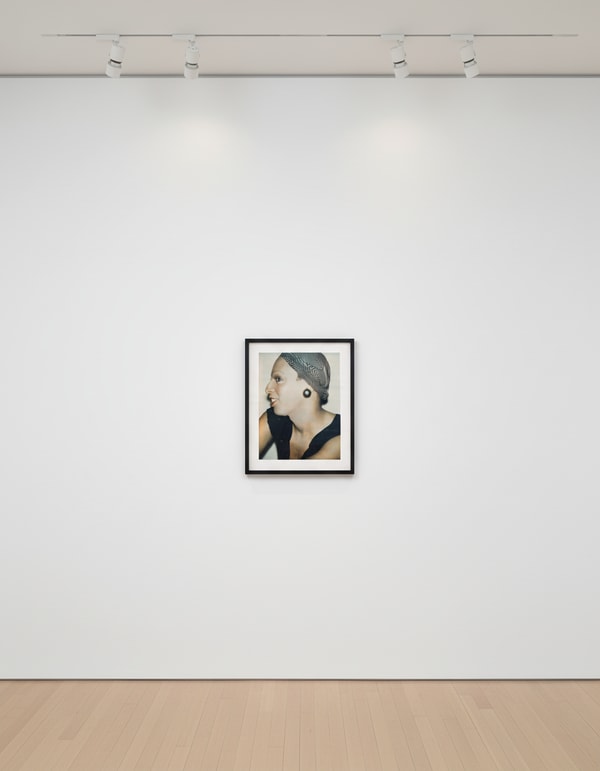
Andy Warhol
Ladies and Gentlemen (Wilhelmina Ross)
1974
Enquire →
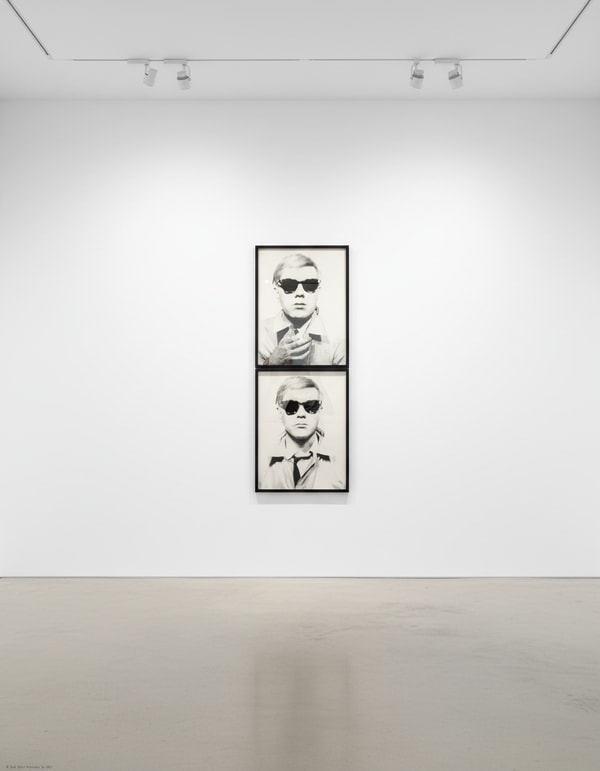
Andy Warhol
Self - Portrait F.S. IIIA 10
1978
Enquire →
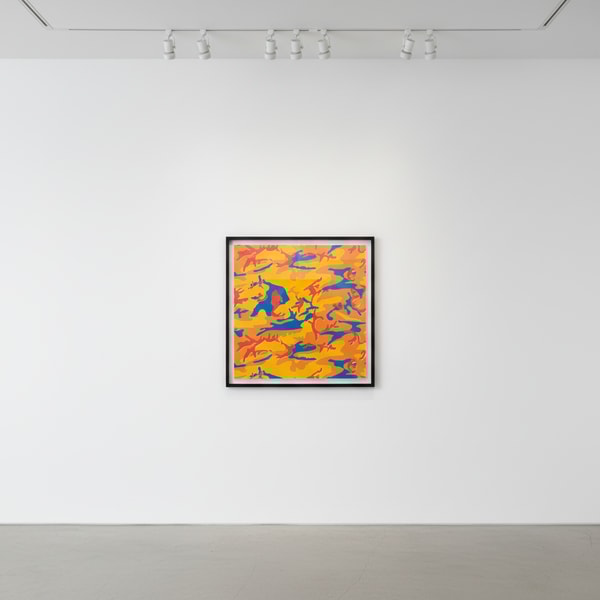
Andy Warhol
Camouflage Trial Proof TP 4/84
1987
Enquire →
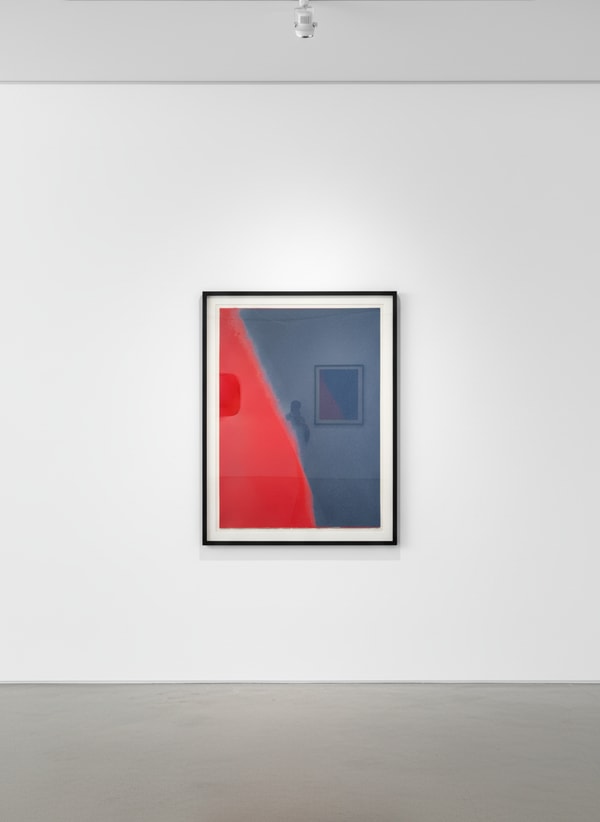
Andy Warhol
Shadows V (Red and Blue) `
1979
Enquire →
Andy Warhol
Marilyn Monroe Invitation
1981
Enquire →

Andy Warhol
Karen Kain F.S. II 236
1980
Enquire →
Andy Warhol
Mao F.S. II 96
1972
Enquire →
Andy Warhol
Beethoven F.S. IIB 390-393
1987
Enquire →
Thinking of selling?
Get a free Andy Warhol valuation
Guy Hepner Gallery — 25+ years in the market. Same-day offers.
More from Guy Hepner